
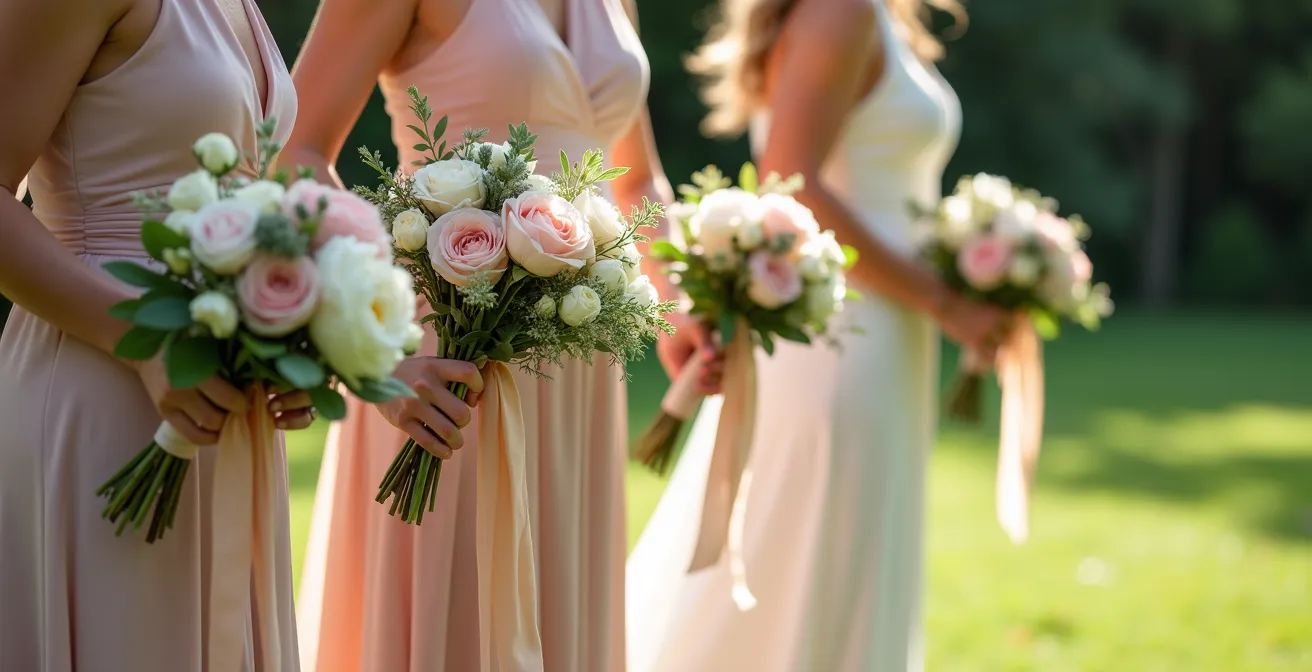
The key to an effortlessly chic bridal party isn’t matching dresses, it’s the artfully imperfect hand-tied posy.
- Texture and movement from elements like silk ribbons are more important than perfect color matching.
- Strategic choices—like exposed stems or varied bouquets—create a high-fashion, “just gathered” look.
Recommendation: Focus on “curated imperfection” by combining complementary, not identical, florals and accessories for a look that’s personal, modern, and stylish.
There’s a certain pressure that comes with being a bridesmaid. You want to look amazing and support the bride, but the trend of rigid, identical everything can feel a little dated. The old rulebook says that bridesmaid dresses, shoes, and especially flowers must be a perfect match. This often leads to stiff, formal bouquets that feel more like props than personal accessories. But what if the secret to a truly stylish and relaxed bridal party look wasn’t about perfect uniformity at all?
The conversation in modern weddings has shifted. It’s no longer just about color coordination; it’s about texture, movement, and personality. While perfectly round bouquets have their place, the hand-tied posy offers a breath of fresh air. The real magic, however, lies in understanding that the “effortless” look is a carefully crafted illusion. It’s not about randomly grabbing some stems; it’s about mastering the art of curated imperfection. This is the perspective that separates a generic bouquet from a true statement piece that feels both natural and incredibly chic.
This guide moves beyond the basics. We’re going to break down the specific, intentional details that create that coveted “just gathered from a meadow” vibe. We’ll explore how silk ribbons create a textural story, why exposed stems can be a powerful design choice, and how to keep these delicate creations looking fresh. We’ll even cover how to repurpose them and ensure your entire day’s schedule supports, rather than sabotages, your beautiful florals.
Table of Contents: The Modern Guide to Bridesmaid Posies
- How to Select Silk Ribbons That Enhance the Flow of a Posy?
- Exposed Stems or Full Wrap: Which Looks Better in Detail Photos?
- Identical Posies or Color Variations: Which Suits Mismatched Dresses?
- The Hydration Mistake That Wilts Posies Before the Ceremony Starts
- How to Repurpose Bridesmaid Posies as Centerpieces Effectively?
- How to Choose a Cascading Bouquet That Complements Your Dress Silhouette?
- How to Select Bridal Party Gifts That Won’t End Up in a Goodwill Bin?
- How to Build a Minute-by-Minute Run-of-Show That Prevents Guest Boredom?
How to Select Silk Ribbons That Enhance the Flow of a Posy?
The ribbon on a bridesmaid’s posy is so much more than a finishing touch; it’s a key part of the bouquet’s personality. It’s what gives the arrangement its “floral gesture”—the sense of movement and life that looks incredible in photos and in person. Moving beyond standard satin, the world of hand-dyed silk ribbons offers a playground of textures, from smooth Habotai to gauzy raw silk, that can elevate a simple posy into something truly special. The trick is to think of the ribbon as an extension of the flowers themselves.
This idea of creating a cohesive look is beautifully illustrated when florists match ribbon color to subtle details within the bouquet. A posy featuring cosmos, for instance, can be transformed with a gentle chartreuse silk ribbon that picks up the tone of the flowers’ golden centers. This creates a sophisticated, layered look that feels intentional yet understated. It’s this textural storytelling that contributes to the overall aesthetic, making the bouquet a complete composition rather than just a bundle of stems.
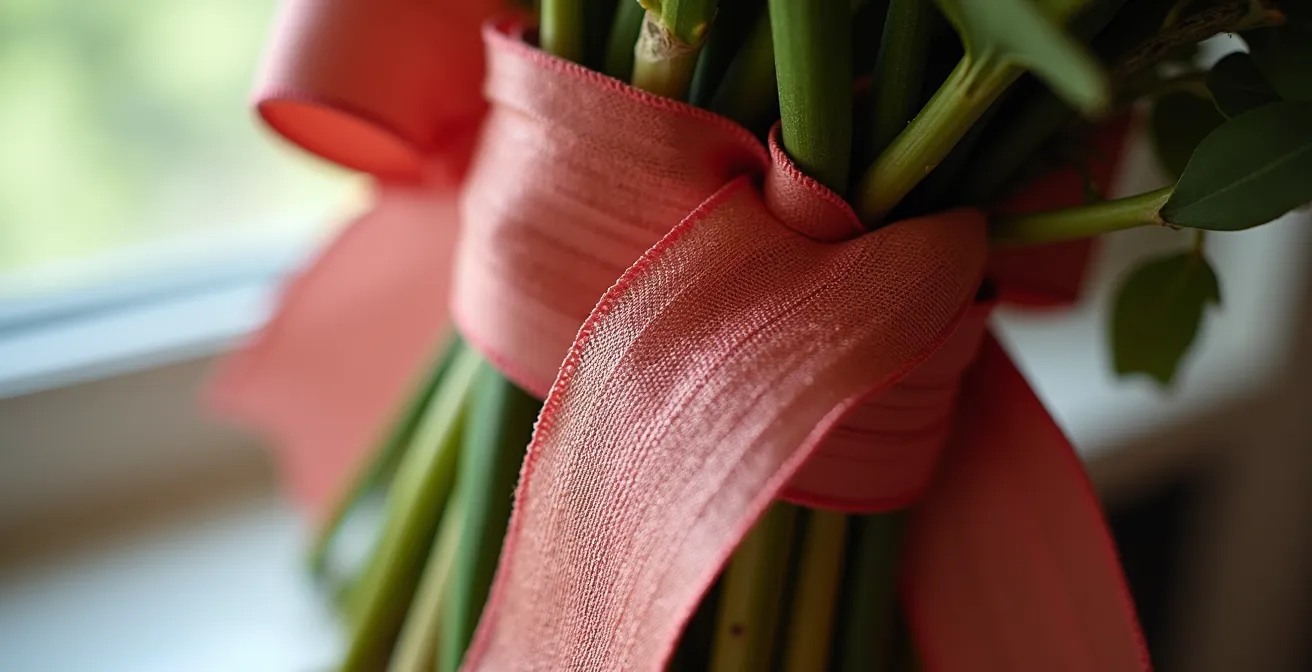
When selecting your ribbons, consider both length and width. For bridesmaid posies, a good rule of thumb is to use about half a 2-inch spool to create streamers around 1.5 feet long. The length should be roughly twice that of the bouquet itself for a delicate drape that doesn’t overwhelm the florals. A final pro tip: always wrap the bouquets on-site. Transporting them in water can soak and ruin delicate silk. If any kinks or creases appear, a quick pass with a hair straightener will have them looking flawless in seconds.
Your 5-Point Silk Ribbon Audit
- Points of Contact: Consider all the elements the ribbon will interact with. This includes the bride’s dress fabric, the bridesmaid’s skin, and the other floral elements in the posy.
- Collect Samples: Gather a small inventory of different ribbon textures to compare. Think about raw silk for a rustic feel, velvet for luxury, or smooth Habotai for classic elegance.
- Check for Coherence: Hold the ribbon samples against the flowers and dress swatches. Does the texture and color align with the wedding’s overall aesthetic and level of formality?
- Assess Memorability: Does your ribbon choice feel unique and add emotional depth, or is it a generic afterthought? The goal is to enhance the posy’s “floral gesture” and make it memorable.
- Create an Integration Plan: Based on your audit, finalize the ribbon’s length, width, and wrapping technique to ensure it perfectly complements the bouquet’s design.
Exposed Stems or Full Wrap: Which Looks Better in Detail Photos?
The way a posy’s stems are finished is a major style decision that directly impacts the overall vibe. It’s a choice between two distinct aesthetics: the polished elegance of a full wrap versus the organic charm of exposed stems. Neither is right or wrong, but each tells a different visual story, especially in the all-important detail photos that photographers love to capture.
A full wrap, where ribbon covers the stems completely, creates a clean, refined look. It offers a smooth, comfortable grip and puts the singular focus on the blooms and the ribbon itself. This style is a perfect match for formal, classic, or modern weddings where a polished finish is paramount. On the other hand, exposed stems tap into that ‘just-gathered’ aesthetic. Leaving the bottom of the stems visible adds a layer of natural texture and creates complex shadow lines that are a dream for photographers shooting flat-lays. This approach is ideal for garden, rustic, or bohemian themes where an organic feel is celebrated.
As you weigh the options, this quick comparison can help guide your decision, and this detailed comparison shows how each choice impacts the final look.
| Aspect | Exposed Stems | Full Wrap |
|---|---|---|
| Visual Story | Natural, organic, ‘just-gathered’ aesthetic | Refined elegance, polished finish |
| Texture in Photos | Complex shadow lines photographers love for flat-lays | Clean, singular focus on blooms and ribbon |
| Hand Comfort | More organic feel but may snag delicate fabrics | Smooth, comfortable grip but can appear stiffer |
| Best For | Garden, rustic, or bohemian weddings | Formal, classic, or modern weddings |
Wedding photography expert Andreas K. Georgiou emphasizes the power of a cascading ribbon, especially for romantic or old-world themes, seeing it as a transformative element:
I highly recommend a 5cm wide hand-dyed silk ribbon (1 meter length, for a cascading ribbon). It will make a huge impact since it flows gracefully in the breeze and photos nearly like liquid gold! It’s critical to match the color of the ribbon to the bouquet when choosing a color.
– Andreas K. Georgiou, Wedding Photography Expert
This choice between a full wrap and exposed stems is a perfect example of curated imperfection. The “messier” option of exposed stems often requires more thought to look artful rather than sloppy, proving that the most natural looks are born from deliberate design choices.
Identical Posies or Color Variations: Which Suits Mismatched Dresses?
The trend of mismatched bridesmaid dresses has officially liberated bridal parties from cookie-cutter styling. But it also introduces a new floral question: should the posies be identical to create a point of unity, or should they vary to complement each dress? The answer, for a truly modern and high-fashion look, is to embrace strategic asymmetry. Using varied but coordinated bouquets is the secret to making a mismatched lineup look cohesive rather than chaotic.
The most effective approach is to select one or two “hero” flowers—like a classic white peony or a dramatic dahlia—to feature in every single posy. This creates a common thread. From there, the supporting blooms and accent colors can be tailored to each specific dress. This allows each bridesmaid to have a bouquet that feels unique to them while still being part of a unified floral story. It’s the ultimate expression of curated imperfection, where individuality is celebrated within a harmonious group.
Case Study: Mismatched Dresses with Tonal Coordination
A beautiful example of this strategy in action involved a bridal party wearing gowns in various shades of lilac and grey. Instead of identical bouquets, the florist created posies tied with silk ribbons in complementary almond blush and lilac grey tones. This subtle coordination through the ribbons and supporting florals created a stunning visual link between the different dress colors, proving that cohesion doesn’t require exact matching.
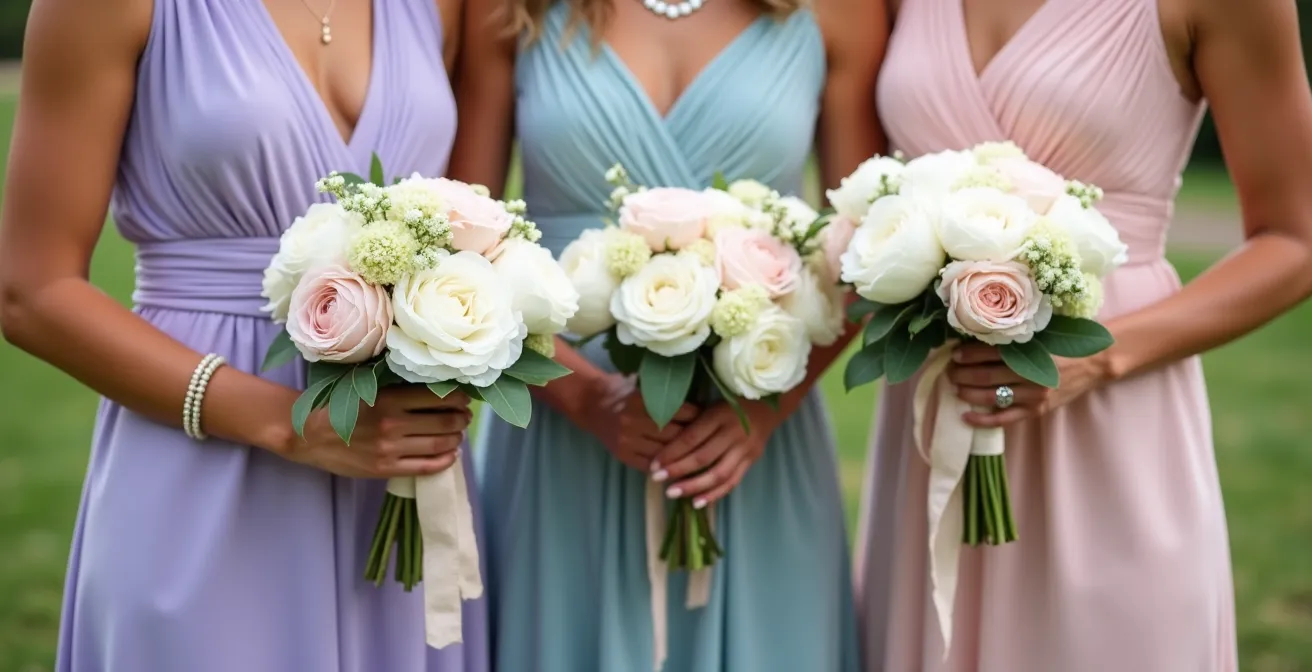
When planning, consider the overall aesthetic and formality. For a standout look, don’t be afraid to use two or three different spools of ribbon to add personal touches. You can even create an ombré effect with the ribbon colors to visually bridge the different shades of the dresses. The goal is to create a collection of bouquets that look like sisters, not twins—related and in harmony, but each with her own personality.
The Hydration Mistake That Wilts Posies Before the Ceremony Starts
There is nothing that shatters the “effortless” floral dream faster than a bouquet that wilts before the “I do’s.” The single biggest culprit? Heat. A flower’s metabolism goes into overdrive in high temperatures, causing it to lose water at an alarming rate. In fact, startling research on floral health shows that a rose at 87°F uses 26 times more food reserves than one in a cool, mid-30s environment. This is the science behind the dreaded pre-ceremony droop, and avoiding it requires a strict hydration strategy, not just a bucket of water.
The most common mistake is assuming flowers can drink water whenever it’s offered. If a stem has been out of water for a prolonged period, an air bubble forms in its vascular system, effectively blocking any further hydration. The only way to fix this is to re-cut the stem. This is non-negotiable. Another critical error is the delay between cutting and placing in water. Cells at the cut site begin to close almost immediately, so you have a window of less than 30 seconds to get that freshly trimmed stem into water for it to hydrate properly. As one florist experienced during an extreme heatwave, the conditions can be brutal.
According to our thermometer it was 115 degrees as the wedding began. It was hotter than … well, it was hot!!!
– Michelle Perry-White AIFD
To combat this, a solid hydration plan is essential. These professional tips, drawn from expert sources like The Floral Coach, are your best defense against wilting.
- Always trim at least a half-inch off the bottom of each stem at a 45-degree angle to maximize the surface area for water uptake.
- Transport all flowers in a cool, shaded vehicle. Never, ever leave them in a hot car, even for a few minutes.
- As mentioned, if flowers have been out of water, you must recut the stems to remove air blocks.
- Place every stem into water no more than 30 seconds after snipping to ensure the veins stay open and ready to drink.
Keeping your posies looking fresh is the foundation of the relaxed, beautiful aesthetic. It’s a behind-the-scenes effort that makes all the difference on the big day.
How to Repurpose Bridesmaid Posies as Centerpieces Effectively?
One of the smartest and most sustainable wedding trends is giving your flowers a second life. Bridesmaid posies, with their smaller scale and hand-tied nature, are perfectly suited for being repurposed as reception decor. This isn’t just a budget-friendly move; it’s a way to ensure your floral aesthetic is woven throughout the entire event, from the ceremony aisle to the dinner table. The key to making this transition look chic and intentional, rather than like a last-minute afterthought, is a quick and efficient plan.
The most straightforward method is to have designated vases ready at the reception. Once the ceremony and formal portraits are done, a coordinator or a designated “flower captain” can collect the posies. For a simple but effective centerpiece, you can group 2-3 posies together in a larger vessel. This creates a fuller, more impactful arrangement that feels like a deliberate focal point. Before placing them in water, it’s crucial to give all stems a fresh cut at an angle and pluck any slightly wilted outer petals to freshen them up.
A more creative approach involves deconstructing the posies to create a completely new look. This works especially well for creating an airy, expensive-feeling tablescape that covers more surface area.
Case Study: The Deconstructed Posy Approach
Instead of placing whole posies in vases, one couple’s florist took apart the bridesmaid bouquets after the ceremony. The individual stems and small clusters of flowers were then distributed across 3-5 small bud vases per table. This “deconstructed” method created a delicate, intentional centerpiece design that looked far more curated and high-end than simply dropping the bouquets into a single vase.
To ensure a seamless transition, a two-minute checklist is all you need. Have a station ready with vases, fresh water, and snips. First, carefully remove and neatly fold the beautiful silk ribbons to be kept as mementos. Next, give every stem that fresh snip to help it rehydrate. Finally, ensure the vases are spotlessly clean before filling them with water to prevent any bacteria from contaminating the arrangement and shortening its life. This small effort ensures your beautiful florals continue to shine all night long.
How to Choose a Cascading Bouquet That Complements Your Dress Silhouette?
While this guide focuses on bridesmaid posies, it’s impossible to talk about hand-tied styles without touching on the bride’s bouquet, especially the dramatic cascade. A cascading bouquet, with its waterfall of flowers and greenery, makes a bold, romantic statement. It’s a style that surged in popularity thanks to icons like the late Princess Diana, who carried a famously grand one on her wedding day. However, its success hinges entirely on proportion and its relationship with the bride’s dress silhouette. The wrong pairing can overwhelm the dress, while the right one creates breathtaking harmony.
The guiding principle is balance. A large, dramatic dress can handle a large, dramatic bouquet, while a sleek, simple gown needs something more restrained to avoid being overshadowed. A full, theatrical ballgown or A-line dress, for example, provides the perfect canvas for a full cascade. The bold floral style complements the grandeur of the dress, creating a look that is pure drama and romance. Conversely, for a form-fitting sheath or mermaid gown, a full cascade can create visual clutter. Here, a more delicate light cascade or even a simple posy is a much better choice, as it complements the clean lines of the dress without competing with them.
This principle of pairing style and silhouette applies to all dress types, as this helpful guide from Southern Graces outlines.
| Dress Silhouette | Recommended Bouquet | Why It Works |
|---|---|---|
| A-line/Ballgown | Full Cascade | Bold style perfect for brides who desire to make a dramatic statement with their florals |
| Sheath/Mermaid | Posy or Light Cascade | Clean lines complement form-fitting silhouettes without visual clutter |
| Tea-Length | Round Posy | Traditional and elegant, ideal for just about any wedding style, color scheme, or dress type |
| Empire Waist | English Garden | Looser and less structured which gives them a more natural, boho vibe |
Ultimately, choosing a bouquet is about enhancing, not hiding, the carefully chosen dress. The florals should feel like the ultimate accessory that completes the look, working in concert with the gown’s silhouette to create a single, stunning vision as the bride walks down the aisle.
How to Select Bridal Party Gifts That Won’t End Up in a Goodwill Bin?
Choosing a gift for your bridesmaids is a way to say “thank you” for their support, time, and friendship. But so often, generic, monogrammed gifts end up unused and eventually discarded. The secret to a truly meaningful gift is to make it personal, useful, and connected to the shared experience of the wedding day. And what’s more central to a bridesmaid’s experience than the beautiful posy she carries?
Tying the gift directly to the day’s florals is a thoughtful and creative strategy. Instead of a generic tote bag, consider a gift that extends the life and memory of the bouquet. A high-quality ceramic vase, chosen to match their personal home style, is a perfect example. It’s a beautiful and practical present that also serves as an immediate home for their posy after the reception. Another idea is a custom-scented candle inspired by the specific florals in the bouquets—a scent that will forever transport them back to the wedding day.
For a truly unique and dual-purpose gift, consider using a beautiful silk scarf as the ribbon wrap for their posy. After the wedding, it becomes a stylish accessory they can wear, a tangible and fashionable reminder of the day. The focus should be on quality and personal resonance. As one styling company that prioritizes local and foraged elements notes, tying things into the natural, romantic feel of the day makes them more special. Think about gifts that reflect that same ethos, like an experience-based present such as a floral arrangement workshop or a gift certificate to a local plant nursery.
- A high-quality ceramic vase for them to take their posy home in.
- A custom-scented candle inspired by the bouquet’s florals.
- A fine art print featuring the key flowers from their posy.
- A beautiful silk scarf used as the ribbon wrap (a dual-purpose gift).
By connecting the gift to a central, beautiful element of the wedding, you ensure it’s cherished as a memory rather than becoming just another piece of clutter.
Key takeaways
- Embrace “curated imperfection” by using varied, complementary bouquets, especially for mismatched dresses, to create a cohesive yet personal look.
- The right silk ribbon adds more value through texture and movement than any other single element; it’s a key part of the bouquet’s “floral gesture.”
- Proper, proactive hydration on the day of the wedding is non-negotiable to maintain the fresh, “effortless” look of delicate hand-tied posies.
How to Build a Minute-by-Minute Run-of-Show That Prevents Guest Boredom?
An amazing floral design can be completely undermined by poor logistics. The most beautiful, “effortless” posies won’t look so effortless if they’re wilting in the sun or misplaced during transitions. A detailed run-of-show, or timeline, is the invisible framework that holds the wedding day together. It’s not just about preventing guest boredom; it’s about ensuring every beautiful detail you’ve planned—including the florals—gets its moment to shine.
When it comes to your flowers, the timeline needs to be incredibly specific. For outdoor weddings, this is paramount. The flowers should be delivered at precisely the right time—not so early that they sit out and wilt, but with enough time for setup and cleanup. This might mean scheduling a “3:00 PM: Floral Delivery & Hydration Check” point in your run-of-show. You should also assign a specific person, a “flower captain” (often the coordinator or a trusted friend), who is responsible for all floral transitions throughout the day.
This includes scheduling key moments for the posies themselves. For example, your timeline could include “4:15 PM: Coordinator collects bridal party posies for centerpiece placement.” This ensures the repurposing happens smoothly and doesn’t get forgotten in the post-ceremony excitement. You can even build floral moments into the guest experience, like a “Champagne & Posies Mingle” immediately after the ceremony, where guests can admire the bouquets up close while the bridal party celebrates. The timeline is the tool that transforms your floral vision into a seamless reality, ensuring every stem is fresh, in place, and perfectly presented from start to finish.
Now that you have the insider’s guide to creating the perfect relaxed bridal party look, you can start planning your florals with the confidence of a pro. Focus on these small, intentional details—the texture of a ribbon, the artful variation in bouquets, and the behind-the-scenes planning—to achieve a style that is truly personal, modern, and effortlessly chic.