
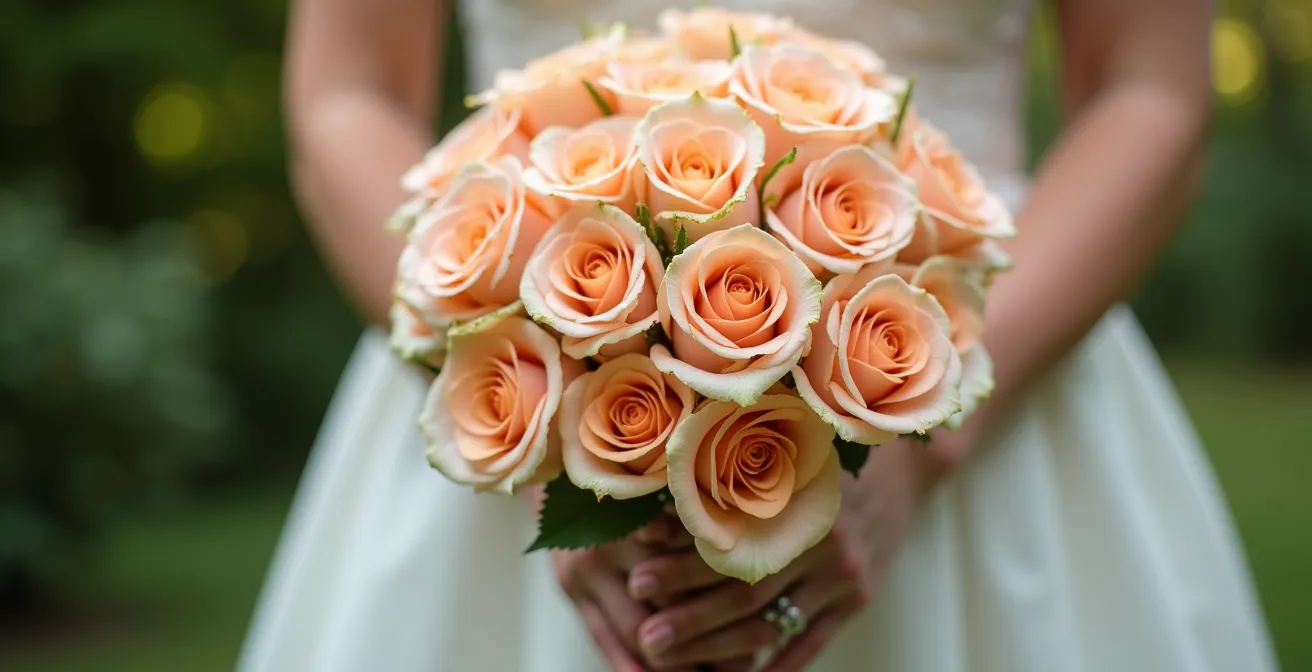
For brides dreaming of peonies out of season, the garden rose isn’t a compromise—it’s an upgrade in artistry, fragrance, and romantic expression.
- Garden roses, especially David Austin varieties, offer a more complex petal structure and a richer, more varied scent profile than most peonies.
- Unlike the fleeting peony season, premium garden roses are cultivated year-round, offering consistent beauty and reliability for any wedding date.
Recommendation: Shift your perspective from finding a “peony substitute” to embracing the unique botanical architecture and emotional resonance that only a garden rose can provide for your special day.
There is a particular kind of heartbreak familiar to many brides: falling in love with the lush, cloud-like perfection of a peony, only to discover your wedding date falls just outside its frustratingly short season. The immediate scramble is for a substitute, a flower that can mimic its voluminous charm. For years, the default recommendation has been the garden rose. This advice, while well-intentioned, does a profound disservice to both the bride and the rose itself. It frames one of the world’s most cherished blooms as a mere stand-in, a second-best option.
The common wisdom suggests focusing on visual similarity. But what if the true secret to an unforgettable floral design lies not in imitation, but in elevation? What if the very qualities that make a garden rose distinct are the keys to unlocking a deeper, more personal sense of romance? This is where we move beyond simple substitution. The conversation shifts from “what looks like a peony” to “what creates a more moving, multi-sensory experience.” It involves understanding the nuances of botanical architecture, the layers of a scent profile, and the way a flower’s form interacts with light and fabric.
This guide reframes that perspective entirely. We will explore why the garden rose, particularly in its most exquisite forms like those from David Austin, is not a consolation prize but a deliberate, superior choice. We will demonstrate how its structure, resilience, and year-round availability make it the artist’s choice for crafting a wedding aesthetic that is not just beautiful, but full of emotional resonance. We will delve into the practical magic of ensuring each bloom is perfect and how to weave its unique character into every element of your day, from your bouquet to your guests’ experience.
This article provides a detailed exploration of the unique advantages of garden roses. You will find a structured comparison, practical handling guides, and artistic inspiration to help you see these blooms not as an alternative, but as the ultimate expression of wedding romance.
Summary: Why Garden Roses are the Ultimate Romantic Wedding Flower
- David Austin vs. Standard Roses: Is the Price Difference Visible?
- How to Ensure Your Roses Are Fully Blown Open for the Wedding Day?
- Garden Roses or Dahlias: Which Survives a Summer Outdoor Wedding Better?
- The Handling Mistake That Causes Garden Roses to Wilt Prematurely
- How to Match “Juliet” Rose Tones With Your Bridesmaid Dresses?
- How to Choose a Cascading Bouquet That Complements Your Dress Silhouette?
- How to Maximize Floral Impact by Embracing Seasonal Botanical Availability?
- Why Low Floral Centerpieces Are the Key to Better Guest Conversation?
David Austin vs. Standard Roses: Is the Price Difference Visible?
When you see a garden rose that truly takes your breath away, with a heart of countless swirling petals, you are likely looking at a specialty variety, such as those bred by David Austin. The distinction between these and a standard grocery store rose isn’t subtle; it’s a fundamental difference in artistry, presence, and impact. A standard rose is a simple statement; a David Austin rose is a sonnet. The price difference reflects this jump from commodity to couture, and yes, the difference is profoundly visible.
The most immediate distinction is in the botanical architecture. A standard rose typically has 20-40 petals, forming a classic, elegant bud. A premium garden rose, by contrast, is a symphony of texture. The comparison table below highlights the dramatic differences in composition. This complexity is why professional florists report that 20 garden roses can create the same visual impact as 40-60 standard roses. You are not just paying for a single stem, but for a bloom that does the work of three.
| Feature | David Austin Garden Roses | Standard Roses |
|---|---|---|
| Petal Count | Over 100 petals per bloom | 20-40 petals |
| Fragrance | Complex, multi-layered fragrance | Minimal to no scent |
| Bloom Size | 3.5-5.5 inches wide | 2-3 inches wide |
| Vase Life | 3-4 days | 5-7 days |
| Visual Impact | 1 bloom equals 2-3 standard roses | Standard impact |
Furthermore, growers like Alexandra Farms, the world’s largest licensed grower of fresh-cut David Austin® Wedding Roses, cultivate these flowers as a luxury product. They are the top choice for brides and event planners seeking something extraordinary. The investment is not just in size, but in the unmatched romantic silhouette and complex fragrance that a standard rose simply cannot replicate. The price reflects a bloom bred specifically for breathtaking beauty and emotional effect.
How to Ensure Your Roses Are Fully Blown Open for the Wedding Day?
One of the greatest fears for a bride is that her flowers won’t be at their peak on the wedding day. A tight, closed rose bud lacks the romantic, billowy effect that makes them so desirable. Achieving that perfect, fully open state is not a matter of luck, but of careful timing and technique—a process we can call bloom choreography. This ensures every petal is perfectly unfurled to showcase the flower’s complete beauty precisely when you walk down the aisle. The key is a 72-hour timeline that allows the roses to open naturally and gracefully.
The process begins about three days before the wedding. You’ll want to work with roses that are already four or five days old; if they are too fresh, the petals can be brittle and may crack when handled. You can gently control the opening speed by managing their environment: warmer rooms will encourage them to bloom, while a cooler space slows them down. The day before the wedding is for the final artistic touches. This is when a florist will carefully remove the outer guard petals and leaves, and may even “reflex” the petals—gently folding each one back to create a fuller, more voluptuous face. This delicate work is always done before the bouquet is designed.
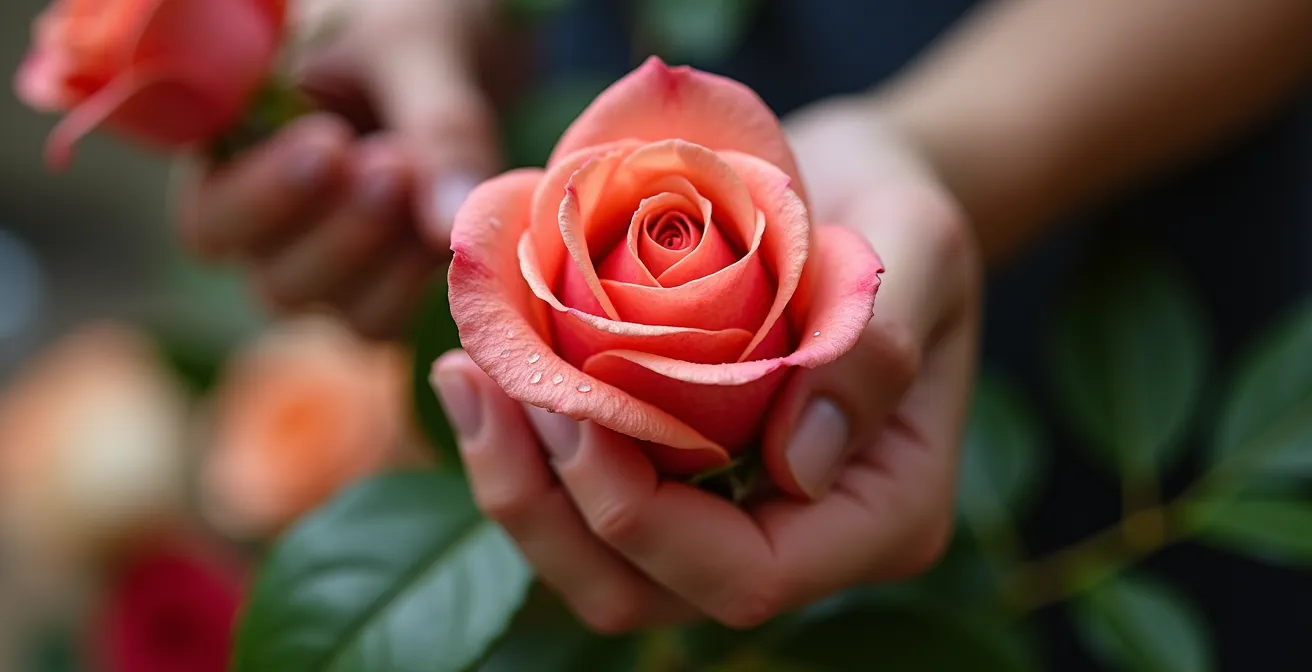
On the morning of the wedding, the final step is ensuring hydration. The prepared roses should be placed in clean vases with fresh, cool water mixed with floral food. This nutrient solution prevents bacteria and feeds the blooms, keeping them vibrant. Any leaves that would fall below the water line must be removed to keep the water pristine. This meticulous preparation guarantees that the botanical architecture of each rose is displayed in its full glory for your most important moments.
Garden Roses or Dahlias: Which Survives a Summer Outdoor Wedding Better?
For a summer wedding, especially an outdoor affair, flower resilience is as important as beauty. Heat, sun, and time out of water can be brutal on delicate blooms. When choosing between voluminous flowers, the debate often comes down to garden roses versus dahlias. While both are stunning, the structure and breeding of premium garden roses give them a significant advantage in surviving the rigors of a wedding day. Dahlias are notoriously thirsty and can wilt dramatically in the heat, their heavy heads drooping if their water source is compromised for even a short time. This makes them a risky choice for bridal bouquets or arrangements that will be out of a vase for hours.
In contrast, many varieties of David Austin garden roses are bred for exceptional performance. They possess a sturdier cellular structure and woody stems that retain moisture more effectively. While any flower will suffer in extreme heat, garden roses have a proven track record of endurance. For instance, professional growers confirm that specific varieties like the luminous ‘Beatrice’ or the iconic ‘Juliet’ have an impressive vase life of 8-10 days under ideal conditions, a testament to their inherent hardiness. This underlying strength translates into better performance during a long, warm wedding day.
This resilience doesn’t come at the cost of romance. In fact, their ability to hold their shape allows them to contribute to the fairytale atmosphere all day long. Renowned for their top-quality flowers, garden rose assortments from specialty farms are proven to elevate any summer event, holding their stunning form from the first photos to the last dance. Their figures stun the eye and the heart, creating an atmosphere that looks straight out of a storybook. Choosing a garden rose is choosing peace of mind without sacrificing an ounce of beauty.
The Handling Mistake That Causes Garden Roses to Wilt Prematurely
There is nothing more devastating than seeing a beautiful, expensive garden rose begin to droop and wilt before its time. More often than not, this premature decline is not a fault of the flower itself, but a result of a simple, preventable handling mistake. The single most critical error is allowing bacteria to contaminate the water. When leaves are left on the lower part of the stem, they sit in the vase water, decay, and create a breeding ground for bacteria. This bacteria is then drawn up the stem, clogging the vascular system and preventing the rose from hydrating properly, no matter how much water is available. The result is a thirsty, wilting bloom.
Proper hydration is an art, and it begins the moment the roses are received. The stems need a fresh cut to be able to drink efficiently. Using sharp scissors or a knife, you should cut about one inch from the bottom at a diagonal angle. This increases the surface area for water absorption and prevents the stem from sitting flat on the bottom of the vase. Immediately after cutting, the roses must be placed into water. This prevents air from being drawn into the stem, which can create an embolism (an air bubble) that blocks water uptake, similar to the effect of bacteria.
Protecting the blooms from environmental stress is also paramount. Direct sunlight and drafts can cause the roses to lose moisture through their petals faster than they can absorb it through their stems. Finally, the water itself must be kept pristine. It should be changed every one to two days, or as soon as it appears cloudy. This simple act is the most effective way to prevent the bacterial growth that is the primary culprit behind premature wilting. By avoiding these common errors, you protect the integrity and longevity of each precious bloom.
Action Plan: Preventing Premature Wilting in Garden Roses
- Sanitize Your Water: Meticulously remove all leaves that will fall below the water line in your vase. This is the primary defense against bacterial growth.
- Optimize for Hydration: Use sharp, clean scissors to cut one inch off the stems at a diagonal angle and place them in water immediately to prevent air blockages.
- Control the Environment: Keep the roses away from direct sunlight, heat sources, and drafts, which cause rapid dehydration. Use temperature to control the blooming speed.
- Maintain Water Purity: Change the water every 1-2 days, or whenever it becomes cloudy, and add fresh floral food to nourish the blooms and inhibit bacteria.
- Test Before Committing: Before a major event, experiment with handling a few stems of your chosen variety to understand its specific needs and resilience.
How to Match “Juliet” Rose Tones With Your Bridesmaid Dresses?
The David Austin ‘Juliet’ rose is, for many, the pinnacle of floral romance. It is not just a flower, but an icon. Its signature color—a unique and complex blend of soft apricot and warm peach—is what makes it so captivating. When designing your wedding’s color palette, matching this specific tone is an exercise in creating harmony, not just finding an exact duplicate. The goal is to choose bridesmaid dress colors that complement and enhance the rose’s warmth, creating a cohesive and sophisticated visual story. The key is to work with ‘Juliet’s’ undertones, not against them.
As Rose Explosion Wedding Florals notes in their guide, the ‘Juliet’ is the ultimate sweetheart, with a unique glow that is central to its appeal.
Juliet is the ultimate sweetheart of wedding roses. With her soft apricot-peach tones and perfectly rounded blooms, she has become a timeless choice for bridal bouquets. The way her petals unfold layer by layer creates a warm, elegant glow that photographs beautifully under natural light.
– Rose Explosion Wedding Florals, The Ultimate Guide to David Austin Wedding Roses
To achieve a truly elevated color harmony, consider these families of color for your dresses:
- Complementary Cool Tones: Soft, dusty blues and muted sage greens create a beautiful contrast with the warmth of the apricot. This pairing is timeless, elegant, and feels effortlessly romantic. The cool tones make the peach hues of the ‘Juliet’ pop.
- Analogous Warm Tones: For a more monochromatic and rich palette, look to shades of champagne, soft gold, and blush. These colors share the same warm base as the ‘Juliet’ rose, creating a seamless and luxurious feel.
- Earthy Neutrals: Shades of taupe, sand, or even a soft terracotta can ground the palette, giving it an organic and sophisticated aesthetic that feels both modern and timeless.
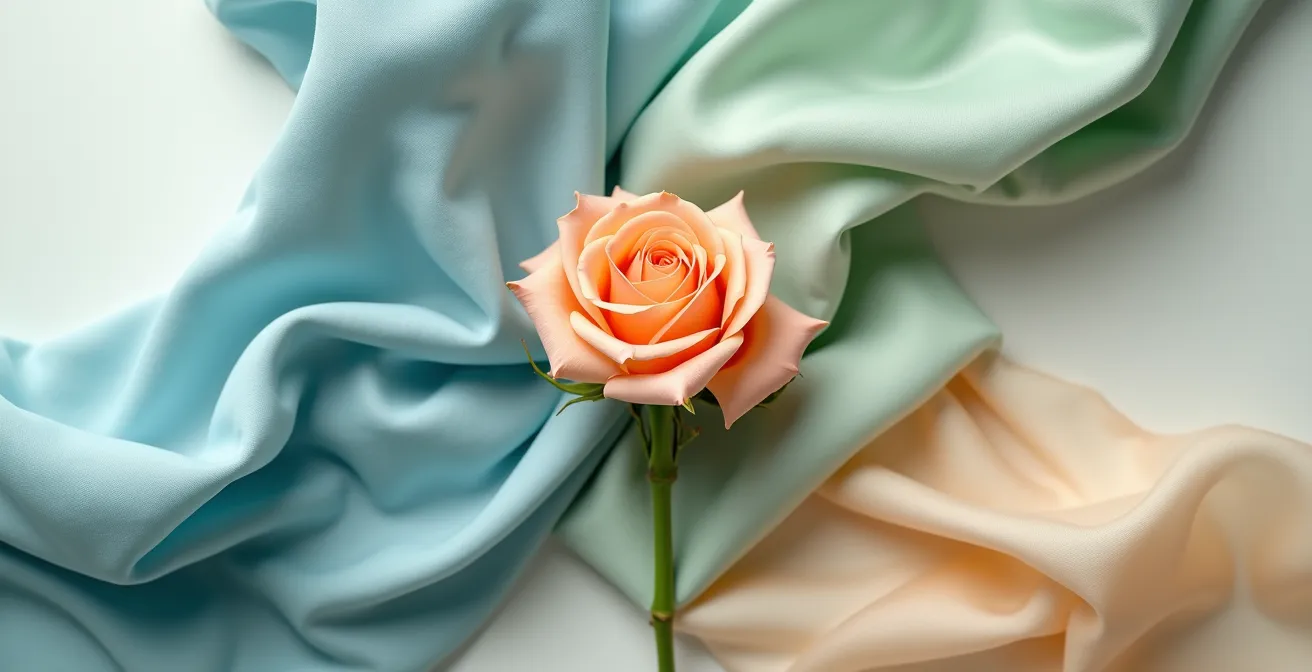
The secret is to think like a painter. By placing the warm, luminous ‘Juliet’ against a backdrop of either complementary cool tones or analogous warm neutrals, you are creating a palette that has depth, intention, and emotional resonance. It transforms the simple act of choosing colors into a sophisticated artistic statement.
How to Choose a Cascading Bouquet That Complements Your Dress Silhouette?
A cascading bouquet is a bold statement of romance and drama. More than just a bundle of flowers, it is a wearable piece of art designed to flow with and enhance the bride’s silhouette. The key to a successful cascade is achieving a sense of movement and balance, ensuring it complements the dress rather than competes with it. The choice of flowers is critical, as the weight and shape of each bloom contribute to the overall drape and form. Garden roses, with their large, multi-petaled heads, are perfect for creating focal points within the cascade, but their placement requires skill.
The construction of a cascade is a delicate dance of angles and levels. As florists know, the secret is to add the roses at an angle, turning the bouquet continuously. By placing some blooms low and others high, you create that beautiful, organic movement that defines the style. This technique avoids a stiff, heavy appearance and ensures the bouquet has life and airiness. The overall size of the cascade should be scaled to the bride. A petite frame might be overwhelmed by a massive cascade, while a taller bride can carry a more dramatic arrangement. For reference, even for simpler styles, professional florists recommend at least 10-15 roses for small bouquets to achieve an elegant look, so a cascade will require significantly more to create its signature trail.
The silhouette of your dress is the most important factor in determining the shape of your bouquet. Consider these pairings:
- For a Ball Gown or A-Line Dress: These full silhouettes can support a more dramatic, fuller cascade. The bouquet can be wider at the top and have a long, luxurious trail that balances the volume of the skirt.
- For a Sheath or Mermaid Dress: With these form-fitting gowns, a slender, more delicate cascade is often more effective. A “teardrop” or “pageant” style bouquet that is narrower and emphasizes vertical length will complement the sleek lines of the dress without adding bulk.
- For a Simple, Modern Dress: An asymmetrical cascade, with flowers trailing off to one side, can add a wonderfully artistic and contemporary touch to a minimalist gown.
Ultimately, the bouquet should feel like a natural extension of your bridal look. It is a dialogue between the botanical architecture of the flowers and the sartorial architecture of the gown, working together to create one breathtaking image.
How to Maximize Floral Impact by Embracing Seasonal Botanical Availability?
The anxiety around peony seasonality stems from a valid concern: you want your flowers to be at their absolute best. The brilliant solution, however, is not to chase a bloom that is out of season, but to lean into a flower that is specifically cultivated for year-round perfection. This is the single greatest advantage of the premium garden rose. Unlike garden-grown peonies that are subject to the whims of climate and a short flowering window, cut roses for the floral trade are grown in ideal, controlled environments. As premier breeders explain, these wedding and event roses are often grown under cover in equatorial climates to ensure year-round flowering and exceptional performance.
This reliability frees you from the constraints of a specific season and opens up a world of creative possibilities. Instead of your wedding date dictating your flowers, you can choose your flowers and then use the season to enhance them. The garden rose becomes your constant, the heart of your floral design, which you can then embellish with other botanicals that are peaking at the time of your wedding. This strategy allows you to get the best of both worlds: the timeless romance of the rose and the unique character of the season.
Consider these seasonal pairing strategies to create depth, texture, and fragrance:
- For Spring: Pair lush garden roses with the delicate, fluttering petals of ranunculus and the clean lines of tulips. This combination creates a rich textural contrast that feels fresh and full of life.
- For Summer: Combine your roses with wisps of local wildflowers, Queen Anne’s lace, and textural grasses. This pairing gives a wilder, garden-inspired appearance for a natural and romantic aesthetic.
- For Fall: Weave in autumnal elements like seeded eucalyptus, richly colored berries, and delicate autumn foliage. These additions provide seasonal depth and a warm, harvest-inspired palette.
- For Winter: Accent your roses with fragrant evergreens, silvery brunia balls, and dusty miller. This creates a beautifully muted, textural, and wonderfully fragrant winter bouquet.
By using the garden rose as your anchor, you are not fighting the season; you are embracing it. You maximize your floral impact by layering textures and scents, creating a design that is both timelessly romantic and perfectly in tune with the moment you say “I do.”
Key Takeaways
- Garden roses offer superior value, with one premium bloom providing the visual impact of 2-3 standard roses due to its complex petal structure.
- Perfectly open blooms are achieved through a timed 72-hour process of “bloom choreography,” not luck, ensuring peak beauty on your wedding day.
- Unlike peonies, premium garden roses are cultivated year-round, offering reliability and freeing you from the stress of a short, unpredictable season.
Why Low Floral Centerpieces Are the Key to Better Guest Conversation?
While tall, dramatic centerpieces can make a grand statement upon entering a reception, they often come at a cost: guest interaction. A towering arrangement, no matter how beautiful, can become a “floral wall,” obstructing sightlines and forcing guests to peer around stems and leaves to speak with those across the table. The modern approach to wedding reception design prioritizes the guest experience, and this is where the low, lush centerpiece shines. By keeping the floral design below eye level, you encourage conversation, connection, and a more intimate, convivial atmosphere.
This design choice also offers a unique opportunity to engage another sense: smell. With a low centerpiece, the delicate fragrance of the blooms can gently perfume the air around the table without being overwhelming. This is where choosing a garden rose with a notable scent profile becomes a powerful tool for crafting an immersive atmosphere. A bloom like the ‘Patience’ rose, known for its incredible fragrance, can transform the guest experience. As noted by floral experts, it adds a layer of unseen luxury to the event.
Rose Patience is a stunning English rose known for its creamy white petals that open into a large, ruffled shape. This garden rose has the most pronounced perfume and seduces with its intense and clean antique rose fragrance with a touch of lemon.
– THURSD Magazine, Summer Weddings Never Looked So Good Than With These 10 Garden Roses
A low centerpiece invites guests to lean in and admire the intricate details of each flower. They can appreciate the swirling heart of a David Austin rose, the subtle color variations in its petals, and the delicate scent it releases. This creates a far more personal and memorable interaction with the decor. It makes the flowers a shared point of discovery rather than just a background element. The choice for a low arrangement is a choice for intimacy, connection, and a multi-sensory experience that leaves a lasting impression of warmth and romance.
By reframing the garden rose not as a substitute but as a superior choice, you unlock a new level of artistry and personal expression for your wedding. Now that you are equipped with this knowledge, the next step is to begin visualizing how these incredible blooms can tell your unique love story.
Frequently Asked Questions on Why Garden Roses Are the Superior Alternative to Peonies for Romance?
What varieties of roses reflex best without breaking?
The ‘Quicksand’ variety is known to be wonderful and very easy to reflex, but it is crucial that the rose is given time to age properly before attempting the technique.
How old should roses be before reflexing?
You want roses that are a good four or five days old before you try to reflex them. If the blooms are too fresh, their petals will be too brittle and are likely to crack or break instead of bending gracefully.
Which varieties work best for handling?
You have to know which varieties do better than others. It is highly recommended to experiment with a few stems before you get started on a large project, because if a variety doesn’t work well for reflexing, it simply doesn’t work. It’s not a “maybe”; the result will be a definite no or a definite yes.