
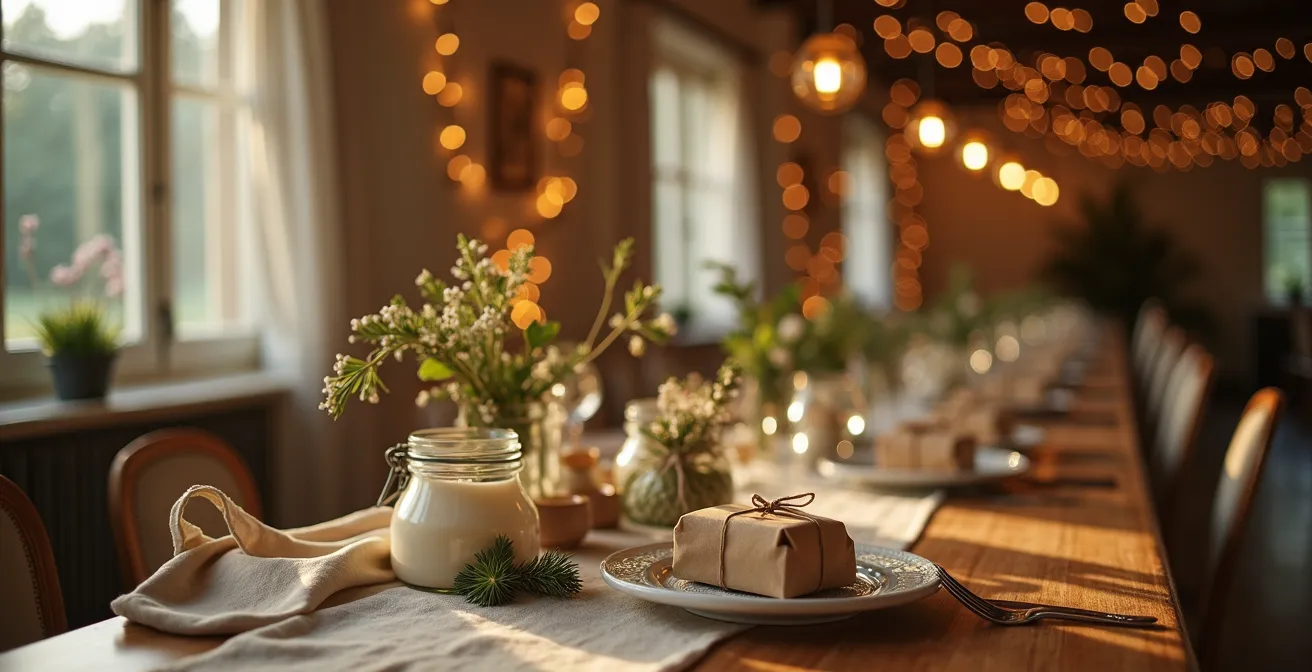
The most successful wedding favors are not branded mementos for you, but practical acts of service for your guests.
- Personalized trinkets with initials or dates are the most likely to be discarded, creating unnecessary waste and expense.
- Gifts that solve an immediate guest need—like a late-night snack, a bottle of water, or a pre-paid taxi—have the highest perceived value.
- True personalization is about choosing a gift based on your guests’ comfort and enjoyment, not branding an object with your identity.
Recommendation: Prioritize guest-centric utility. Opt for high-quality consumables, genuinely useful items, or meaningful experiences that enhance the event rather than creating clutter.
Every newlywed couple has seen it: the lonely box in the corner the day after the wedding, filled with dozens of carefully chosen, lovingly packaged favors that were left behind on the tables. It’s a frustrating sight, especially when you consider that a 2024 study found that couples spent an average of $460 on these gifts. The conventional wisdom for decades has been to give guests a small token of appreciation, a memento of your special day. This has led to an endless parade of monogrammed keychains, tiny photo frames, and themed bottle openers.
While the intention is pure gratitude, the execution is often fundamentally flawed. Most traditional favors are designed from the couple’s perspective, meant to be a reminder of *their* day. But what if we shift the perspective? What if the most effective and appreciated “thank you” isn’t a physical object to remember you by, but a thoughtful gesture that serves the guest in that very moment? This is the principle of guest-centric utility—a pragmatic, sustainable approach that focuses on providing genuine value rather than a branded souvenir.
This shift in mindset not only dramatically reduces waste but also ensures your budget is spent on something your guests will genuinely appreciate. It’s about moving away from the question, “What can they take home?” and toward the question, “How can we make their experience even better?” This guide will deconstruct why so many favors fail and provide a practical framework for choosing gifts that are memorable for all the right reasons.
For those who prefer a visual spark of inspiration, the following video showcases a creative and beautiful favor idea. While this article focuses on the strategy behind the choice, this offers a glimpse into how elegance and thoughtfulness can be combined.
To help you navigate this new approach, this article is structured to tackle the most common pain points and questions couples face. We will explore why certain favors succeed while others fail, how to cater to your guests’ real needs, and how to execute these ideas with style and grace.
Summary: Rethinking the Wedding Favor From the Ground Up
- Why Edible Favors Have a 90% Take-Home Rate vs. 20% for Trinkets?
- Water, Snacks, or Maps: What Do Out-of-Town Guests Actually Need?
- Why Putting Your Initials on Favors Guarantees They Will Be Trashed?
- How to Style Favors So They Double as Table Decor?
- Charity Donation vs. Physical Gift: How to communicate It Without Looking Cheap?
- Stationary Grazing Tables or Passed Hors d’Oeuvres: Which Serves Guests Faster?
- Where to Source Authentic Driftwood Ethically for Large Structures?
- How to Select Bridal Party Gifts That Won’t End Up in a Goodwill Bin?
Why Edible Favors Have a 90% Take-Home Rate vs. 20% for Trinkets?
The overwhelming success of edible favors isn’t about taste alone; it’s about pure, unadulterated utility. An edible item solves an immediate, primal need: hunger or thirst. Unlike a decorative object that requires a person to find a place for it in their home, a consumable gift asks for nothing but to be enjoyed. It is an ephemeral gift, designed to be used and disappear, leaving behind only a pleasant memory instead of physical clutter. This makes it an inherently sustainable and guest-friendly choice.
Discussions on wedding forums consistently confirm this. One guest on WeddingWire praised a couple who offered take-out boxes for the dessert bar, noting it was the most practical favor they’d ever received. It addresses a common guest desire—to enjoy a late-night snack back at the hotel. This highlights a key principle: the more immediate the problem your favor solves, the more successful it will be. A bottle of water at the end of a long night of dancing is infinitely more valuable in that moment than a personalized candle.
However, “edible” is not a magic bullet. Success depends on context and quality. Some couples report that even brand-name candies are left behind. The most effective edible favors are those that feel like a thoughtful upgrade or a solution to a specific moment. Here are some categories that consistently perform well:
- Late-night snacks: Hot pretzels, sliders, or even simple bottles of water handed out as guests leave are almost universally appreciated.
- Gourmet pantry items: Small bottles of high-quality olive oil, local honey, or maple syrup appeal to food enthusiasts and have a longer shelf life.
- Coffee and tea packets: A practical and comforting “morning-after” gift that guests will actually use.
- DIY treat kits: S’mores or hot cocoa bomb kits are interactive and create an experience rather than just being a passive item.
- Artisanal chocolates and candies: When chosen for quality and unique flavor, these remain a classic crowd-pleaser.
By focusing on consumption rather than collection, you are giving your guests a moment of enjoyment without burdening them with an object they feel obligated to keep. It’s a gesture of pure hospitality.
Water, Snacks, or Maps: What Do Out-of-Town Guests Actually Need?
For guests who have traveled to celebrate with you, the concept of guest-centric utility is even more critical. They are in an unfamiliar environment and often have small, practical needs that go unaddressed by traditional welcome bags. A bag filled with decorative trinkets is a burden to pack for the flight home. A bag filled with solutions to their immediate problems is an act of profound hospitality. The goal is to transform the welcome gift from a souvenir into a mobile concierge kit.
Think like a traveler. What are the common pain points? Forgetting a toiletry, needing a quick snack before the ceremony, navigating an unfamiliar town, or recovering the morning after. Your welcome gift is a prime opportunity to solve these problems. Instead of a decorative fan, provide travel-sized sunscreen for an outdoor ceremony. Instead of generic candy, offer a local coffee packet and some electrolytes for the next morning. This approach demonstrates a deep level of care that guests will remember far more than a branded tote bag.
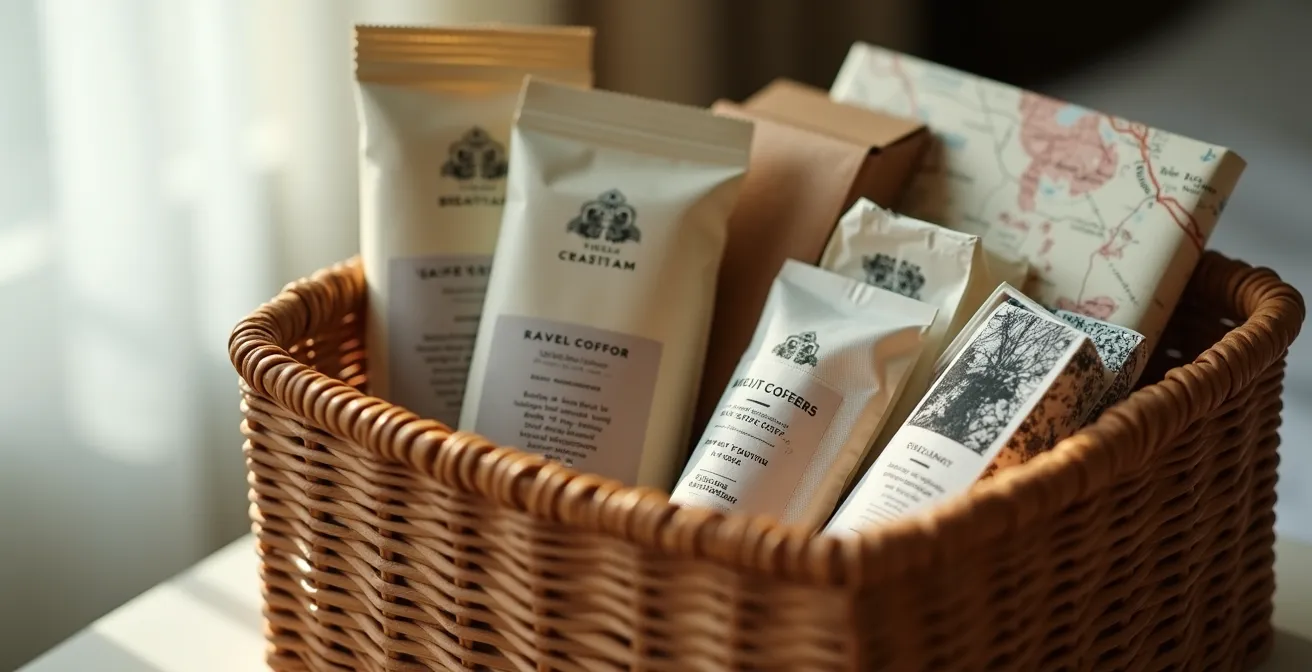
A thoughtfully arranged welcome basket serves as a warm embrace after a long journey. The following table breaks down how to pivot from traditional, often wasteful gifts to genuinely helpful alternatives that address the real needs of your out-of-town guests.
| Guest Need | Traditional Gift | Problem-Solving Alternative | Cost Range |
|---|---|---|---|
| Sun Protection | Decorative fan | Mini sunscreen bottles | $1-2 per item |
| Morning Recovery | Welcome candy | Coffee/tea packets + electrolytes | $2-3 per set |
| Local Navigation | Printed itinerary | QR code with custom Google Map | $0.50 per card |
| Transportation | None typically | Prepaid Uber/Lyft voucher | $10-15 per guest |
Ultimately, the best welcome gift says, “We’re so glad you’re here, and we’ve thought about how to make your stay as comfortable as possible.” It is a gift of service, not stuff.
Why Putting Your Initials on Favors Guarantees They Will Be Trashed?
It’s a natural impulse to want to put a personal stamp on your wedding, but this desire leads to what can be called the Personalization Paradox. A study from The Knot reveals that while 62% of couples consider personalization a top priority, wedding forums are a graveyard of stories about those very items—coasters, glasses, and keychains bearing the couple’s names and wedding date—being left on tables. The paradox is this: the more you personalize a non-consumable item to *you*, the less useful and desirable it becomes to anyone else.
No one, not even your closest friends, wants to use a wine stopper or a picture frame with someone else’s initials on it. It instantly renders the object unusable in their own home, dooming it to a drawer or, more likely, the trash. This is the single biggest source of waste in the world of wedding favors. As one wedding planning expert succinctly puts it, you should apply the “Goodwill bin” test before making a purchase.
Before you order it, imagine seeing this item in a Goodwill bin. Does it make sense? If not, it’s likely a bad favor.
– Wedding Planning Expert, Kennedy Blue Wedding Guest Favors Guide
The solution is not to abandon personalization, but to redefine it. True personalization is not about branding; it’s about thoughtfulness. Instead of stamping your identity onto the object itself, personalize the packaging. A beautiful, high-quality, unbranded gift—like a small candle with a universal scent or a nice deck of playing cards—can be made special with a custom tag, ribbon, or box that includes your names and date. The packaging can be easily removed, leaving the guest with a genuinely useful item they will be happy to keep. This strategy honors your desire for a personal touch while respecting your guests’ homes and reducing waste.
By personalizing the experience and the presentation rather than the product, you give a gift that is both a reflection of your day and a welcome addition to your guests’ lives.
How to Style Favors So They Double as Table Decor?
A brilliant strategy for creating a sustainable and impactful wedding is to choose favors that serve a dual purpose. By integrating your favors into the event’s decor, you achieve several goals at once: you enhance your tablescapes, eliminate the clutter of a separate favor table, and give an item that already has a function within the celebration. This approach is both economically and aesthetically efficient, ensuring every element of your wedding is working hard for you.
The key is to think of the favor not as a handout, but as an interactive element of the environment. Instead of being an afterthought, it becomes a part of the guest’s initial experience upon entering the reception space. This requires choosing items that are visually appealing and can be elegantly displayed. For example, small potted succulents or herbs can serve as place cards, with guests’ names on small stakes. They add a touch of green to the table and are a living gift that guests can nurture at home.
Here are several strategies for making your favors a functional part of your decor:
- Interactive Escort Cards: Beyond succulents, consider luggage tags with table assignments for a travel-themed wedding, or beautifully calligraphed agate slices that guests can take as keepsakes.
- Favor Station Design: If you prefer a dedicated display, make it a stunning visual moment near the exit. An artfully arranged wall of donuts or a “tree” of coffee bags can serve as a final, memorable decor piece.
- Edible Centerpieces: Arrange tiered displays of macarons, artisanal bread, or fruit tarts as centerpieces that guests are invited to deconstruct and take home at the end of the night.
- Color Integration: Choose favors that tie into your wedding’s color palette. Small bottles of limoncello can add a vibrant pop of yellow, while boxes of lavender shortbread can bring in soft purple hues.
- Dual-Purpose Items: For an outdoor or summer wedding, use decorated fans or high-quality sunglasses as part of the ceremony program. Guests will use them immediately and be happy to take them home.
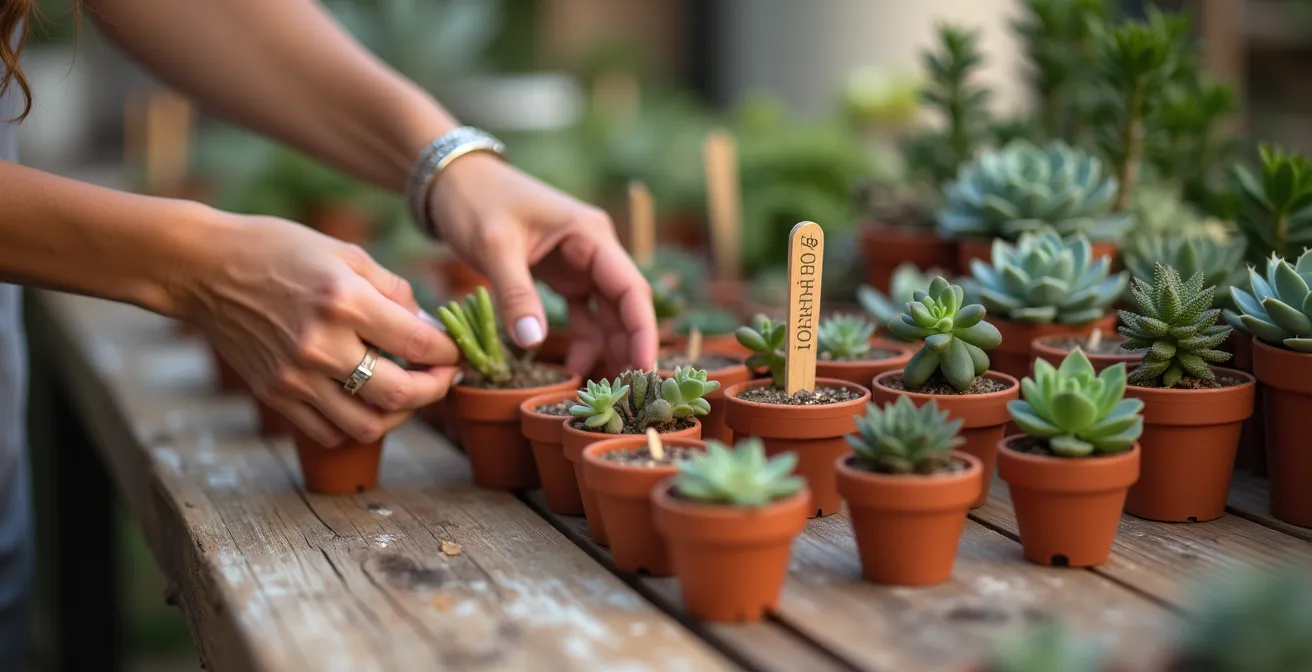
When your favor is part of the atmosphere, it feels less like an obligation and more like a beautiful, integrated part of the celebration you’ve invited your guests to share.
Charity Donation vs. Physical Gift: How to communicate It Without Looking Cheap?
Making a charitable donation in lieu of physical favors is a growing trend, perfectly aligned with a sustainable and minimalist ethos. It’s an opportunity to use your wedding budget to support a cause you believe in. However, the execution requires finesse. While many guests appreciate the sentiment, experts warn of mixed reactions, with some feeling that the gesture can seem impersonal or that the couple is imposing their own values. The key to success is in the communication and presentation, ensuring the act feels like a shared contribution, not a cost-saving measure.
To avoid the perception of being “cheap,” the gesture must be presented with sincerity and transparency. A simple, elegant card at each place setting is the most common method. This card should briefly explain why the chosen charity is meaningful to you and what impact the donation will have. The focus should be on the story and the positive outcome, inviting guests to feel part of a collective good deed. It’s not just “we donated”; it’s “in honor of you, our guests, we have made a donation to help…”
To make the donation feel more tangible and engaging, consider a hybrid approach. The most successful strategies bridge the gap between the abstract nature of a donation and the satisfying feeling of receiving something. The following table, adapted from event planning best practices, outlines effective methods to present your charitable giving.
This comparative analysis from wedding etiquette experts at Willow & Oak Events provides a clear guide on how to navigate this choice.
| Presentation Method | Guest Perception | Etiquette Rating | Implementation Tips |
|---|---|---|---|
| Simple donation card at each place | Can seem impersonal | Acceptable | Include charity story and impact details |
| Donation + small token (pin, seed packet) | More tangible and memorable | Preferred | Choose tokens related to the cause |
| Guest choice voting station | Interactive and engaging | Excellent | Provide 3 charity options with tokens to vote |
| Micro-favor + donation card | Best of both worlds | Highly recommended | Small chocolate with ‘A sweet treat for you, help for others’ tag |
When handled with thoughtfulness and transparency, a charitable donation can be one of the most meaningful favors of all, turning your celebration into a force for good.
Stationary Grazing Tables or Passed Hors d’Oeuvres: Which Serves Guests Faster?
While not a traditional “favor,” the way you serve food is one of the most significant gifts you can give your guests: the gift of comfort, convenience, and enjoyment. The choice between a stationary grazing table and passed hors d’oeuvres during cocktail hour directly impacts the guest experience, and making the right decision is an act of hospitality. The question of speed is central, but it’s linked to flow, social dynamics, and even food waste.
Passed hors d’oeuvres embody the concept of service. Servers bring the food directly to guests, eliminating the need for them to move or queue. This is ideal for a crowded space or a more formal atmosphere where you want guests to focus on conversation. However, speed can be an issue. If staffing is inadequate, some guests may be missed, while others are repeatedly approached. It can lead to pockets of “hangry” guests who haven’t seen a server in twenty minutes.
Stationary grazing tables, on the other hand, offer choice and abundance. They act as a social hub, encouraging guests to gather and mingle. A well-designed table is a stunning piece of decor in itself. The main drawback is the potential for a long queue, especially at the beginning of cocktail hour. This can create a bottleneck and detract from the relaxed atmosphere you’re trying to cultivate. From a sustainability perspective, grazing tables can also lead to more food waste if not managed carefully, as large quantities of food are put out at once.
Ultimately, considering the flow of your guests and ensuring easy access to food and drink is a powerful, non-physical gift. It demonstrates a deep consideration for their comfort and is a cornerstone of a well-hosted event.
Where to Source Authentic Driftwood Ethically for Large Structures?
The choice of decor materials speaks volumes about a couple’s values. Opting for natural, sustainable elements over mass-produced plastic items is a powerful statement. Driftwood, with its organic shapes and coastal charm, is a popular choice for arches, centerpieces, and other large structures. However, its appeal is tied to its natural origin, which makes ethical sourcing a paramount concern. Presenting a beautiful structure built from illegally or irresponsibly harvested wood undermines the very aesthetic it aims to achieve.
Ethical sourcing for driftwood is more complex than simply picking up wood from a beach. Here are the key considerations for your sustainability-focused plan:
- Legality: Many public lands, including national parks, state beaches, and protected coastlines, have strict regulations against removing any natural materials, including driftwood. Doing so can result in fines and damages the ecosystem. Always check the rules of the specific location.
- Ecological Impact: Driftwood is not just debris; it’s a vital part of the coastal ecosystem. It provides habitat for birds, insects, and marine life, and it helps prevent beach erosion. Large-scale removal can disrupt this delicate balance.
- Sourcing Alternatives: The most ethical way to acquire driftwood for a large project is to purchase it from reputable suppliers. These sellers often source their wood from private lands, reservoirs, or areas where removal is permitted or even encouraged for safety reasons. They may also sell “man-made” driftwood, which is wood that has been commercially and sustainably treated to achieve the desired weathered look.
When talking to florists or rental companies, specifically ask about their sourcing policies. A truly sustainable vendor will be transparent about where their materials come from. Choosing vendors who prioritize ethical practices is another way to imbue your wedding with shared values that eco-conscious guests will notice and appreciate.
In the end, the beauty of your decor is magnified when it is in harmony with nature, not taken at its expense. This conscious choice is a gift to the environment and a reflection of your own principles.
Key Takeaways
- Prioritize guest-centric utility: The best favors solve an immediate need (hunger, comfort, convenience) rather than acting as a branded memento.
- Redefine personalization: Avoid putting initials on items. Instead, personalize removable packaging to give a high-quality, unbranded gift that guests will actually use.
- Embrace consumables and experiences: Edible treats, useful items that are consumed, or gifted experiences provide the highest value and leave the least waste.
How to Select Bridal Party Gifts That Won’t End Up in a Goodwill Bin?
The principles of guest-centric utility and thoughtful personalization apply with even greater force to the gifts you give your bridal party. These are your closest friends and family, and a generic, monogrammed flask or robe simply doesn’t honor the depth of that relationship or the significant investment of time and money they’ve made. The goal is to give a gift that says, “I see you, I know you, and I appreciate you as an individual.”
The most meaningful and sustainable approach is to gift experiences or services. These create memories without creating clutter and can be tailored to each person’s unique tastes. Instead of another object, you are giving them the gift of time, relaxation, or enjoyment. This is the ultimate expression of gratitude and is a far more impactful use of your budget.
Instead of their initials on a generic item, personalization means choosing a gift based on their unique, individual hobbies and needs
– Wedding Planning Specialists, The Knot DIY Wedding Favors Guide
Consider these experience-based gifts that provide genuine value:
- Pay for professional hair and makeup on the wedding day.
- Cover hotel accommodation costs for out-of-town party members.
- Gift spa day vouchers for post-wedding relaxation.
- Provide restaurant gift certificates to their favorite dining spots.
- Offer concert or show tickets for future enjoyment.
- Subscribe them to masterclasses aligned with their hobbies (cooking, writing, music).
- Arrange for professional car detailing services—a practical luxury many wouldn’t buy for themselves.
If you do want to give a physical item, make it something of high quality that aligns with their specific interests—a premium set of headphones for the music lover, a high-end yoga mat for the fitness enthusiast, or a beautiful leather-bound journal for the writer. The item should be unbranded with your wedding details, chosen for them and them alone.
Before you add any favor or gift to your cart, apply the “Goodwill bin” test. Ask if it serves your loved one or if it simply serves to commemorate your day. The most sustainable, cherished, and genuinely appreciative choice is always the one rooted in generosity and utility.