
Every wedding venue arrives with its own personality—some charming, others challenging. A historic ballroom might offer architectural grandeur but feel cold without the right touches. An industrial warehouse provides a blank canvas yet demands intentional design to feel romantic. The difference between a space that merely hosts your celebration and one that actively enhances it lies entirely in how you approach venue decor.
Understanding venue transformation goes far beyond selecting pretty centerpieces or hanging string lights. It requires a strategic approach to spatial design, illumination, texture, and focal points. This comprehensive resource explores the fundamental elements that professional designers use to completely reshape environments—from masking architectural flaws to creating emotional atmosphere through light, establishing intimacy with fabric, and framing ceremonial moments that guests will remember for years.
The most dramatic venue transformations happen when couples move beyond surface decoration and consider the architecture itself as something they can alter. Structural decor encompasses everything from ceiling installations to room dividers, allowing you to fundamentally change how guests perceive and move through a space.
Human beings instinctively respond to spatial proportions. A room with soaring ceilings can feel majestic but also cavernous and impersonal. Conversely, low ceilings create intimacy but may feel oppressive without proper design intervention. Understanding these psychological responses allows you to work with—or against—a venue’s natural characteristics. For instance, hanging installations at varying heights in a tall space draws the eye upward in stages rather than emphasizing the vast emptiness above. This layered approach makes guests feel embraced by design rather than dwarfed by volume.
Most venues have elements you’d prefer guests ignore: utility boxes, outdated light fixtures, unattractive walls, or awkward architectural features. Rather than accepting these limitations, structural decor provides solutions. Freestanding screens, decorative panels, or strategic greenery walls can completely hide problematic areas while adding visual interest.
Equally important is the concept of zoning—creating distinct areas within open spaces. A large reception hall becomes more intimate when you establish separate zones for dining, dancing, and lounge areas. This can be accomplished through furniture arrangement, floor-level changes, or overhead structures like canopy frames that visually define boundaries without erecting walls.
When planning structural installations, you’ll face a fundamental decision: rent existing pieces or commission custom builds. Rental companies offer established inventory—arbors, archways, decorative columns, and pergolas—that arrive ready to install. This approach provides cost predictability and reduces risk. Custom builds, however, allow perfect alignment with your vision and can address unique venue challenges that standard rentals cannot solve. Consider custom work when your venue has unusual dimensions, when you need pieces to fit specific architectural features, or when your aesthetic vision requires truly original elements.
If structural elements define space, lighting defines emotion. The strategic use of illumination represents perhaps the most powerful tool in venue transformation, capable of hiding flaws, creating romance, and shifting energy throughout your celebration.
Not all light is created equal. Color temperature, measured in Kelvins, dramatically affects atmosphere. Warm light (2700-3000K) mimics candlelight and sunset, creating romantic, intimate feelings. Cool light (5000K+) reads as energetic and modern but can feel sterile in wedding contexts. Most successful wedding lighting employs warm tones during dinner, potentially shifting slightly cooler as dancing begins to maintain energy. Understanding this principle prevents the common mistake of overly bright, cool-toned lighting that makes guests feel like they’re in a conference center rather than a celebration.
General ambient lighting fills a room, but pin-spotting creates magic. These focused beams highlight specific elements—centerpieces, the cake table, floral installations—making them appear to glow from within. The technique draws the eye to your carefully chosen design elements while allowing other areas to recede into gentle shadow. This creates visual hierarchy and prevents the flat, evenly lit appearance that reads as institutional rather than designed.
Candlelight remains unmatched for creating warmth and romance, its flickering quality engaging human attention in ways that static light cannot. However, relying solely on candles creates practical challenges: insufficient illumination for dining, potential safety concerns, and unpredictability in outdoor settings. The most effective approach combines both: electric lighting provides your foundational illumination and structural highlights, while candles add layers of warmth and visual interest at eye level where guests most notice them.
One of the most common amateur mistakes involves too much light. When every corner glows brightly and no shadows exist, spaces feel exposed and guests become self-conscious. Darkness is not your enemy—it creates depth, mystery, and intimacy. Professional designers often remove or dim existing venue lighting before adding their own, working from darkness upward rather than trying to selectively darken an over-lit space. Remember that your goal is not maximum visibility but rather intentional atmosphere.
High-end textiles possess an almost magical ability to soften industrial spaces, hide architectural flaws, and inject romance into sterile environments. Draping represents one of the most versatile tools in venue transformation, though it requires understanding of both aesthetic and practical considerations.
Fabric choice dramatically impacts both appearance and budget. Voile and chiffon offer ethereal, romantic qualities with light-filtering properties that create soft, dreamy effects. Polyester alternatives provide similar looks at lower costs but may appear less refined up close. Velvet and heavier materials create luxury and work beautifully for dramatic backdrops but require substantial rigging due to weight. Satin catches light beautifully but shows every wrinkle. Your selection should balance visual goals, budget constraints, and practical installation requirements.
Draping orientation changes the visual effect entirely. Vertical draping—fabric hung from ceiling to floor—elongates spaces and draws the eye upward, making rooms feel taller and more elegant. This approach works beautifully for pipe-and-drape wall transformations or creating soft room dividers. Horizontal or swag draping creates movement and romance, particularly effective for ceiling treatments that lower visual height in overly tall spaces. The technique you choose should respond directly to your venue’s proportions and the atmosphere you’re creating.
Beautiful draping requires proper installation infrastructure. Venues may offer existing rigging points, or you may need to bring portable pipe-and-drape systems. Understanding weight loads, securing methods, and structural requirements prevents dangerous installations or last-minute failures. Equally critical: fire safety compliance. Many venues and jurisdictions require flame-retardant or inherently fire-resistant fabrics, particularly for ceiling installations. Confirm these requirements early—fire marshal inspections that halt setup hours before your event create catastrophic stress.
Single-color draping provides clean elegance, but layering multiple fabric colors creates dimensional richness. This might mean an ivory base layer with blush overlay, or strategic placement of deeper tones to create visual anchors within lighter schemes. The technique adds sophistication and allows you to incorporate multiple wedding colors without overwhelming the space. When layering, ensure sufficient contrast between shades—colors too similar simply look muddy rather than intentionally layered.
Modern technology now allows couples to literally paint walls with light, transforming static venues into dynamic environments that shift throughout the celebration. Projection mapping and uplighting create effects that would be impossible through traditional decor alone.
Projection mapping uses specialized software to fit projected images onto three-dimensional surfaces—walls, ceilings, even draped fabric—creating effects from subtle texture enhancement to dramatic animated displays. You might project a delicate pattern onto plain walls during dinner, shift to your monogram during toasts, then transition to energetic visuals as dancing begins. The technology allows a single venue to feel like multiple spaces throughout your event.
Projection quality depends heavily on placement. Projectors positioned too close create distortion; too far reduces brightness and detail. Surface texture matters enormously—smooth walls accept projections beautifully, while heavily textured surfaces fragment images. When working with draping, tight, wrinkle-free fabric yields the best results. Consider sight lines carefully: projectors require clear paths to their target surfaces, and guests or decor elements crossing these paths create distracting shadows.
Static projections display unchanging images or patterns—elegant but potentially monotonous over hours. Dynamic programming allows projections to evolve: gentle animations during dinner, synchronized light shows during key moments, responsive visuals that react to music during dancing. While dynamic elements create excitement, restraint remains important. Constantly moving, changing projections become distracting and can read as chaotic rather than sophisticated.
Uplighting—LED fixtures that wash walls with color—offers tremendous transformative potential but also the greatest risk of tacky execution. The classic mistake: choosing saturated, primary colors (particularly purple and hot pink) that make spaces feel like nightclubs rather than wedding receptions. Professional designers typically use warm ambers, soft blushes, or subtle lavenders at lower intensities. The goal is gentle color washing that enhances architecture rather than overwhelming it. When in doubt, choose warmer tones at lower brightness—you can always increase intensity, but overly saturated colors immediately cheapen the aesthetic.
Insufficient lighting fixtures create uneven coverage with dark spots between lit areas. As a general guideline, plan one uplight for every 8-10 feet of wall you want to illuminate, adjusting based on ceiling height and desired intensity. For projection, one quality projector typically covers 12-15 feet of wall effectively. Rather than spreading fixtures too thin, consider focusing on key architectural features—highlighting beautiful elements while letting less attractive areas recede into gentle shadow often works better than attempting to light everything equally.
The ceremony represents your event’s most photographed and emotionally significant moment, making its spatial design critically important. Proper ceremony structuring frames the couple, guides guest attention, and creates a sacred feeling even in secular spaces.
Every ceremony needs a clear visual anchor—the spot where vows occur must feel intentional and special. This might be an elaborate floral arch, a simple fabric backdrop, a natural feature like a garden view, or architectural elements like a fireplace or window. Whatever you choose, it should provide sufficient visual interest for photographs while not overwhelming the couple. The framing effect matters enormously: structures that create a “window” around the couple (arbors, arches, draped frames) naturally draw focus and create beautiful photographic compositions.
Canopy design affects both aesthetics and practicality. Open structures (four posts with minimal overhead covering) provide definition without blocking guest views or creating shadow. They work beautifully for outdoor ceremonies where you want sky visible, or indoor settings with architectural ceilings worth showcasing. Closed or heavily draped canopies create intimacy and work well when overhead views are unattractive (exposed rafters, commercial ceilings) or when you need weather protection. Consider photography angles—heavily draped tops can create shadowing on faces during daytime ceremonies.
Structure height requires careful calibration. Too low, and your ceremony backdrop fails to register in photographs, particularly if you have tall partners or are working with risers. Too high, and the structure appears disconnected from the couple, floating above rather than framing them. A practical guideline: the top of your ceremony structure should be approximately 18-24 inches above the taller partner’s head when standing. This creates visual connection while providing adequate frame proportion.
Beautiful ceremony structures become disasters when they topple mid-vows. Outdoor installations require particular attention to anchoring—wind can catch fabric or tall structures unexpectedly. Ground stakes work for soft surfaces; weighted bases become essential on hard surfaces like patios or decks. For indoor ceremonies, ensure your structure doesn’t damage floors (protective pads under bases) and remains stable if brushed by guests or wedding party members. Also consider aisle runner practicality: while visually appealing, runners create tripping hazards on uneven surfaces and often bunch or shift during the processional. Assess whether they genuinely enhance your ceremony or simply create logistical complications.
Florals and ceremony structures should work as integrated design elements rather than competing focal points. Your choices: make the structure simple and let extraordinary florals shine, create an architecturally dramatic structure with minimal floral accent, or balance both at moderate levels. Avoid the common mistake of designing an elaborate structure and then feeling obligated to cover every surface with flowers—this creates visual clutter and unnecessary expense. Strategic floral placement at key points (base corners, top center, or asymmetrical clustering) often reads as more sophisticated than complete coverage.
Venue decor represents far more than aesthetic preference—it fundamentally shapes how your celebration feels and how guests experience your event. By understanding these core elements—spatial transformation through structure, atmospheric control through lighting, textural softness through fabric, dynamic visual possibilities through projection, and intentional ceremony framing—you gain the tools to transform any space into an environment that truly reflects your vision. Each element offers depth worth exploring further as you develop your specific design plan.
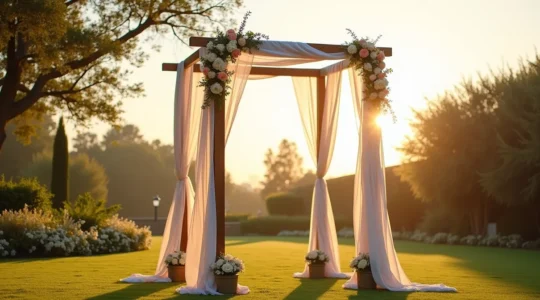
A chuppah’s beauty is not just in its flowers, but in the unseen engineering that guarantees its stability and frames the couple perfectly. Structural integrity, achieved through proper weighting, is non-negotiable for outdoor ceremonies to counteract environmental forces like wind….
Read more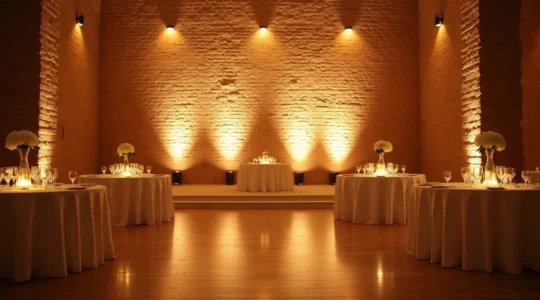
Strategic uplighting is not about painting walls with color; it’s an event technology used to architecturally sculpt a space and choreograph its emotional energy throughout the night. The biggest mistake is over-saturating colors, which makes a wedding look like a…
Read more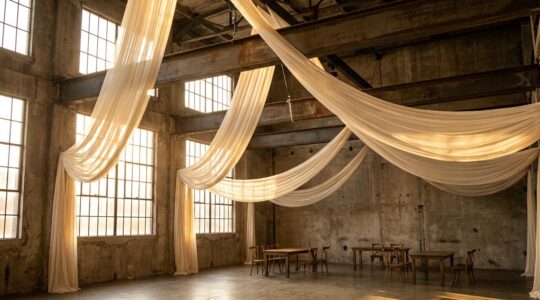
The key to a romantic industrial wedding isn’t just adding fabric; it’s selecting a textile whose physical properties—like silk chiffon’s—can fundamentally alter light and space. Silk’s unique fiber structure creates a soft, multi-dimensional luminosity that polyester cannot replicate, avoiding harsh…
Read more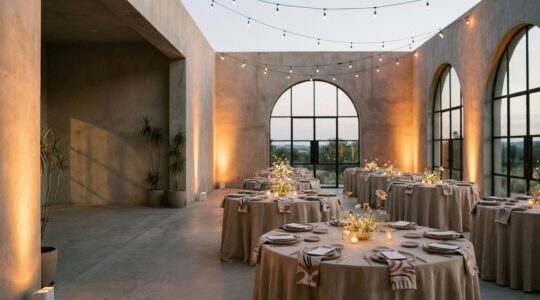
In summary: Prioritize warm, high-CRI lighting (2700K-3000K) to ensure flattering skin tones in photos and hide imperfections. Use precise accent lighting, like pin-spotting, to draw attention to key elements like centerpieces and cake. Employ strategic uplighting to “paint” over unattractive…
Read more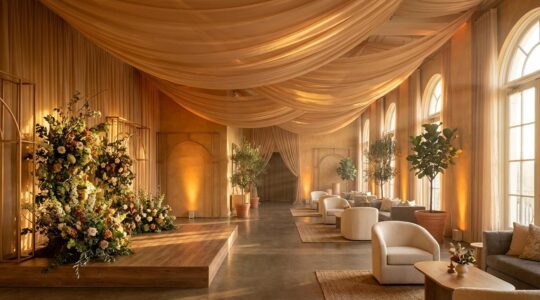
Transforming a generic ballroom is not about hiding flaws, but about architecturally reshaping the space with light and structure to manipulate perception. Light can be used to sculpt walls and create “virtual wallpaper,” completely changing a room’s texture and feel…
Read more