
The wedding table is far more than a place to serve dinner. It’s a stage for connection, a canvas for aesthetic expression, and a functional workspace that must accommodate everything from formal service to spontaneous toasts. Every decision—from the width of the table to the thickness of a glass rim—ripples outward, affecting guest interaction, photography, logistics, and the overall atmosphere. Yet many couples approach table design as a purely decorative challenge, overlooking the technical and psychological dimensions that separate a beautiful tablescape from a truly exceptional dining experience.
This comprehensive resource explores the foundational principles of wedding table design and tableware selection. We’ll examine how ergonomic considerations influence guest behavior, why material choices affect both aesthetics and acoustics, and how seemingly minor details like glassware weight or napkin placement create cascading practical consequences. Whether you’re planning an intimate dinner or a grand banquet, understanding these interconnected elements will help you create tables that are as functional as they are photogenic.
The most beautifully decorated table fails if guests can’t comfortably interact with one another. Guest experience should drive every design decision, from furniture dimensions to decorative placement. The psychology of dining spaces reveals that certain configurations naturally encourage lingering and conversation, while others create subtle barriers to connection.
Table width determines conversational dynamics more than any other single factor. A standard 30-inch width allows guests seated opposite each other to converse comfortably without shouting, while anything exceeding 36 inches begins to create psychological distance. Narrow farmhouse tables measuring 28 inches foster intimacy but limit centerpiece options and plate spacing. Consider this practical test: can two guests comfortably pass a bread basket across the table while maintaining eye contact? If not, the width may be undermining your goal of creating connection.
The often-repeated advice to keep centerpieces below eye level oversimplifies a nuanced challenge. Seated guests have sightlines approximately 40 inches from the table surface, meaning arrangements should either stay below 14 inches or elevate dramatically above 24 inches on tall stands. The danger zone between these heights creates visual obstruction that forces guests to lean awkwardly or avoid eye contact altogether. “Volume without height” techniques—using low, lush arrangements that spread horizontally rather than vertically—offer maximum visual impact while preserving conversation flow.
Chair design affects everything from table access to ambient noise levels. High-backed upholstered chairs create acoustic dampening and a sense of enclosure, ideal for rowdy receptions in echoey venues. Lightweight chiavari chairs facilitate easy movement for servers and dancing guests but offer no sound absorption. The “straddling issue” with certain cross-based chairs causes awkward seating positions that leave guests uncomfortable throughout multi-hour receptions. Always test how chairs fit under your specific table—a beautiful chair that doesn’t nest properly wastes valuable space and creates tripping hazards.
Centerpieces anchor the visual identity of your tablescape, but they also present technical challenges related to construction, proportion, and guest interaction. Understanding the mechanics behind successful arrangements helps you communicate effectively with florists and make informed decisions about rental items versus purchases.
The vessel you choose determines both aesthetic style and practical construction possibilities. Metallic vessels—particularly in brass, copper, or silver finishes—instantly anchor a vintage or luxe aesthetic, but they require careful finish matching across rental inventory. Compote-style vessels elevate arrangements to create the coveted “floating” effect, but they demand specific floral mechanics including chicken wire or foam to secure stems at odd angles. Asymmetrical arrangements in shallow vessels feel organic and modern but need heavier blooms positioned strategically to prevent tipping.
Creating visual impact without obstructing sightlines requires strategic bloom selection and placement. Choose flowers with large, photogenic faces for low arrangements where guests will see them in close-up detail—garden roses, dahlias, and peonies photograph beautifully at close range, while filler flowers like baby’s breath can appear sparse and unimpressive. For height variation on long tables, alternate between low lush clusters and elevated single stems in bud vases rather than committing to uniform centerpiece heights, which can feel institutional.
Candles add irreplaceable warmth and movement, but poorly planned candle placement creates the “clutter mistake”—tables so crowded with votives, tapers, and vessels that there’s no room for serving dishes or personal items. Limit yourself to one candle style per table, and always account for wax drip prevention with proper holders. Outdoor settings require wind protection through hurricane vessels or strategic placement, as constantly relighting candles disrupts service flow and guest experience.
The configuration of your tables affects traffic patterns, serving efficiency, and the social dynamics of your reception. Long tables, rounds, and mixed layouts each present distinct advantages and challenges that extend well beyond aesthetics.
Long harvest-style tables create dramatic visual impact and encourage the convivial energy of communal dining, but they require careful planning to avoid practical pitfalls. Space efficiency calculations should account for 24 inches of linear space per guest minimum—30 inches if you’re serving family-style with shared platters. The “serving logistics” challenge intensifies with tables exceeding 12 guests: will servers bring individual plates, or will dishes be passed? Both approaches require adequate server access lanes of at least 48 inches between table edges.
Garland runners—whether floral, greenery, or mixed—create seamless visual flow down long tables but present construction and transportation challenges. They also eliminate flexibility for serving dishes during dinner. Individual centerpieces clustered at intervals preserve functional table surface and can be relocated easily if serving platters need space. A hybrid approach uses low greenery runners punctuated by taller arrangements at strategic intervals, balancing visual continuity with practical flexibility.
Table leg placement determines whether guests have comfortable seating or spend the evening awkwardly straddling supports. Trestle tables with end-only supports maximize seating flexibility, while pedestal-base rounds can accommodate one additional guest but create cramped conditions. Always map out exact chair positions before finalizing guest counts—a table rated for eight might comfortably seat only six when you account for leg placement and adequate elbow room.
Textile decisions influence visual warmth, acoustic comfort, practical maintenance, and even food temperature. The trend toward bare wood tables represents a significant shift in wedding aesthetics, but it introduces trade-offs worth understanding before committing.
Velvet, thick linens, and textured weaves serve double duty: they create visual depth that photographs beautifully and provide acoustic dampening in reverberant spaces like barns or industrial venues. The heat retention factor matters for outdoor winter weddings, where linens literally keep tables warmer for guests. However, heavy fabrics show spills more dramatically and require professional cleaning, impacting rental return conditions. Lint and crumb management becomes crucial with certain textures—velvet attracts everything.
Exposed wood tables align with rustic-elegant aesthetics and eliminate linen rental costs, but they amplify ambient noise and provide no spill absorption. Every dropped fork, placed glass, or served plate creates noise that compounds across a room of bare tables. Color tone matching becomes critical when renting wood tables—variations in stain and wood species can look haphazard rather than intentional. If you choose bare wood, plan for individual placemats or chargers to create acoustic buffering and protect table surfaces from heat and moisture.
The question of napkin versus tablecloth layering affects both budget and aesthetics. Napkins placed directly on bare tables or chargers create clean, modern lines but offer no protection for rental tables. Tablecloths with contrasting napkins allow for color play and protect surfaces but increase textile costs. Consider alternative materials like leather or cork placemats that provide textural interest and surface protection without full tablecloths, particularly effective for rustic-meets-refined aesthetics.
Glassware might seem like a simple rental checkbox, but choices about style, weight, and quantity affect everything from budget to guest experience to the perceived formality of your event.
Thin, delicate glassware feels elegant in hand and maximizes light refraction for visual sparkle, but it breaks more easily and feels precarious to guests. Heavier, more substantial glasses project casual confidence and withstand outdoor settings better, though they lack the refined delicacy of fine crystal. Rim thickness affects the tasting experience—wine enthusiasts will notice the difference, even if they don’t consciously identify it. For most weddings, a middle-weight option balances elegance with durability.
Mixing glassware styles—vintage coupes for champagne, colored goblets for water, standard wine glasses—creates collected, personalized tablescapes but requires careful curation to avoid looking mismatched rather than intentional. Establish a unifying element such as all clear glass, all gold rims, or all vintage shapes. Be aware that rental breakage costs escalate with vintage or specialty glassware, and replacement charges can significantly exceed the rental fee itself.
Glassware arrives from rental companies clean but rarely polished to the standard you see in professional photography. Budget time for hand-polishing each glass with lint-free cloths before table setting if you want that showroom sparkle. Water spots become more visible on darker linens and in outdoor lighting, so consider this in your overall design. Some couples designate a polishing station as a day-before task for trusted helpers, transforming adequate into exceptional.
The recent trend toward matte flatware finishes creates stunning visual contrast against traditional china, but it introduces practical concerns about durability, maintenance, and compatibility with your menu.
Matte black, brushed gold, and satin-finish flatware photograph dramatically and signal contemporary design sensibility. However, scratch visibility becomes a significant concern—matte finishes show use marks that polished silver conceals. The “fingerprint issue” cuts both ways: matte finishes hide fingerprints better during setup but show food residue more obviously during use. Weight balance varies significantly between rental sources; lightweight matte flatware can feel cheap despite its trendy appearance.
Your flatware finish should complement your menu service style. Matte black flatware against white plates creates high-contrast modern drama ideal for plated service of contemporary cuisine. Traditional silver pairs better with vintage china and family-style service of classic menus. Consider steak knife compatibility if you’re serving beef—some matte flatware collections lack matching steak knives, forcing you to introduce a jarring element or change your menu.
If you’re planning plated service or incorporating haute cuisine elements, understanding the technical requirements of formal place settings prevents logistical failures and overcrowding.
Formal service traditionally includes water, white wine, and red wine glasses, plus champagne. That’s four glasses per person in approximately 16 inches of horizontal space. Add bread plates, multiple forks, and centerpieces, and you quickly run out of table real estate. Consider whether every glass is truly necessary—many couples eliminate the white wine glass or serve champagne in the red wine glass after toasts to reduce crowding.
Professional caterers need 48 to 60 inches between table edges for efficient plated service. Cramped lanes slow service, increase accident risk, and create bottlenecks during course changes. The placement of salt, pepper, and bread seems trivial until servers must navigate around them repeatedly. Individual salt cellars at each place setting solve the passing problem but increase rental costs and setup time. Shared sets between every four guests represent a practical compromise.
Rich sauces, red wine, and coffee create staining risks that vary by linen color and fabric. Light-colored linens show every drop but allow for bleaching and thorough cleaning. Dark linens hide wine stains better but show water spots and lint dramatically. Rental agreements typically charge replacement costs for unremovable stains, so factor this into your linen selection if you’re serving high-risk items. Some couples add protection by specifying an extra linen runner down the center where serving happens.
Lighting transforms table design from pretty to magical, but it requires technical planning to balance romantic atmosphere with functional illumination for dining and navigation.
Candles provide unmatched warmth and movement, but outdoor settings demand wind protection strategies beyond simple votives. Hurricane vessels, lanterns, or clustered groupings create microclimates where flames can survive breezes. Wax drip prevention requires proper holders and high-quality dripless candles—budget candles create cleanup nightmares and damage linens. Always have a lighting backup plan; if wind makes candles impossible, ensure your overhead or ambient lighting can compensate.
String light patterns affect both ambiance and practical visibility. Dense crisscrossing creates a canopy effect and provides adequate light for dining, while sparse decorative strands offer aesthetic impact but insufficient illumination. Dimmability is essential—lights perfect for cocktail hour feel harsh during dinner. Pole support aesthetics matter more than many realize; exposed poles and visible wiring undermine otherwise beautiful lighting installations. Work with your rental company or lighting designer to conceal infrastructure through draping, greenery wrapping, or strategic placement.
The ideal lighting layering combines three elements: ambient overhead lighting (natural or string lights) for general visibility, candles for warmth and table-level glow, and optional accent lighting for architectural features or focal points. Test your lighting at actual dining time—sunset lighting that’s perfect at 6 p.m. becomes inadequate by 8 p.m. For outdoor evening events, plan for significantly more illumination than you instinctively think necessary; what feels romantic when you’re standing might feel uncomfortably dark when guests are trying to cut their food.
Wedding table design succeeds when beauty and function reinforce rather than compete with each other. Every element discussed here—from table width to glass weight to lighting intensity—represents an opportunity to enhance your guests’ experience while creating the visual atmosphere you envision. As you move forward with your planning, prioritize the aspects that align most closely with your values: perhaps that’s creating intimate conversation spaces, showcasing spectacular florals, or honoring formal dining traditions. There’s no single correct approach, only the approach that’s correct for your celebration.
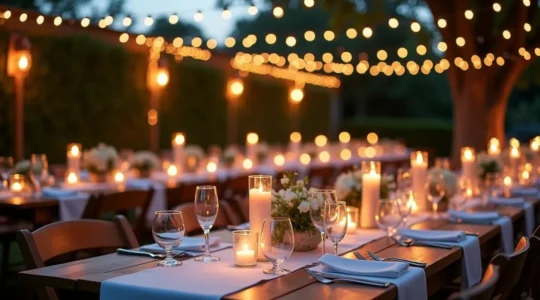
The secret to a magical outdoor dinner isn’t just adding lights; it’s about choreographing them. Bistro strings define the space and provide functional light, while candles create intimacy and atmosphere. Success depends on layering these sources and controlling their intensity…
Read more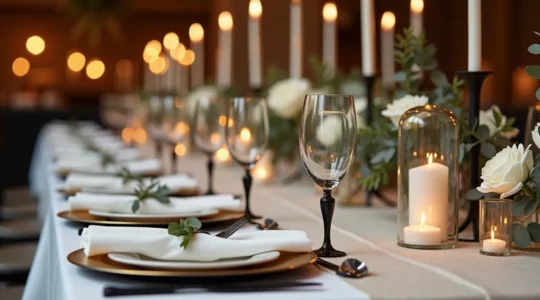
The aesthetic appeal of matte flatware is undeniable, but its durability is a matter of material science, not just style. The highest quality matte finishes are created through a process called PVD coating, which results in a surface far harder…
Read more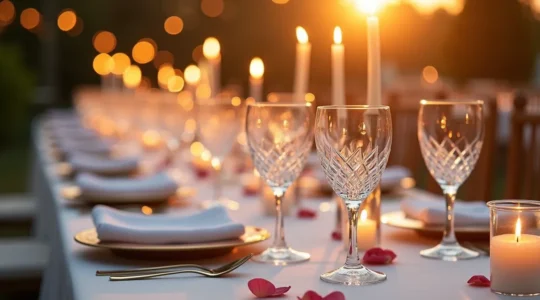
The “sparkle” of your wedding glassware is not a matter of opinion, but a result of physics and psychology; cut crystal is engineered to manipulate light in a way smooth glass cannot. The high lead content in crystal increases its…
Read more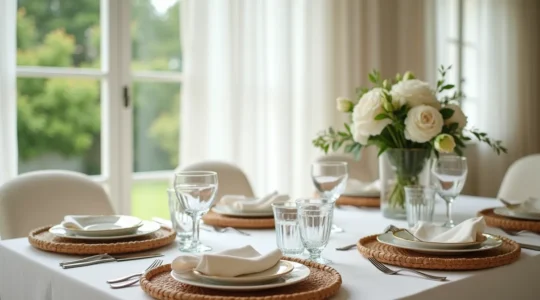
The belief that rattan chargers are exclusively for casual, boho events is a limiting myth. Their successful use in a formal setting depends entirely on mastering the high-low tension between organic texture and polished elegance. The stability and quality of…
Read more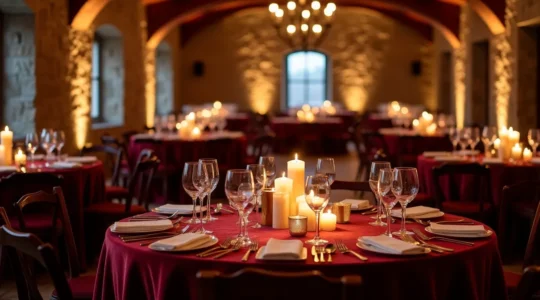
Velvet’s true value for a wedding is its power to solve the core atmospheric problems of large, impersonal venues: echo and a lack of warmth. It scientifically dampens sound by trapping soundwaves in its dense pile, reducing echo and making…
Read more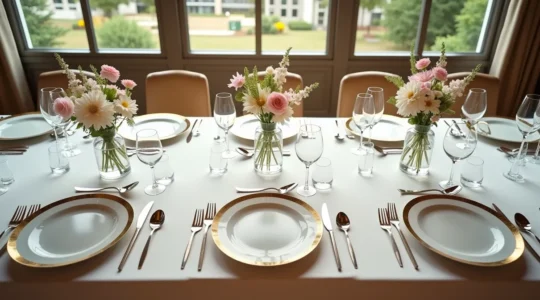
A beautiful tablescape that causes service delays is a luxury failure; true elegance is engineered for flawless execution. Effective tablescaping prioritizes “spatial economy” to ensure adequate room for glassware, staff movement, and serving platters. High-risk menu items demand preventive design…
Read more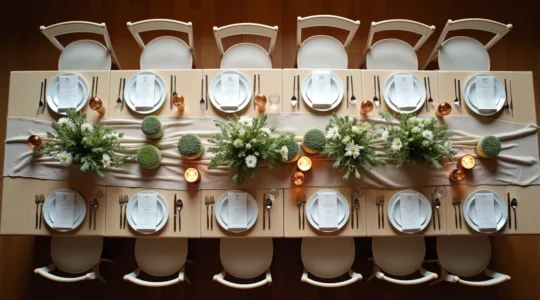
The secret to a lively wedding dinner isn’t awkward icebreaker games; it’s a tablescape designed with psychological precision to make conversation feel natural and inevitable. Physical space dictates social dynamics; table width and centerpiece height are either bridges or barriers…
Read more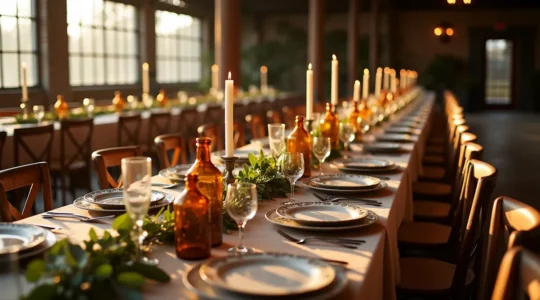
Creating a true communal feast is less about floral arrangements and more about spatial engineering. Banquet tables are more space-efficient but introduce logistical challenges like leg placement and platter service that must be solved. A successful design uses a “service…
Read more
To achieve a truly timeless, luxurious tablescape, one must treat the gold compote not merely as a vase, but as a foundational artifact. Success lies not in simply filling it with flowers, but in mastering its structural mechanics, understanding the…
Read more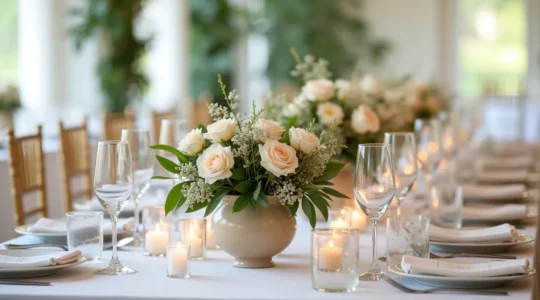
The most successful wedding tables aren’t just beautiful; they are intentionally designed for human connection. Choosing a low centerpiece is a strategic act of social architecture, removing physical barriers to encourage natural conversation. Mastering tabletop ergonomics—the science of spacing, scale,…
Read more