
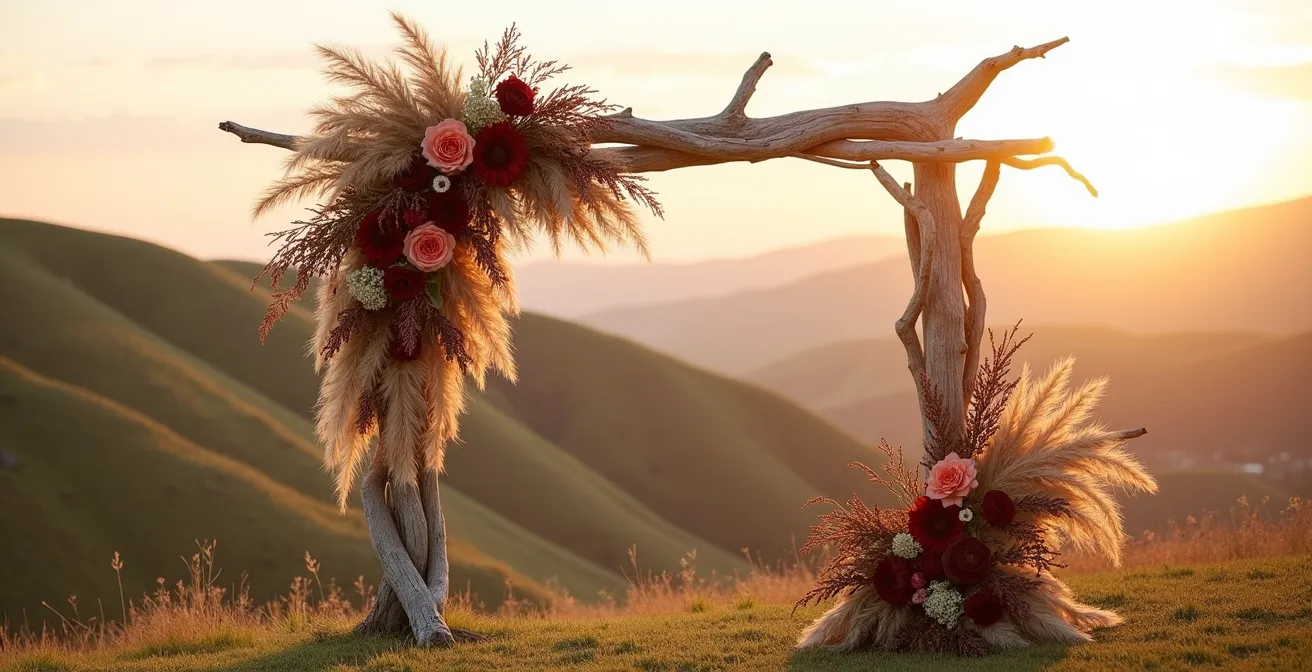
The secret to an expensive-looking boho wedding isn’t buying more pampas grass; it’s adopting a stylist’s mindset of intentional curation to balance raw textures with polished elegance.
- Boho fails when it becomes a random collection of “bohemian” items. It succeeds when each element, from macramé to rattan, is chosen with purpose.
- Sophistication comes from creating a “textural dialogue”—pairing rough elements like dried florals with smooth ones like fresh blooms or fine china.
Recommendation: Instead of just adding boho elements, focus on how they interact. Elevate one raw material (like rattan chargers) by surrounding it with refined details (like crystal glassware and metallic flatware).
There’s an undeniable magic to a bohemian wedding. It promises a day that feels personal, free-spirited, and deeply connected to nature. You’ve pinned the images: the flowing dresses, the sun-drenched ceremonies, the tablescapes that feel like an intimate feast. But a quiet fear often accompanies this dream—the fear that “boho” will slide into “messy,” that “eclectic” will look “cheap,” and that your carefully planned day will feel more like a haphazard craft fair than a sophisticated celebration. Many couples believe the solution is simply to layer more textures, add more pampas grass, or hang another piece of macramé.
This approach often backfires, creating visual noise rather than effortless charm. The truth is, a high-end bohemian aesthetic isn’t achieved through accumulation. It’s born from curation. The real key isn’t found in the items themselves, but in the deliberate, thoughtful balance between the raw and the refined, the wild and the composed. It’s about understanding the principles of design—visual weight, negative space, and textural contrast—and applying them to quintessentially boho elements.
This guide will move beyond the generic advice. We will deconstruct the core components of boho decor and reveal the specific strategies to elevate each one. We’ll explore why mixing dried and fresh florals is non-negotiable, how to use macramé as a modern art piece, and how to style natural materials like driftwood and rattan so they exude luxury. Forget just collecting boho items; you’re about to learn how to orchestrate them into a stunning, cohesive vision.
To guide you through this process, this article breaks down the essential strategies for achieving a curated, high-end bohemian look. Explore the sections below to master each element of your wedding design.
Summary: Your Guide to an Elevated Boho Wedding
- Why Mixing Dried and Fresh Elements Is Key to the Modern Boho Look?
- How to Incorporate Macramé Without It Looking Like a 1970s Craft Project?
- Persian Rug Aisles or Bare Earth: Which Suits a Boho Ceremony Best?
- The Flammability Risk of Large Pampas Grass Installations Indoors
- How to Balance an Asymmetrical Arch for Perfect Photos?
- How to Style a Driftwood Arbor for a Sophisticated Coastal Wedding?
- Modern vs. Bohemian: How to Merge Opposing Styles into “Mod-Boho”?
- How to Style Rattan Chargers Without Your Table Looking Too Casual?
Why Mixing Dried and Fresh Elements Is Key to the Modern Boho Look?
The soul of modern boho floral design lies in a concept I call “textural dialogue.” It’s the dynamic interplay between different forms, lifecycles, and textures. Relying solely on dried elements can leave your decor looking static and dated, while using only fresh flowers can feel too traditional. The magic happens when you combine them. Dried elements like pampas grass, bunny tails, and preserved eucalyptus offer incredible structure, longevity, and that quintessential earthy palette. They form the sophisticated, sculptural backbone of your arrangements.
Fresh blooms, in contrast, inject life, vibrant color, and delicate softness. They prevent the arrangements from feeling brittle or dusty. Imagine the velvety petals of a fresh rose nestled against the feathery plume of pampas grass, or the waxy sheen of a succulent beside the rustic texture of dried lavender. This contrast is what creates visual interest and a look that feels both timeless and alive. The trend is clear, with an analysis of 2024 wedding flower trends showing that dried flowers have made a huge comeback for their versatility. But their true power is unlocked when paired with the vitality of fresh counterparts.
To achieve this balance like a professional, think about layers and complexity. Florists often recommend starting with a foundation of understated, elegant dried elements like braided palm frond leaflets. From there, you can introduce more complex textures. Consider layering soft dried grasses with unexpected elements like unripe fruits for visual complexity. This combination of the living and the preserved is what elevates a simple boho arrangement into a curated work of art that feels both intentional and effortlessly natural, as seen in personal celebrations where couples handcraft decor and even grow their own flowers for a truly unique look.
How to Incorporate Macramé Without It Looking Like a 1970s Craft Project?
Macramé is a hallmark of boho style, but it walks a fine line between chic art piece and dated craft project. The key to keeping it on the sophisticated side of that line is threefold: modern patterns, strategic placement, and thoughtful integration. Forget the dense, heavy owl wall hangings of the 70s. Today’s high-end macramé focuses on clean lines, geometric shapes, and a sense of airiness created through negative space in the design.
When selecting a piece, look for patterns that feel contemporary. Many modern macramé artists use simple, repetitive knots, like the square knot, to create elegant backdrops that are romantic without being fussy. The beauty of these pieces is their versatility; a stunning arch backdrop can be repurposed as a piece of home decor, like boho curtains, giving it a life long after the wedding day.
Placement is everything. Instead of overwhelming an arch, consider using a single, beautifully crafted macramé wall hanging as a central focal point. Another elevated approach is to use free-flowing ribbons or delicate macramé strands that catch the wind during the ceremony, adding movement and a touch of whimsy. The goal is to complement the structure, not completely cover it. For a truly integrated look, weave in elements from your floral arrangements. Attaching a few statement blooms or some lush greenery that complements your bouquet directly onto the macramé ties the entire look together, making it feel like a single, cohesive installation rather than separate decorative items.
Persian Rug Aisles or Bare Earth: Which Suits a Boho Ceremony Best?
The ceremony aisle is the first grand statement of your wedding. For a boho theme, the choice often comes down to two distinct aesthetics: the curated luxury of Persian rugs or the raw authenticity of the bare earth. Neither is inherently better, but each sends a very different message and requires different considerations. A bare earth aisle, whether it’s a sandy beach, a forest floor, or a grassy meadow, creates an unparalleled connection to the location. It’s elemental, organic, and speaks to a wild, untamed version of love. However, it comes with practical challenges, like weather dependency and uneven terrain that can be treacherous for heels.
Layered rugs, on the other hand, transform any space into a defined, sacred ground. They bring color, pattern, and a sense of curated comfort. This approach is the hero of boho design, allowing you to create a stunning visual pathway and practical walking surface. You can layer multiple vintage Persian or kilim rugs to create a rich tapestry, instantly signaling a style that is both bohemian and luxurious. This works not just for the aisle, but also for creating cozy lounge areas with floor cushions or defining the space under a sweetheart table.
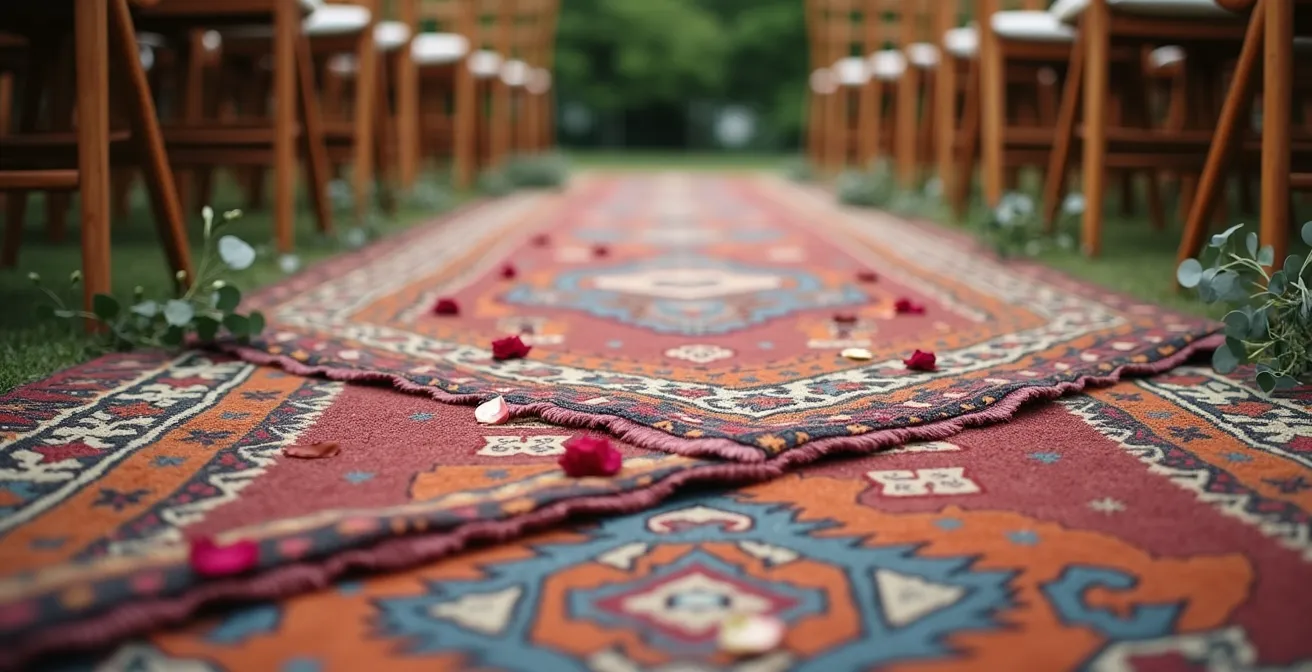
Ultimately, the choice depends on the specific story you want to tell. The table below breaks down the key differences to help you decide which path to take.
| Aspect | Persian Rugs | Bare Earth |
|---|---|---|
| Visual Impact | Creates defined sacred space with color and pattern | Natural, organic connection to location |
| Guest Comfort | Protects shoes, provides stable walking surface | Risk of heels sinking, uneven terrain |
| Style Message | Curated bohemian luxury | Raw, elemental authenticity |
| Practical Considerations | Layer variety of different rugs down the aisle for next-level boho décor | Weather-dependent, requires backup plan |
The Flammability Risk of Large Pampas Grass Installations Indoors
Pampas grass is the undisputed icon of modern boho decor. Its feathery plumes add incredible texture, volume, and drama to any setting. It’s no surprise that wedding photography experts note that creative uses of dried materials like pampas grass are a major trend. However, its beauty comes with a significant, often overlooked, risk: it is highly flammable. When planning large-scale indoor installations—such as hanging clouds, dramatic archways, or dense tablescapes—safety must be your primary concern. A room filled with dried grasses and candlelight is a beautiful but hazardous combination.
Many venues are now enforcing strict regulations or outright bans on dried grasses near open flames for this very reason. Before you fall in love with a pampas-heavy design, you must have a frank conversation with your venue coordinator about their specific rules. Ignoring this can lead to last-minute design heartbreak or, in the worst-case scenario, a genuine fire hazard. But fear not, you can still achieve that dreamy, wispy look safely by following a strict protocol.
The solution is not to abandon pampas grass, but to handle it with intelligence and care. This involves treating the grass itself to reduce shedding, and more importantly, controlling the environment around it. This checklist provides a clear, actionable safety plan for incorporating pampas grass indoors without compromising on style or safety.
Your Safety Checklist for Indoor Pampas Installations
- Treat the Plumes: Once your pampas grass is fluffed, give each stalk a light spritz of hairspray. This simple step helps seal the plumes and dramatically reduces shedding, minimizing flammable debris.
- Create a Safe Zone: Position all pampas grass installations a significant distance away from any potential heat sources. This includes candles, spotlights, heaters, and even kitchen doorways.
- Embrace Flameless Alternatives: Eliminate the risk entirely by using high-quality, battery-operated LED candles instead of real flames anywhere near your dried floral arrangements. Modern LEDs can mimic the warm flicker of a real candle beautifully.
- Ensure Clear Exits: Make sure that large installations, especially arches or hanging pieces, do not obstruct any fire exits, hallways, or emergency pathways.
- Consult with Professionals: Always discuss your plans with both your florist and your venue manager to ensure everyone is aligned on the safety measures and that you are in full compliance with local fire codes.
How to Balance an Asymmetrical Arch for Perfect Photos?
Asymmetrical arches are the epitome of effortless boho chic. They reject rigid symmetry in favor of organic, natural-feeling forms. However, creating an arch that looks artfully unbalanced—rather than just lopsided—is a true design challenge. The secret lies in understanding the principle of visual weight. This isn’t about the actual weight of the flowers, but how heavy they *appear* to the eye. Darker colors, larger blooms, and denser textures all carry more visual weight.
A common mistake is placing the main floral mass randomly. For perfect photographic composition, florists often use the rule of thirds, positioning the heaviest cluster of flowers at the 1/3 point of the arch, either horizontally or vertically. This creates a natural focal point that draws the eye without overwhelming the frame. A professional approach often uses large, feathery elements like pampas grass branches to create the foundational shape, then adds the rest of the flowers and greenery to build upon it. The ultimate goal is to make the arch look as if it has organically grown out of the ground.
Another powerful tool in your arsenal is negative space. Don’t feel the need to cover every inch of the arch. Leaving parts of the structure exposed allows the design to breathe and highlights the beauty of the arch itself. This intentional use of empty space is a hallmark of sophisticated design. By skillfully combining these techniques—placing your main focal point strategically, using color and texture to manage visual weight, and embracing negative space—you create an asymmetrical arch that is perfectly balanced for stunning, magazine-worthy photos.
How to Style a Driftwood Arbor for a Sophisticated Coastal Wedding?
A driftwood arbor is a dream for a coastal or beachside boho wedding. Its weathered, sculptural form provides a stunning natural frame for your ceremony. However, the temptation can be to over-decorate it, smothering its organic beauty. The key to a sophisticated look is restraint. Your goal should be to enhance the driftwood’s natural character, not to hide it. Think of yourself as a curator, not a decorator.
Start by studying the arbor’s shape. Identify its most interesting lines, curves, and textures. Your floral and fabric additions should follow and accentuate these natural contours. Instead of covering the entire structure, focus on creating one or two dramatic focal points. A single, cascading arrangement of flowers flowing from an upper corner or a cluster of blooms at the base can have far more impact than a fully wrapped arch. This minimalist approach keeps the focus on the beautiful, silvered wood.
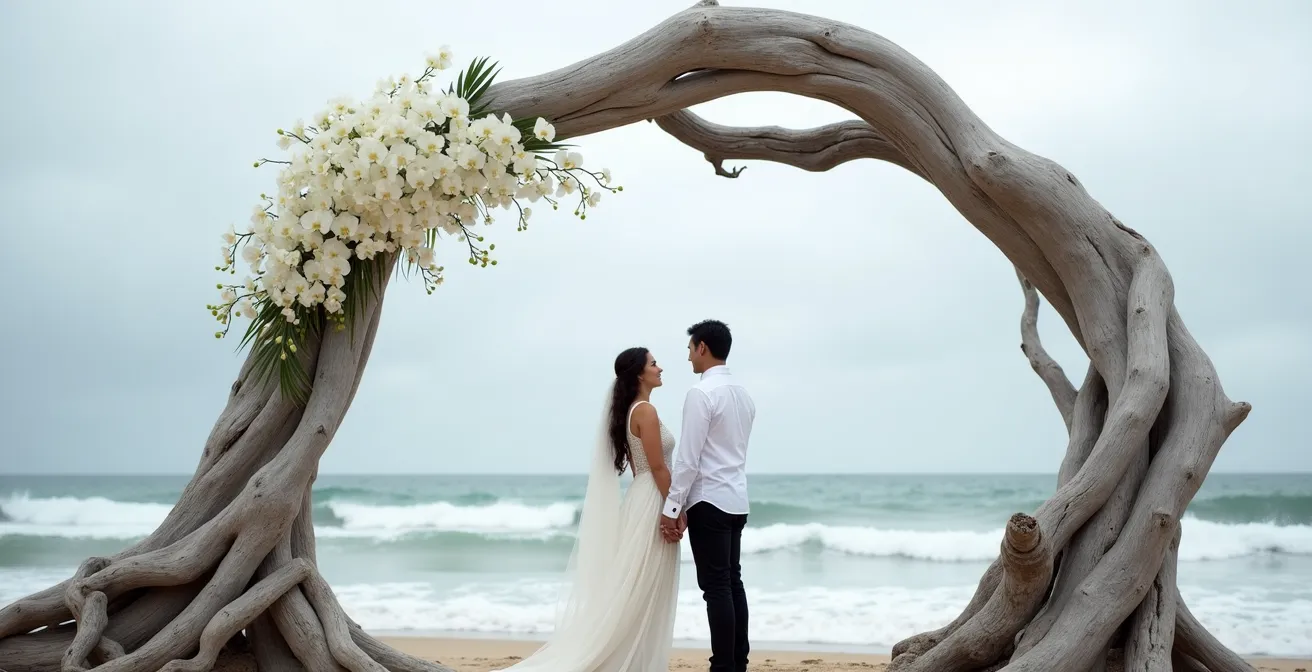
To add softness and elegance, incorporate flowing fabrics. A long, single piece of light silk or chiffon draped over a branch will catch the ocean breeze, adding beautiful movement and a touch of romance without adding bulk. The key is to let the fabric flow freely rather than tightly wrapping it. Whether you are using a simple driftwood altar, a more complex tipi-like structure, or a classic arch, the principle remains the same: let the natural beauty of the wood be the star of the show. Your decorations are the supporting cast, there to highlight its leading role.
Modern vs. Bohemian: How to Merge Opposing Styles into “Mod-Boho”?
The “Mod-Boho” aesthetic is the ultimate expression of curated style. It’s for the couple who loves the free-spirited, textured vibe of bohemian design but is also drawn to the clean lines, minimalism, and polish of modern aesthetics. Merging these two seemingly opposing styles can be challenging, but the result is a look that is uniquely personal, sophisticated, and completely of-the-moment. The trick is not to create a 50/50 split, but to use elements of one style to temper and elevate the other.
Think of it as a strategic fusion. You might take a modern, industrial frame—like a clean, geometric metal arch—and soften it with wild, free-flowing bohemian florals. Or, you could place a sleek, modern ghost chair in front of a richly textured macramé backdrop. This contrast is where the magic lies. The modern elements provide structure and prevent the boho details from feeling cluttered, while the bohemian touches add warmth, personality, and texture to the clean modern base.
This fusion extends to every aspect of the design, from florals to materials. For instance, sustainable, cloud-style floral installations are a perfect mod-boho element, combining a structured, modern shape with the organic feel of flowers. The table below illustrates how you can blend these two styles across different design elements to create a cohesive and sophisticated look.
| Design Element | Pure Modern | Pure Bohemian | Mod-Boho Fusion |
|---|---|---|---|
| Color Palette | Monochrome, minimal | Rich, eclectic mix | Temperate-climate flowers in youthful, fresh and modern palette |
| Texture | Smooth, polished | Layered, organic | Strategic contrast of smooth and textured |
| Installation Style | Geometric, structured | Free-flowing, wild | Cloud-style floral installations as sustainable marvels |
| Materials | Metal, glass, acrylic | Wood, fabric, natural fibers | Mix of industrial frames with organic elements |
Key Takeaways
- Curation Over Collection: A high-end look comes from deliberate choices, not just accumulating “boho” items. Every element must have a purpose.
- Master Textural Dialogue: The key to sophistication is contrasting textures. Pair raw, natural materials with polished, refined elements to create visual interest and depth.
- Balance is Intentional: Whether it’s an asymmetrical arch or a tablescape, balance is achieved through design principles like visual weight and negative space, not by accident.
How to Style Rattan Chargers Without Your Table Looking Too Casual?
Rattan chargers are a fantastic way to bring a natural, bohemian texture to your tablescape. As a type of palm, this material introduces neutral, eco-friendly fibers that can beautifully ground your decor. However, their inherently casual, beachy vibe can risk making your entire table setting feel more like a laid-back lunch than an elegant wedding reception. The secret to elevating rattan is to create a deliberate and striking contrast by pairing it with overtly luxurious and formal elements.
Think of the rattan charger as your earthy, textural base. Now, build upon it with layers of sophistication. This is where the concept of “textural dialogue” truly shines. Place fine bone china directly on the woven rattan. The contrast between the rustic, open weave of the charger and the smooth, delicate porcelain is immediately striking and intentional. Don’t stop there. Introduce another layer of refinement with your choice of cutlery and glassware. The warm gleam of gold or copper flatware against the neutral rattan adds a touch of metallic luxury, while sparkling crystal glassware provides a polished, light-catching element.
Finally, complete the look with high-quality textiles. As one expert in boho wedding decor tips suggests, a great table runner made of vintage or natural linen materials is a staple that ties the whole look together. Layering this with crisp, neatly folded linen napkins in a complementary neutral tone reinforces the feeling of quality and care. By surrounding the casual nature of rattan with undeniable markers of formality, you don’t erase its boho charm—you elevate it, creating a tablescape that is the perfect blend of relaxed and refined.
By applying this mindset of intentional curation—from the grand scale of your ceremony arch to the intimate details of your place settings—you can confidently design a bohemian wedding that is not only beautiful and personal but also undeniably sophisticated. Your wedding day will feel exactly as you dreamed: effortlessly chic, deeply authentic, and not a bit messy.