
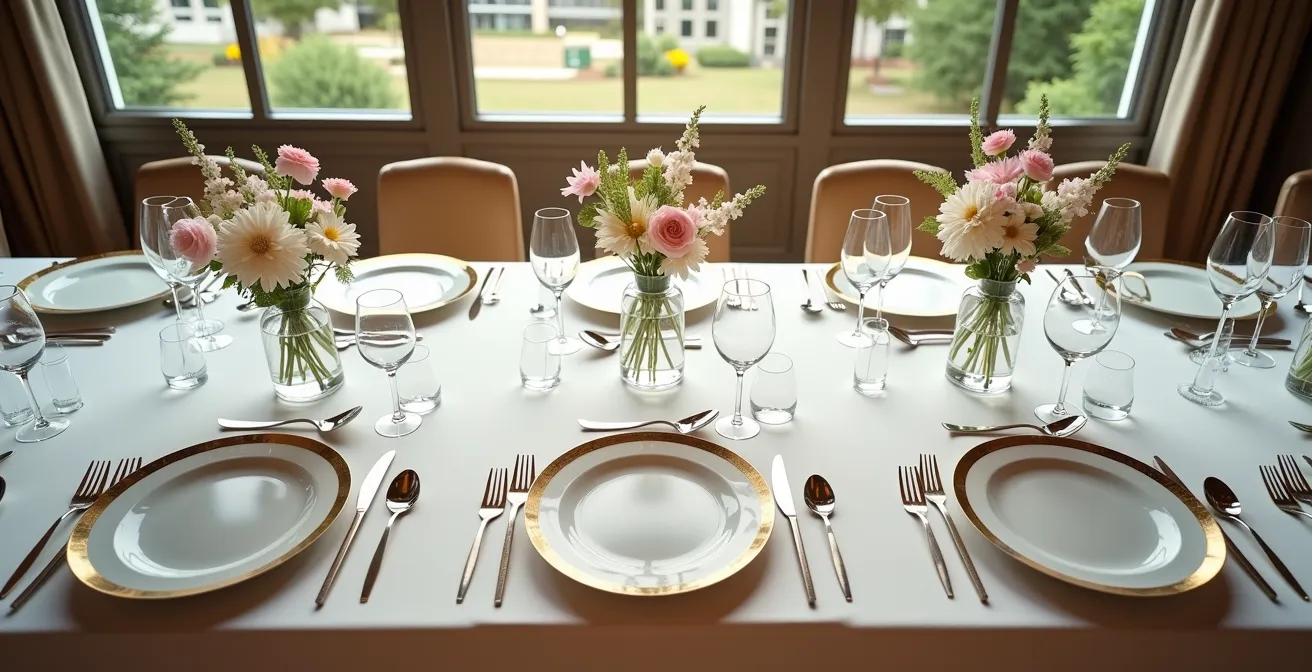
A beautiful tablescape that causes service delays is a luxury failure; true elegance is engineered for flawless execution.
- Effective tablescaping prioritizes “spatial economy” to ensure adequate room for glassware, staff movement, and serving platters.
- High-risk menu items demand preventive design choices and service protocols to protect expensive linens from irreversible stains.
- Every element, from centerpiece design to the type of salt cellar, must be evaluated for its impact on the overall “service choreography.”
Recommendation: Audit every decorative choice against the practical demands of your menu and service style to transform your tablescape from a static display into a high-functioning asset.
The vision is clear: tables laden with luxurious fabrics, towering floral arrangements, and the warm glow of candlelight. It’s an image pinned and saved a hundred times. Yet, for couples aspiring to a Michelin-star level of service, a critical question is often overlooked. Beyond the aesthetics, is your tablescape designed to function? The common advice focuses on color palettes, layering plates, and choosing beautiful flatware. These are the building blocks of design, but they are not the blueprint for a seamless fine dining experience.
The reality of a multi-course service introduces a set of technical challenges that can turn a beautiful setting into a logistical nightmare. Cluttered surfaces, inaccessible place settings, and a lack of clear pathways for staff can disrupt the flow, transforming elegance into awkwardness. The true secret to a luxury tablescape lies not in what is added, but in what is accommodated. The perspective must shift from that of a designer to that of a Maître d’. We must treat the table not as a static canvas, but as a dynamic workspace for both guest comfort and staff efficiency. This is the art of functional elegance.
This guide will deconstruct the tablescape from a service-oriented viewpoint. We will move beyond the visual and into the practical, examining the critical spatial and logistical decisions that ensure your tablescape not only looks exquisite but actively supports the flawless execution of a high-end dining service. We will analyze glassware arrangement, centerpiece strategy, service lane requirements, and even the subtle details that separate amateur settings from professional ones.
Summary: A Maître d’s Blueprint for a Service-Ready Wedding Tablescape
- How to Fit 4 Glasses per Guest Without the Table Feeling Crowded?
- Where to Place the Bread Plate When the Centerpiece Is Too Wide?
- The Menu Item That Will Ruin Your Expensive Silk Runners
- How to Leave “Wait Staff Lanes” Between Chairs for Seamless Service?
- Individual Cellars or Shared Shakers: What Is the Standard for Luxury Dining?
- When to Feed Your Vendors: The Etiquette That Ensures Peak Performance
- How to Leave Space for Platters on a Family-Style Banquet Table?
- Cut Crystal vs. Smooth Glass: Which Reflects Candlelight Better?
How to Fit 4 Glasses per Guest Without the Table Feeling Crowded?
The addition of multiple wine glasses and a water goblet is a hallmark of fine dining, but it is also the primary cause of tablescape clutter. The solution lies in geometry and discipline. The goal is to create an organized, accessible cluster of glassware that does not encroach on the guest’s personal space or the central decorative zone. The fundamental rule is to work within a defined area. To achieve this, remember that industry standards specify that each fine dining place setting requires 24 to 30 inches of table width. This is your total workspace, and the glassware must fit neatly within this allocation.
The most efficient and professionally recognized method is the triangular or diamond formation. This isn’t merely for aesthetics; it is a system of spatial economy. The water glass serves as the anchor, placed at the 12 o’clock position directly above the main dinner knife. From there, the wine glasses are built out to the right. The white wine glass, for the first course, is placed to the lower right of the water glass. The red wine glass is then placed above and between these two, forming a neat triangle. If a champagne flute is required for a toast, it is positioned behind this triangle, creating a diamond shape. This vertical arrangement uses height to its advantage, preventing a horizontal sprawl of glass.
Maintaining a minimum of one inch between each glass is a non-negotiable rule of service. This small gap is crucial for preventing a domino effect if a glass is accidentally tipped by a guest or server. For an even cleaner look, consider “progressive service.” The table is set with only the water goblet and the first course’s wine glass. Subsequent glasses are brought with their respective courses and cleared afterward. This advanced technique requires highly trained staff but guarantees the most uncluttered table possible, representing the pinnacle of service choreography.
Where to Place the Bread Plate When the Centerpiece Is Too Wide?
A wide, lush centerpiece or runner can create a stunning visual impact, but it often comes at the expense of a crucial piece of real estate: the space for the bread plate. When the traditional top-left position is occupied, a Maître d’ must employ alternative strategies to maintain both elegance and function. The most sophisticated solution is often to remove the problem entirely by adopting a different service style.
Case Study: The French Service Approach
At Apéritif Restaurant in Bali, Chef Nic Vanderbeeken, an expert with over two decades of Michelin-star experience, uses the “French Service” style. A server presents bread from an elegant basket, and guests are expected to place their piece directly on the rim of their charger plate or on their linen napkin. According to an explanation of their fine dining philosophy, this method eliminates the bread plate, saving approximately 7 inches of table width per guest. This reclaimed space allows for more elaborate and wider centerpieces without compromising the dining experience or creating clutter.
If eliminating the bread plate is not an option, the solution must come from the centerpiece design itself. Instead of a low, wide arrangement, a more intelligent approach is to create verticality. An “elevated” or “bridge” centerpiece utilizes a tall, slender stand to lift the main floral display several inches off the table.
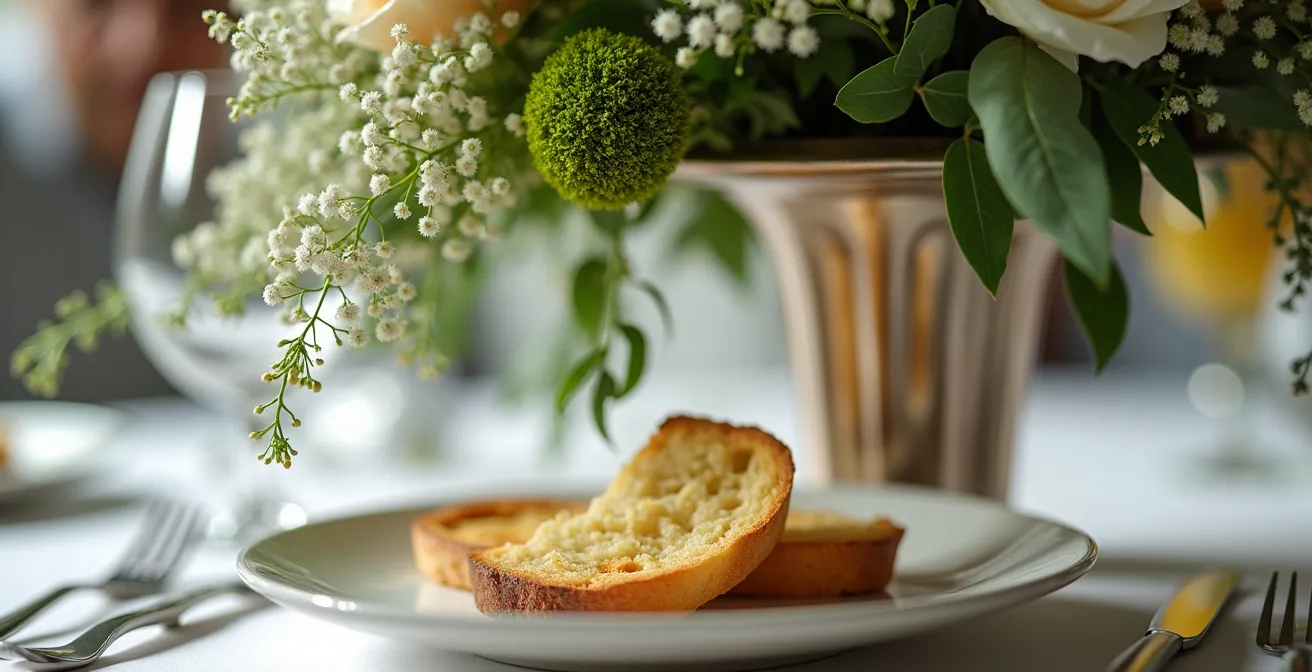
This architectural approach creates a protected, usable space underneath the arrangement. As seen in the image, this “tunnel” becomes the perfect, unobtrusive location for a bread plate. It keeps the table looking clean while ensuring all necessary components are present. This method of creating space through elevation is a cornerstone of functional tablescape design, proving that stunning visuals and practical service can coexist.
The Menu Item That Will Ruin Your Expensive Silk Runners
A luxurious silk or velvet runner is a significant investment in your tablescape’s aesthetic. However, its survival is entirely dependent on your menu choices. Certain foods and sauces are so notorious for staining that they pose a high risk to delicate fabrics. This is a classic example of where preventive design—making choices to avoid future problems—is paramount. The primary culprits are intensely pigmented or oil-based items that can permanently mar expensive linens.
Foods like beet purée, squid ink pasta, and anything with a balsamic glaze or saffron oil are considered high-risk. Red wine, of course, is the most common offender. Acknowledging these risks does not mean you must eliminate them from your menu. Instead, it requires a conversation with your caterer about service protocols. For instance, a balsamic glaze should be drizzled tableside by a server using a protective guard plate, rather than pre-plated in the kitchen where it can drip during transport. Dishes with heavy sauces or purées should be served in bowls or vessels with wide rims to contain any potential spills.
The following table provides a clear guide to the risk levels of common culprits and the service strategies required to mitigate them, based on information curated for fine dining service.
| Food/Sauce | Silk Risk Level | Velvet Risk Level | Linen Risk Level | Prevention Strategy |
|---|---|---|---|---|
| Red Wine | Extreme | Extreme | High | Use coasters, serve from right side |
| Balsamic Glaze | Extreme | High | Medium | Request tableside drizzle with guard plate |
| Beet Purée | Extreme | Extreme | High | Serve in contained vessels only |
| Saffron Oil | High | Extreme | Medium | Use under-plates for all courses |
| Squid Ink | Extreme | Extreme | High | Avoid entirely or use protective overlay |
An additional layer of defense comes from simple, yet often overlooked, service details. As luxury wedding planner Michelle Cousins advises, a simple instruction can prevent the majority of accidents.
For soup courses, always request service with a ‘service plate’ underneath the bowl until it’s placed, preventing drips during transport. This single protocol can prevent 90% of runner accidents.
– Michelle Cousins, Utah Bride & Groom – Luxury Wedding Planning Guide
By synchronizing your menu with your décor and implementing strict service protocols, you protect your investment and ensure the tablescape remains pristine throughout the event. This proactive approach is the essence of professional event management.
How to Leave “Wait Staff Lanes” Between Chairs for Seamless Service?
A flawlessly executed service is a carefully planned ballet, and the dance floor is the space between your tables and chairs. This “unseen workspace” is the most critical element for a Maître d’, yet it is the most frequently ignored aspect in event design. Without clearly defined wait staff lanes, servers are forced to squeeze, reach, and interrupt, shattering the illusion of effortless luxury. The design of these pathways is the foundation of the entire service choreography.
The first step is a frank discussion with your venue and rental company about table placement. Professional catering standards require clear routes for staff to move efficiently from the kitchen to the guests. This means establishing “major arteries”—main pathways for two-way traffic—that should be a generous 36 to 48 inches wide. “Single-server passages” between the backs of chairs or a chair and a wall can be narrower, but should never be less than 24 inches. It is also crucial to calculate the actual footprint of your chairs; a wide armchair requires significantly more space than a slender Chiavari chair, and this must be factored into your layout.
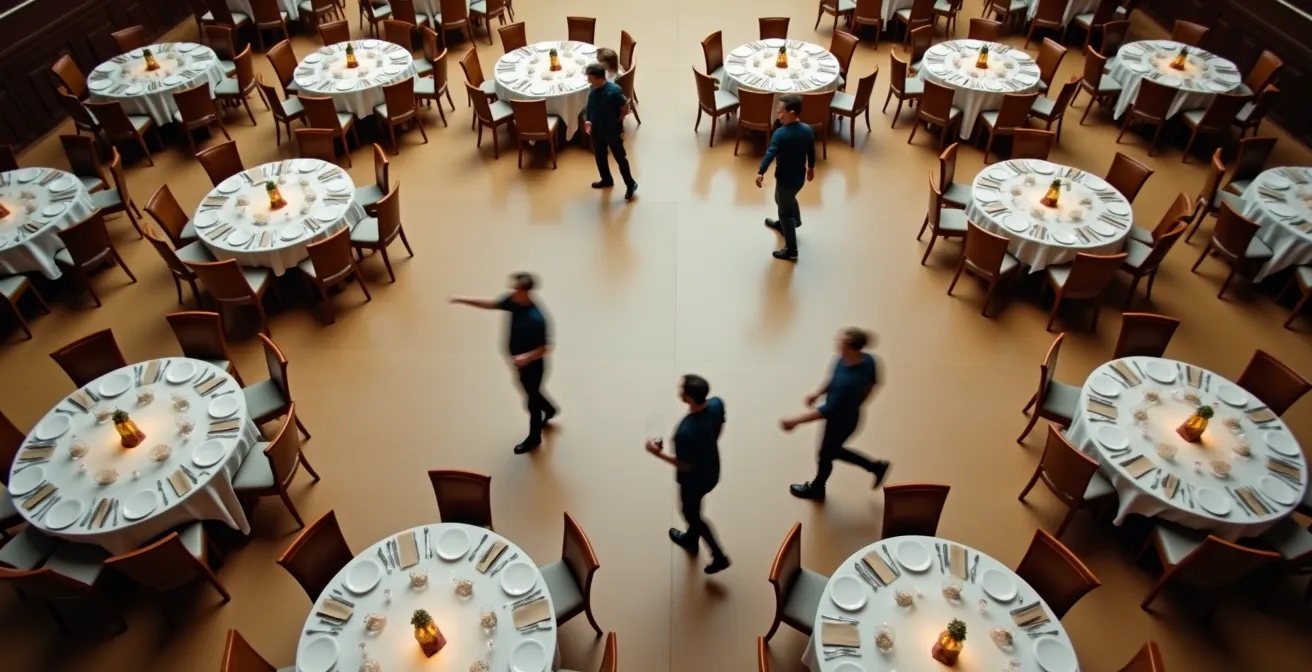
As the aerial view demonstrates, a proper floor plan creates a clear and logical grid for movement. The empty space is not wasted; it is the most functional element in the room. To ensure this plan is executed correctly on the day, your event planner must take charge with a systematic approach.
Action Plan: Mapping Your Service Lanes
- Map primary service routes from the kitchen to the main dining area on a floor plan before finalizing the table layout.
- Designate “bus stops,” which are 4×4 foot empty zones near table clusters, for servers to temporarily place large trays.
- Calculate the true chair footprint: add an extra 6 inches of depth for a Chiavari chair and up to 12 inches for a plush armchair when pulled out.
- Use subtle, removable floor tape during setup to mark the boundaries of service lanes for staff to reference.
- Create diagonal pathways when using round tables to maximize movement efficiency and avoid dead ends.
- Position beverage stations on the opposite side of the room from food service routes to prevent congestion and cross-traffic.
Individual Cellars or Shared Shakers: What Is the Standard for Luxury Dining?
The question of salt and pepper service may seem minor, but in the world of fine dining, it is a detail that speaks volumes about the establishment’s philosophy. The traditional shared salt cellar and pepper shaker, once a staple of every table, has been largely reconsidered. The decision now balances between hygiene, guest perception, and culinary integrity.
In recent years, hygiene has become a primary driver of change. Open, shared salt cellars are increasingly viewed as a potential point of cross-contamination. This concern has led to a significant shift in standards at high-end venues.
Case Study: The Post-Pandemic Shift to Individual Service
A 2024 survey of luxury hotels and restaurants revealed a dramatic evolution in seasoning service. The survey found that 78% of high-end establishments have moved away from traditional open salt cellars in favor of individual sealed grinders or small, personal cellars for each guest. This change was driven by both hygiene concerns and practical issues like humidity control. The Ritz-Carlton group, for example, reported that adopting individual mill sets not only addressed safety but also enhanced the guest experience, leading to a 12% increase in satisfaction scores related to table service metrics, as it was perceived as a more personalized touch.
However, at the highest echelons of haute cuisine, the debate takes on a different dimension. Here, the presence of any tableside seasoning can be seen as an affront to the chef’s expertise. The dish that leaves the kitchen is considered perfectly balanced and complete. To add salt or pepper is to imply the chef has failed. This purist philosophy leads to another, even more elevated, standard of service.
In haute cuisine, the perfectly seasoned dish requires no additional salt or pepper. We view table seasonings as an insult to the chef’s expertise. Instead, we offer a selection of finishing salts presented tableside by the server for specific courses only.
– Chef Nic Vanderbeeken, Apéritif Restaurant Fine Dining Philosophy
For a luxury wedding, the modern standard is clear: individual, single-use grinders or elegant personal cellars. This approach demonstrates a commitment to hygiene and personalized service. Shared shakers are no longer acceptable in a fine dining context.
When to Feed Your Vendors: The Etiquette That Ensures Peak Performance
While not a direct part of the tablescape, the proper treatment of your creative team is an essential component of the overall service choreography. Your photographer, band, planner, and other vendors are on their feet for 8-12 hours, and their performance is directly tied to their well-being. A hungry photographer may miss a key moment, and a tired band will lack energy. Scheduling vendor meals is not just a courtesy; it is a logistical necessity for ensuring peak performance throughout the event.
The cardinal rule of vendor meals is timing. They must be fed at the same time the guests are served their main course. This is the only significant downtime your vendors will have. If you wait until all guests have finished, your photographer will be needed for speeches, and the band will be preparing for the first dance. The meal must also be “hot and quick”—a nutritious meal that can be consumed in approximately 15 minutes in a designated area. This area should ideally be within earshot of the main room or equipped with an audio feed, so the planner and key personnel can monitor the event’s progress.
For a seamless process, communication and planning are key. The vendor meal count must be included in your final numbers given to the caterer. For teams that cannot all break at once, like the catering captains or planning staff, a “rolling dinner” schedule should be created to ensure everyone gets a chance to eat without leaving the event unattended. A designated staff member should be responsible for alerting vendors (especially the photographer and videographer) about five minutes before key moments like speeches or cake cutting are set to begin, giving them time to finish their meal and get into position.
Checklist: Vendor Meal Protocol for Optimal Event Flow
- Schedule all vendor meals to be served at the exact same time guests receive their main course.
- Confirm with the caterer that a “hot and quick” meal option is available that can be consumed in 15-20 minutes.
- Set up the vendor dining area within earshot of the main reception’s audio system so they can hear announcements.
- Create a “rolling dinner” schedule for essential staff like the wedding planner and catering captain who cannot leave their posts simultaneously.
- Assign a catering staff member to personally alert the photo and video teams 5 minutes before speeches or other key events are scheduled to begin.
- Include the final vendor meal count and any dietary restrictions in your final catering confirmation two weeks before the event.
How to Leave Space for Platters on a Family-Style Banquet Table?
Family-style service, with its large, communal platters, creates a warm and interactive atmosphere. However, it presents the single greatest challenge to tablescape design: where do the platters go? A table beautifully decorated with a continuous runner and dense florals leaves zero landing zones for food. This forces servers to hold heavy platters while guests serve themselves, or to ask guests to move candles and vases, disrupting the entire experience. A functional family-style tablescape must be designed with modular and flexible elements.
The traditional, solid centerpiece is the enemy of family-style service. The modern solution is to create a “deconstructed” or modular centerpiece. Instead of one large arrangement, the design uses a collection of 5-7 smaller, individual bud vases, votives, and small objects. This approach maintains a full, lush look while providing critical flexibility. When a platter arrives, a server can quickly and easily condense a few of these small vases to create a “landing zone” in under ten seconds. This allows the food to be placed on the table, freeing the server and allowing guests to dine at their own pace.
Case Study: Modular Centerpiece Design in Action
Event planner Michelle Cousins successfully implemented this modular approach at a large wedding. Instead of traditional runners that occupy a fixed footprint, she designed centerpieces composed of numerous individual bud vases. This system empowered servers to instantly create landing spaces for large serving platters as they arrived. According to reports on this method, the modular design not only maintained the aesthetic impact but also resulted in an estimated 40% faster main course service time and eliminated all space conflicts, proving the immense value of a flexible centerpiece strategy for family-style dining.
The service style itself also dictates space requirements. A “Pass & Remove” style, where platters are offered by servers and then taken away, requires no permanent space. However, a “Place & Leave” style, where platters remain on the table for the duration of the course, requires significant clearings. An 18 to 20-inch platter needs a dedicated zone, which may require the centerpiece to be compressed by as much as 50%. It is imperative to confirm the exact service style and platter sizes with your caterer before finalizing your floral and décor plan.
Key Takeaways
- Prioritize spatial economy: A minimum of 24-30 inches of table width per guest is a non-negotiable foundation for comfort and service.
- Service choreography dictates layout: Design clear “wait staff lanes” (36-48 inches for main routes) and choose a centerpiece strategy that matches your service style (e.g., modular for family-style).
- Preventive design avoids disaster: Select your menu and implement service protocols (like using under-plates for soup) to protect expensive linens and ensure a smooth, elegant execution.
Cut Crystal vs. Smooth Glass: Which Reflects Candlelight Better?
The final layer of a tablescape is the interplay of light. The choice of glassware is not just about its tactile quality but about how it manipulates and reflects the candlelight that brings warmth and romance to the room. The two primary options, faceted cut crystal and simple smooth glass, offer dramatically different optical effects, and the “better” choice depends on the desired atmosphere and, crucially, the photographic outcome.
Cut crystal, with its intricate facets, is designed to fracture light. When candlelight hits it, the glass acts like a prism, scattering dozens of small, sharp reflections across the table and creating a sparkling, dazzling effect. This can create a very busy, energetic, and glamorous ambiance. The light appears to dance on the table. For a maximalist or highly opulent design theme, the shimmering quality of cut crystal can be a perfect fit, adding another layer of texture and movement to the visual landscape.
Smooth glass, by contrast, does not fracture light; it reflects it. A candle’s flame will appear as a single, soft, and slightly distorted highlight on the curve of a smooth wine glass. This effect is much calmer, more serene, and produces a gentle, romantic glow rather than a brilliant sparkle. This clean reflection contributes to a more minimalist and modern aesthetic, where the focus is on the pure quality of the light itself rather than its fragmentation.
From a professional’s perspective, especially a photographer’s, the choice is often clear. The myriad reflections from cut crystal can be problematic for capturing clean, emotional images.
Cut crystal can create ‘busy’ bokeh and unwanted lens flare in photos, while smooth glass produces cleaner, more controlled highlights. For photography, I always recommend smooth glass with votive candles for that romantic glow without the visual chaos.
– Professional Wedding Photographer, Wedding Photography Lighting Guide
Therefore, while cut crystal offers a traditional sense of luxury, smooth glass often provides a more refined and photogenic result in a candlelit environment. The decision rests on whether the goal is to create dazzling sparkle for the eye or a clean, romantic glow for the camera.
To ensure your vision is executed flawlessly, the next step is to communicate these technical requirements to your wedding planner and caterer, transforming your tablescape design from a list of wants into a professional-grade service blueprint.