
Wedding flowers transcend mere decoration—they establish atmosphere, frame pivotal moments, and create emotional anchors that guests remember long after the celebration ends. Yet the journey from selecting blooms to executing cohesive arrangements involves far more complexity than many couples initially anticipate. Understanding the interplay between structural mechanics, seasonality, personal aesthetics, and practical logistics transforms florals from pretty additions into purposeful design elements that elevate your entire wedding vision.
This comprehensive resource walks you through the foundational principles that professional florists rely on, from choosing between monofloral simplicity and mixed compositions to engineering overhead installations that defy gravity. Whether you’re working with a designer or planning arrangements yourself, these insights will help you make informed decisions that balance visual impact, comfort, budget, and technical feasibility.
Before diving into specific arrangements, grasping core design principles ensures every floral choice supports rather than undermines your overall aesthetic. These fundamentals apply whether you’re planning minimalist centerpieces or elaborate installations.
The choice between monofloral arrangements (using a single flower variety) and mixed compositions shapes your wedding’s visual language. Monofloral designs project modern sophistication and color clarity—imagine fifty white peonies creating a cloud-like centerpiece that needs no explanation. They also simplify sourcing and often reduce costs when you select seasonal blooms.
Mixed arrangements, conversely, offer textural richness and depth. A combination of garden roses, ranunculus, eucalyptus, and astilbe creates visual layers that reward closer inspection. However, this approach demands careful curation to avoid chaotic results. The key lies in establishing a dominant flower (comprising 50-60% of the arrangement), a secondary bloom (30-40%), and accent elements (10-20%)—much like a well-composed photograph directs the eye through foreground, subject, and background.
Proportion mistakes telegraph amateur design faster than any other misstep. The classic guideline suggests centerpieces should measure one-third to one-half the table’s width, but context matters enormously. A 60-inch round table can accommodate a dramatic 24-inch centerpiece at a formal evening reception, while the same arrangement would overwhelm an intimate brunch setting where conversation flows across shorter distances.
Vertical scale requires equal attention. Low arrangements (under 14 inches) preserve sightlines for conversation, while tall designs (24-36 inches) create drama in rooms with high ceilings. The critical mistake occurs in the awkward middle zone (16-22 inches)—tall enough to obstruct views but too short to create genuine visual impact. When designing tall arrangements, ensure the base sits narrow enough that guests can easily see around it.
Beautiful arrangements require invisible engineering. Floral foam, chicken wire, and tape grids provide the armature that keeps stems exactly where you place them, but each method suits different applications. Floral foam excels for compact, symmetrical designs and maintains hydration, though environmental concerns have led many designers toward reusable alternatives.
Chicken wire balled inside a vessel creates flexible support for organic, garden-style arrangements where stems angle naturally. This approach works brilliantly for loose, romantic aesthetics but demands more skilled hand-placement. For delicate blooms like sweet peas or lily of the valley, wiring techniques reinforce fragile stems, allowing them to maintain position without drooping—though this labor-intensive process adds to design time and cost.
Flowers worn or carried interact with movement, body proportions, and fabric in ways that stationary arrangements never do. Successful personal florals balance visual impact with physical comfort throughout hours of wear.
A bouquet should harmonize with the wearer’s body shape and dress silhouette rather than compete for attention. Petite frames pair beautifully with compact, rounded bouquets (8-10 inches in diameter), while taller brides can carry cascading or arm-sheaf styles that emphasize vertical elegance. The dress silhouette guides style choices: structured ballgowns call for formal, rounded bouquets with clean edges, whereas fluid sheaths or bohemian lace complement loose, organic arrangements with trailing ribbons and varied stem lengths.
Color placement matters too. Holding flowers at waist level means they’ll appear in nearly every photograph directly beside the dress fabric. If your gown features ivory or champagne tones, stark white florals may create harsh contrast, while cream or blush varieties create seamless visual flow.
The romance of an oversized bouquet fades quickly when you’re holding three pounds of hydrated stems through a 30-minute ceremony and hour-long photo session. Professional designers typically aim for bouquets under two pounds, achieved by stripping excess foliage, using smaller blooms strategically, and limiting the number of heavy focal flowers like hydrangeas or large dahlias.
Boutonnieres and corsages introduce additional comfort considerations. A boutonniere pinned to lightweight linen or silk requires minimal weight—typically a single bloom with minimal greenery. Heavier constructions pull fabric, create visible distortion, and often require multiple pins that damage garments. Wrist corsages should sit snugly without constricting circulation, with elastic bands hidden beneath ribbon or floral coverage.
Not all flowers tolerate hours outside refrigeration equally. Boutonnieres face particular challenges since they’re pinned directly to fabric without water source. Hardy choices like roses, succulents, and carnations maintain appearance for 8-12 hours, while delicate options such as gardenias or anemones may wilt within two hours of room temperature exposure.
The stain risk receives insufficient attention until disaster strikes. Lilies produce pollen that leaves permanent orange stains on fabric when brushed against dresses or suit lapels—professional florists remove anthers before delivery, but this detail often gets overlooked in DIY scenarios. Similarly, flowers with high moisture content like orchids can leave water marks on silk, while certain roses with very full blooms shed petals that can stain when crushed. When selecting personal florals, discuss stain risks explicitly with your florist, particularly for high-contact items like boutonnieres and corsages.
Few decisions impact both your budget and design aesthetic as profoundly as seasonal alignment. Understanding bloom cycles and strategic repurposing can dramatically extend your floral impact per dollar invested.
Seasonal flowers arrive at your wedding in peak condition, require minimal intervention to look spectacular, and cost significantly less than imported alternatives. A June wedding featuring locally grown peonies, garden roses, and sweet William creates lush, romantic arrangements at a fraction of the cost of achieving the same look in January. Beyond economics, seasonal florals connect your celebration to place and moment—autumn dahlias and marigolds capture harvest richness, while spring tulips and ranunculus embody renewal.
This doesn’t mean abandoning your vision if you love a particular bloom. Rather, it suggests building your palette around seasonal anchors, then incorporating limited quantities of special flowers as focal accents. This strategy delivers visual impact while controlling costs.
Requesting peonies for a November wedding doesn’t just increase price—it often compromises quality. Out-of-season blooms typically travel from distant climates via multiple flights and transfers, experiencing temperature fluctuations and delays that shorten vase life. That peony that costs $3 per stem in May may run $12-15 in winter, arrive smaller, and last half as long.
The price multiplier varies by flower and season, but expecting 200-400% premiums for truly out-of-season requests provides realistic planning parameters. For couples committed to specific blooms regardless of timing, budget accordingly and work with experienced florists who maintain reliable import sources and understand preservation techniques that maximize longevity.
Strategic repurposing stretches budgets while adding continuity across your wedding timeline. Ceremony arrangements along the aisle can transition to cocktail hour displays or frame the entrance to your reception. Altar arrangements often relocate to flank the sweetheart table or serve as dramatic bar installations. Bridesmaids’ bouquets can cluster as centerpieces for the head table.
Successful repurposing requires logistical planning: designate a coordinator to move arrangements during the transition period, ensure vessels work aesthetically in both locations, and account for any size adjustments needed. Some florists include repurposing services in their packages, while others charge hourly rates for the additional labor—clarify these details during initial consultations.
While visual beauty dominates floral decisions, scent and color interactions profoundly affect guest experience in ways couples often overlook until too late.
The fragrance clash risk emerges when combining heavily scented flowers in enclosed spaces. Individually lovely scents—say, stargazer lilies, hyacinths, and gardenias—can create overwhelming or competing olfactory experiences when concentrated in a small room. Some guests experience headaches or nausea from intense floral perfumes, particularly during long dinners. The solution isn’t eliminating fragrance entirely, but rather choosing one signature scent and incorporating it intentionally, or limiting fragrant blooms to open-air areas where scent dissipates naturally.
Color grading—the subtle gradation of tones within a single hue family—creates sophisticated depth that monochromatic blocks can’t achieve. Rather than using identical blush roses throughout, incorporate variations from pale champagne through peach to deeper coral. This approach mimics how color appears in nature, where perfect uniformity rarely exists. When working across multiple colors, establish clear relationships: analogous schemes (neighboring colors on the wheel, like purple-blue-teal) create harmony, while complementary pairings (opposites like purple and yellow) deliver vibrant contrast. The common mistake involves combining too many unrelated colors, creating visual confusion rather than intentional variety.
Suspended florals and ceiling installations create transformative environments, but their execution demands careful attention to structural, practical, and budgetary realities that ground-level arrangements never encounter.
Creating wow-factor ceilings that lower the visual plane and establish intimacy requires understanding weight load calculations that most venues strictly regulate. A lush chandelier installation might weigh 40-80 pounds when fully hydrated—weight that requires secure ceiling attachment points rated for dynamic loads (accounting for movement and vibration). Many event spaces, particularly hotels and historic venues, prohibit ceiling penetrations entirely or limit attachments to pre-existing rigging points.
Alternatives include freestanding structures like chuppahs, arches, or custom frames that support overhead florals without venue modification. These solutions add rental costs and require floor space but offer complete design freedom. When planning overhead installations, obtain written venue approval detailing weight limits, attachment methods, and installation windows well before finalizing designs.
Hydration at height presents unique challenges since overhead arrangements can’t sit in traditional water-filled vessels. Floral foam caged in waterproof containers provides several hours of moisture, while water tubes attached to individual stems work for smaller installations. For all-day events, some designers create removable sections that can be refreshed, though this adds labor complexity.
The reality remains that overhead florals endure harsher conditions than table arrangements—rising heat, increased air circulation, and limited hydration access mean certain delicate blooms simply won’t survive. Hardy choices like roses, carnations, Italian ruscus, and certain orchids tolerate these conditions far better than hydrangeas, tulips, or lilies.
The ladder logistics issue rarely occurs to couples during design dreaming but dramatically impacts installation reality. Installing a 20-foot floral chandelier requires tall ladders, multiple installers, and significant time—often 3-5 hours for complex designs. Venues typically restrict installation access to specific windows (perhaps 8am-12pm on event day), creating pressure that can inflate labor costs.
Lighting integration elevates overhead installations from pretty to breathtaking. Uplighting within or behind suspended florals creates dimensional glow, while pin spots from above create dramatic shadows and highlights. Coordinate with both your florist and lighting designer early, as installations may require modification to accommodate light placement, and electrical access overhead often requires advance planning.
Immersive installations—tunnels, canopies, and specialty effects like cascading wisteria—transform spaces into environments guests will remember for years, though they demand the highest levels of planning and investment.
Simulating the specific ethereal look of cascading wisteria indoors captures one of nature’s most romantic moments, but the execution involves careful choices between artificial and fresh materials. Fresh wisteria delivers unmatched authenticity in color gradation, movement, and scent, but its seasonal availability (primarily late spring) and short vase life (24-36 hours peak appearance) limit applications. Couples marrying during wisteria season can potentially source local branches, though the volume required for dramatic effect often exceeds availability.
High-quality artificial wisteria has evolved dramatically, offering remarkable realism in color grading from deep purple through lavender to white tips. Premium silk or foam versions maintain appearance indefinitely, install days in advance without wilting, and can be reused or resold after your event. The trade-off involves upfront rental or purchase costs and the absence of natural movement and scent. For most couples, a hybrid approach works brilliantly: fresh wisteria accents near key focal points (ceremony backdrop, head table) combined with quality artificial strands creating volume throughout the space.
Creating an immersive tunnel—whether guests walk through florals entering the ceremony, or a canopied pathway connects spaces—requires addressing density, spacing, and clearance. Density and spacing determine whether the effect reads as lush and enveloping or sparse and unfinished. Professional designers typically aim for 60-75% coverage, leaving intentional gaps that create dappled light effects and reduce material costs while still achieving immersive impact.
The height clearance problem affects both safety and aesthetics. Building codes typically require 7-foot minimum clearance for walkways, while taller guests appreciate 7.5-8 feet for comfortable passage without ducking. Hanging installations appear most dramatic when they descend to just above head height—creating that magical sense of walking through rather than under florals—but this narrow margin requires precise measurements and secure installation to prevent any sagging that reduces clearance.
Tunnels and canopies demand substantial structural support—freestanding frames, trussing, or architectural elements strong enough to bear distributed weight across spans of 10-20 feet. Budget for this infrastructure alongside florals themselves, and recognize that installation and removal timelines extend significantly. What appears effortless to guests represents hours of engineering, ladder work, and meticulous placement behind the scenes.
Wedding florals encompass far more than pretty centerpieces—they’re architectural elements, sensory experiences, and logistical puzzles that reward thoughtful planning. By understanding the interplay between design principles, practical constraints, and creative possibilities, you’ll make choices that deliver maximum impact while respecting your budget and venue realities. Whether you ultimately work with a professional florist or tackle arrangements yourself, these foundational insights ensure your floral vision translates successfully from inspiration to execution.
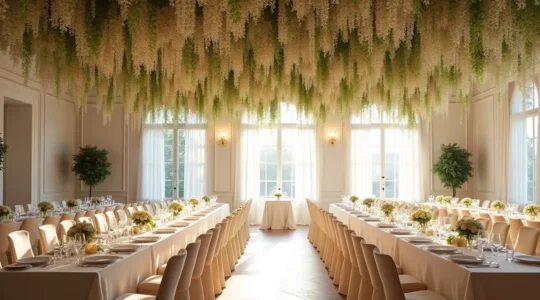
To manifest a truly magical wisteria ceiling, you must think like a set designer, focusing on botanical illusion and atmospheric engineering, not just hanging flowers. The most believable wisteria clouds use high-end, fire-retardant artificial blooms, as they offer control, safety,…
Read more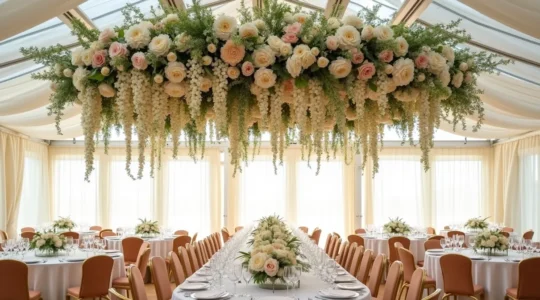
Successfully executing a suspended floral installation is not a matter of decoration, but a question of structural engineering and meticulous production planning. Any installation over 50 lbs requires a certified rigging specialist to calculate load distribution and ensure structural integrity….
Read more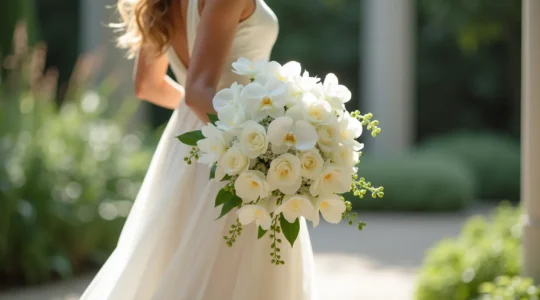
The secret to a stunning cascading bouquet is treating it as a structural extension of your silhouette, not just a floral accessory. Proportion is paramount; the bouquet’s scale must create a harmonious vertical line with your body and dress, not…
Read more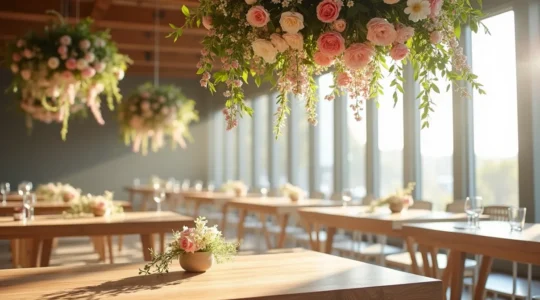
True floral luxury is achieved not through sheer expense, but through the artistic mastery of seasonality, structural form, and sensory experience. Seasonal integrity, like choosing garden roses over winter peonies, dramatically increases quality while strategically managing your investment. Structural artistry…
Read more