
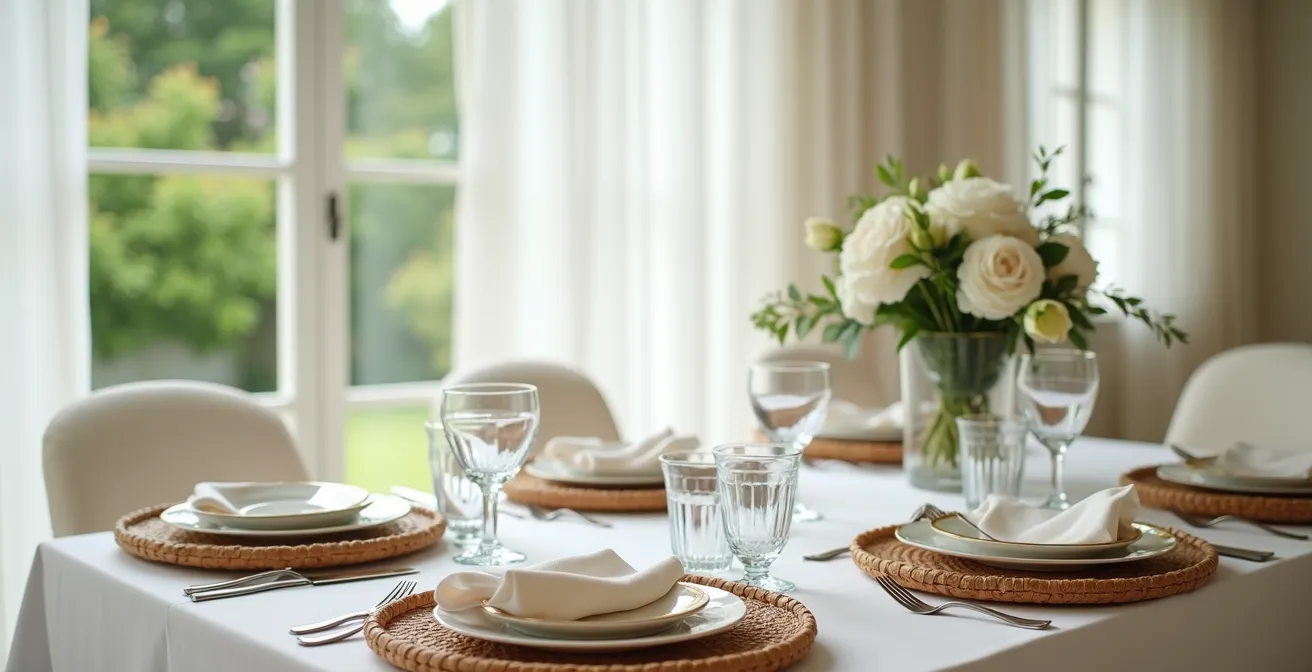
The belief that rattan chargers are exclusively for casual, boho events is a limiting myth. Their successful use in a formal setting depends entirely on mastering the high-low tension between organic texture and polished elegance.
- The stability and quality of the weave are paramount; wobbly or inconsistent chargers instantly cheapen a tablescape.
- The color of the rattan—natural, whitewashed, or black—is a strategic choice that dictates the formality and mood of the entire place setting.
Recommendation: Prioritize structural integrity and material dialogue over simple aesthetics. Select chargers with a rigid, consistent weave and choose a color tone that deliberately complements, rather than clashes with, your fine china and flatware.
You’re planning a wedding that feels both personal and sophisticated. You adore the warm, organic texture of rattan—it speaks to a coastal breeze or a chic, earthy vibe. Yet, your event is formal, perhaps even black-tie, and a nagging question arises: can you truly pair a rustic rattan charger with fine china and crystal without the entire tablescape looking disjointed or, worse, too casual? The common advice to simply use them for “beachy” or “boho” themes feels overly simplistic and misses the mark for a truly elevated event. It ignores the nuanced interplay of materials that defines high-end design.
The challenge is real. The wrong rattan can introduce an element of rustic craft that undermines the intended formality. But what if the solution wasn’t to hide or downplay the rattan’s nature, but to celebrate it by creating a deliberate and masterful “high-low tension”? The secret to using woven chargers in a formal setting lies not in camouflaging their texture, but in understanding the sophisticated principles of material dialogue. It’s about making conscious choices regarding the quality, color, and surrounding elements to ensure the rattan provides a foundation of organic warmth, not a distraction of casualness.
This guide moves beyond the basics to explore the specific strategies that wedding stylists use to integrate this beautiful, natural material into the most elegant of settings. We will dissect the practical mechanics of ensuring stability, the aesthetic science of color pairing, the crucial quality checkpoints for rentals, and the material choices that make or break the look. By the end, you will be equipped to create a tablescape that is not only beautiful but a testament to your nuanced and sophisticated taste.
This article provides a detailed roadmap for achieving that perfect balance. Below is a summary of the key areas we will explore to help you style rattan chargers with the confidence of a professional designer.
Summary: Elevating Rattan from Rustic to Refined
- How to Ensure Plates Don’t Wobble on Woven Rattan Chargers?
- Natural, Whitewashed, or Black: Which Rattan Tone Suits Fine China?
- On Top or Under: Where to Place Napkins With Textured Chargers?
- The “Unravelling” Sign That Means You Should Reject a Rental Batch
- Sea Grass vs. Wicker: Which Material Is More Durable for Events?
- Why Mixing Dried and Fresh Elements Is Key to the Modern Boho Look?
- Naked Wood or Draped Fabric: Which Better Complements a Sea View?
- The Durability Truth About Matte Black Flatware Renters Won’t Tell You
How to Ensure Plates Don’t Wobble on Woven Rattan Chargers?
The single greatest risk in using woven chargers for a formal event is instability. A plate that rocks or shifts undermines the entire feeling of luxury and care. This isn’t just an aesthetic issue; it’s a practical one that affects the guest experience. The natural, uneven surface of hand-woven rattan is part of its charm, but it must be managed to provide a perfectly stable base for your dinnerware. A wobbly plate signals poor quality control and can instantly downgrade an otherwise elegant tablescape.
The solution begins with selecting the right plate. Dinner plates with a pronounced foot ring on the bottom are far more stable on a textured surface than those with a completely flat base. This small rim creates a more defined contact area, reducing the likelihood of rocking. However, the ultimate responsibility lies in testing the chargers themselves. Premium rental companies often perform a “stack test” before delivery, but you should have a protocol of your own to guarantee perfection.
A study by CV Linens, a major rental supplier, found that implementing a pre-event protocol where chargers were tested with actual dinnerware reduced customer complaints about wobbling plates by 85%. This practice has become a standard for ensuring quality. The key is to be proactive and systematic, addressing potential instability before the first guest is seated. True elegance is found in these thoughtful, practical details.
Action Plan: Testing and Fixing Charger Plate Stability
- Perform the ‘Pressure Point’ test: Flip the charger upside down and run your finger across the weave to identify the 3-4 highest points that create the uneven surface.
- Apply silicone bumpers: Use small, clear silicone cabinet bumpers (approximately 3mm thick) and apply them directly on these identified high points to create a new, perfectly level surface for the plate.
- Select appropriate plates: Prioritize plates with a pronounced foot ring or rim on the bottom, as these offer inherently better stability on textured surfaces compared to flat-bottomed plates.
- Execute the ‘Stack Test’: Before committing to a rental, place 3-4 dinner plates on a single charger to simulate the weight and pressure of a full place setting and check for any movement.
Natural, Whitewashed, or Black: Which Rattan Tone Suits Fine China?
The color of the rattan charger is not merely a decorative choice; it is the primary tool for controlling the formality of your place setting. The tone you select establishes a “material dialogue” with your fine china, either enhancing its elegance or pulling it in a more casual direction. This decision should be driven by the specific patterns on your dinnerware and the desired ambient light interaction. Each tone—natural, whitewashed, and black—serves a distinct strategic purpose in achieving a sophisticated look.
Natural rattan, with its warm, golden-brown fibers, excels at creating a sense of relaxed elegance. It pairs beautifully with earthy, hand-painted botanical motifs and glows warmly under candlelight, making it ideal for a sophisticated boho or rustic-luxe theme. In contrast, whitewashed rattan offers an airy, coastal sophistication. Its chalky texture is best suited for delicate blue or green patterns and thrives in bright, natural daylight. However, it can appear flat or lose its dimension in dimly lit evening settings.
For the highest level of formality, black rattan is the most powerful choice. It creates a bold, dramatic silhouette that makes gold or platinum details on minimalist china pop. This high-contrast look is modern and striking, but it requires careful consideration of the table surface; on a dark wood table, a black charger may lose its impact and disappear. Choosing the right tone is about creating a cohesive story where the charger and china elevate one another.
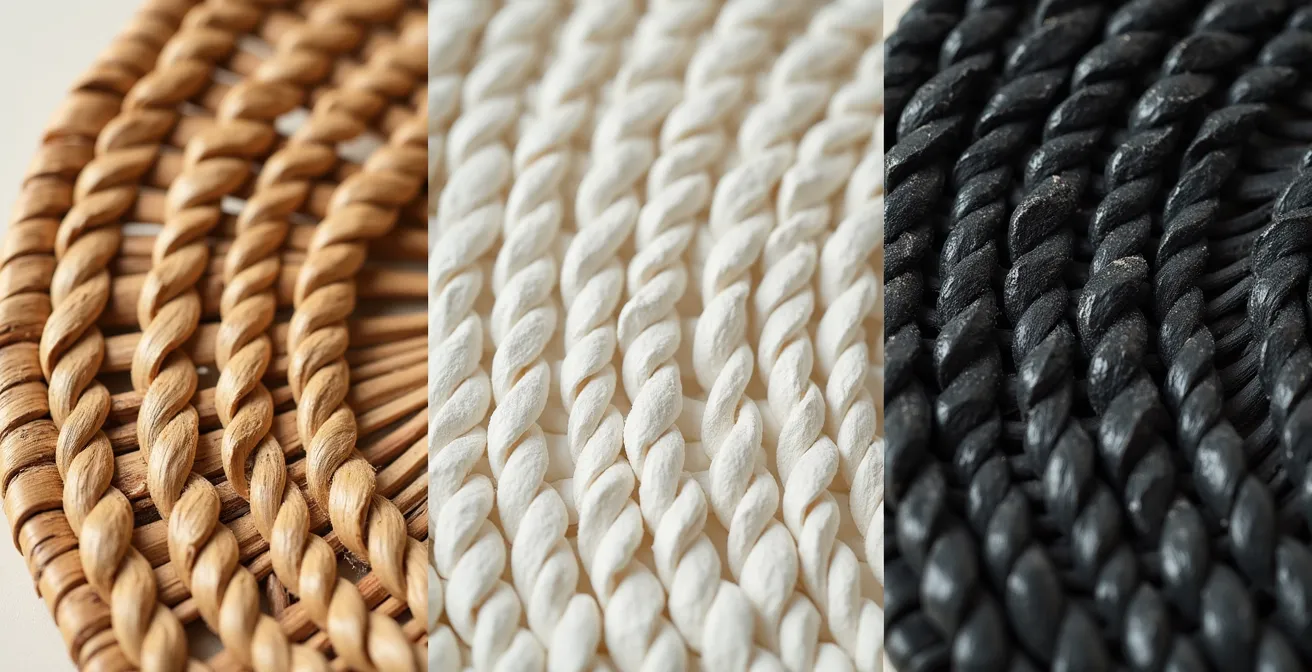
As this detailed comparison shows, the texture and light-play of each finish are dramatically different. The intricate weave of natural rattan absorbs light for a soft glow, the whitewash reflects it for a bright feel, and the black creates sharp, graphic lines. Understanding this interaction is key to achieving your desired aesthetic.
This table from a comprehensive compatibility guide breaks down how each tone interacts with different elements of a formal table setting.
| Rattan Tone | Best China Patterns | Light Interaction | Formality Level |
|---|---|---|---|
| Natural | Earthy hand-painted, botanical motifs | Enhanced by candlelight, warm glow | Relaxed Elegance (Boho/Rustic) |
| Whitewashed | Delicate blue/green motifs, coastal themes | Best in natural daylight, can look flat in dim light | Airy Coastal Sophistication |
| Black | Gold/platinum details, minimalist designs | Creates bold silhouette, may disappear on dark tables | Modern Dramatic Formality |
On Top or Under: Where to Place Napkins With Textured Chargers?
Once the charger and plate are set, the next layer of styling is the napkin. With a smooth charger, placement is purely a matter of preference. However, the pronounced texture of rattan introduces a practical consideration: protecting delicate fabrics from snagging. The decision of where to place the napkin—on top of the plate, or to the side—becomes a balance of aesthetics, formality, and practicality.
Placing the napkin directly on the plate stack is a classic look that creates a sense of occasion. As the Event Design Team at CV Linens notes, “Placing the napkin on top of the plate creates a ‘reveal’ moment when the guest is seated.” This maintains a pristine, complete setting until the meal begins. However, with a coarse rattan weave, this placement risks snagging delicate linen or silk napkins. Using a high-quality napkin ring becomes essential in this scenario, as it keeps the fabric bundled and away from the charger’s textured edges.
Alternatively, placing the napkin to the left of the forks offers a more open, modern look that immediately showcases the full place setting. This is also the most practical choice. An analysis of 200 wedding receptions by LeilaniWholesale revealed a clear pattern: for events with a pre-set first course, 92% of planners placed napkins to the side to avoid disturbing the appetizer. The study also found that the use of textured chargers specifically influenced 65% of planners to use napkin rings, regardless of placement, as a preventative measure against fabric damage. Ultimately, the choice depends on your service style and the delicacy of your linens.
Placing the napkin on top of the plate creates a ‘reveal’ moment when the guest is seated. A napkin to the side showcases the full plate stack immediately, creating a more open look from the start.
– Event Design Team, CV Linens Professional Styling Guide
The “Unravelling” Sign That Means You Should Reject a Rental Batch
The success of a formal tablescape rests on consistency and quality. When renting rattan chargers, you are placing trust in the supplier’s inventory, but not all batches are created equal. A single frayed, stained, or warped charger can compromise the entire table’s aesthetic. It is crucial to perform your own quality inspection upon delivery and have clear criteria for rejecting a substandard batch. The most obvious sign of poor quality is visible unravelling at the edges, but more subtle clues can predict future problems.
First, trust your senses. A musty or mildew odor indicates improper damp storage, which weakens the rattan fibers and makes them brittle. Gently flex the outer edge of a charger; if it crackles or feels excessively stiff, the material is old and likely to break or shed during the event. Beyond physical condition, look for consistency across the batch. Significant variations in color, weave tightness, or diameter will create a disjointed and unprofessional appearance when set on the table. A formal setting demands uniformity.
Finally, inspect the crevices of the weave for any dark spots or discoloration. These are often signs of food stains from previous events that were not properly cleaned, a clear red flag regarding the rental company’s standards. Don’t be afraid to reject a batch that doesn’t meet your criteria. According to an analysis of vendor reviews on WeddingWire, 73% of couples who received damaged or inconsistent charger plates filed complaints, indicating the significant impact that poor quality has on an event. Protecting your aesthetic means being a vigilant and informed client.
Sea Grass vs. Wicker: Which Material Is More Durable for Events?
While often grouped together, “rattan” and “seagrass” are fundamentally different materials with distinct properties that significantly impact their suitability for a formal event. Rattan, which is a type of vine, is known for its high structural rigidity. It can be shaped into a charger that maintains its form without needing a metal frame. Seagrass, a true grass, is much more pliable and almost always requires a metal frame for support. This difference is critical for durability in a rental context.
The primary advantage of rattan for events is its superior resilience. It has moderate moisture resistance and, when properly processed, is largely odorless. Seagrass, on the other hand, is highly absorbent, making it extremely prone to permanent stains from spills like red wine. It also retains a distinct, grassy aroma that can sometimes clash with perfumed floral arrangements or the culinary scents of a meal. For a formal, multi-sensory experience, an odorless material like rattan is a safer and more sophisticated choice.
Durability over time is where rattan truly proves its worth. A stress test conducted by Artex Naman, a major Vietnamese manufacturer, revealed the stark difference: rattan chargers withstood over 500 uses with proper maintenance, while seagrass chargers showed visible fraying and deterioration after just 150 uses. The repeated handling, stacking, and transportation inherent in the event rental industry are far better suited to rattan’s robust nature. While seagrass can offer a lovely, soft texture, rattan provides the longevity and reliability required for a flawless formal event.
This comparative analysis highlights the key differences that matter most in an event context.
| Property | Rattan | Seagrass | Event Impact |
|---|---|---|---|
| Structural Rigidity | High – maintains shape without frames | Low – requires metal frame support | Rattan less likely to warp during events |
| Moisture Resistance | Moderate – can handle humidity | Poor – absorbs liquids easily | Seagrass prone to wine stains |
| Natural Scent | Odorless when processed | Distinct grassy aroma | May clash with perfumed florals |
| Aging Pattern | Maintains appearance for years | Frays and changes color over time | Rattan better for rental longevity |
Why Mixing Dried and Fresh Elements Is Key to the Modern Boho Look?
To fully integrate a rattan charger into a sophisticated tablescape, the surrounding decor must speak the same “high-low” language. This is most effectively achieved in your floral arrangements. The key to a modern, elevated boho aesthetic is not to rely solely on fresh, classic blooms like roses or peonies, but to create a thoughtful dialogue between fresh and dried elements. This mix of textures is what connects the centerpiece back to the fibrous quality of the chargers, creating a cohesive and intentional design.
The strategy is to use fresh flowers as the luxurious base and dried florals as the textural accent. A good guideline is the 80/20 rule: construct about 80% of your arrangement with lush, elegant fresh blooms, and then introduce the remaining 20% as carefully placed dried elements. Materials like bunny tails, dried ferns, delicate pampas grass, or bleached ruscus echo the natural, fibrous texture of the rattan chargers without overwhelming the arrangement. This approach ensures the overall feel remains polished and romantic, not purely rustic.
The placement of these dried elements is also strategic. They should be positioned at varying heights to create visual depth and movement, drawing the eye through the centerpiece. The color of the dried accents should complement the specific tone of your rattan, creating a grounded and harmonious palette. By repeating these same dried textures in other small decor moments—such as a sprig on the place card or an accent in a welcome sign—you create a powerful sense of sensory cohesion that feels both effortlessly chic and meticulously planned.
Naked Wood or Draped Fabric: Which Better Complements a Sea View?
The surface upon which your rattan charger rests is its immediate context. The choice between a naked wood table and a draped fabric tablecloth has profound implications for both the aesthetics and the practicality of your tablescape, especially in a venue with a sea view. While fabric can add softness and color, a solid wood surface often provides a more sophisticated and stable foundation for rattan, allowing the charger’s texture to truly shine.
For coastal or outdoor weddings, wind is a major factor. A study of 50 beachfront weddings documented by Tidewater and Tulle found that venues using naked wood tables experienced 90% fewer disruptions from wind compared to those with draped fabric. The solid, heavy surface of the wood anchored the lightweight rattan chargers, while tablecloths acted as “sails,” leading to knocked-over glassware in 40% of the observed events. From a practical standpoint, a naked wood table is the clear winner for stability.
Aesthetically, wood and rattan create a harmonious layering of natural textures. A dark-stained wood table makes a natural-toned rattan charger pop dramatically, creating a high-contrast, elegant look. A weathered, lighter wood table offers a more serene, tonal integration where the charger blends seamlessly. While a white linen drape can make the charger a focal point, the combination of a naked wood surface and a woven charger creates an authentic, grounded sense of place that beautifully complements a natural view, like the sea. It reinforces the connection to nature in a way that feels intentional and refined, not just decorated.
Key Takeaways
- Formal Rattan Styling: The key is not to hide the rattan’s texture but to create a “high-low tension” with polished elements like fine china and metallic flatware.
- Quality is Non-Negotiable: Always inspect rental chargers for stability, consistency, and signs of wear. A wobbly plate or frayed edge instantly cheapens a formal setting.
- Material and Tone are Strategic: Choose black rattan for modern drama, whitewashed for airy coastal looks, and natural for warm elegance. Always prefer durable rattan over absorbent seagrass for event rentals.
The Durability Truth About Matte Black Flatware Renters Won’t Tell You
The final element in your place setting is the flatware, and this is where a costly mistake can easily be made. Matte black flatware has become incredibly popular for its modern, edgy aesthetic, which seems like a perfect counterpoint to the organic warmth of a rattan charger. However, there is a durability truth that many rental companies may not volunteer: the vast majority of matte black flatware is coated, not solid, and this coating is extremely susceptible to scratching.
The fibrous, uneven surface of a rattan charger acts like a fine-grit sandpaper against the delicate coating of the flatware. Every time a guest sets down their fork or knife, it can create micro-scratches. According to rental industry damage reports, an alarming 68% of matte black flatware shows visible scratching after just a single use on woven chargers. This not only results in a worn look by the end of the event but can also lead to significant damage fees from your rental company.
To achieve that dark, metallic contrast without the risk, you must choose your materials wisely. Opt for finishes that are inherently durable. Brushed bronze or gold finishes are not only resistant to scratching but also beautifully complement the warm tones in natural rattan. For a true black look, seek out “blackened” stainless steel, which is heat-treated for color rather than coated, or high-quality titanium-plated options. These alternatives provide the modern aesthetic you desire with the durability a formal event demands, ensuring your tables look as pristine at the end of the night as they did at the beginning.
Armed with this knowledge, you are now equipped to create a tablescape that masterfully blends organic warmth with timeless elegance. Begin by selecting the rattan tone that will serve as the foundation for your entire design, ensuring it communicates the precise level of formality your beautiful event deserves.