
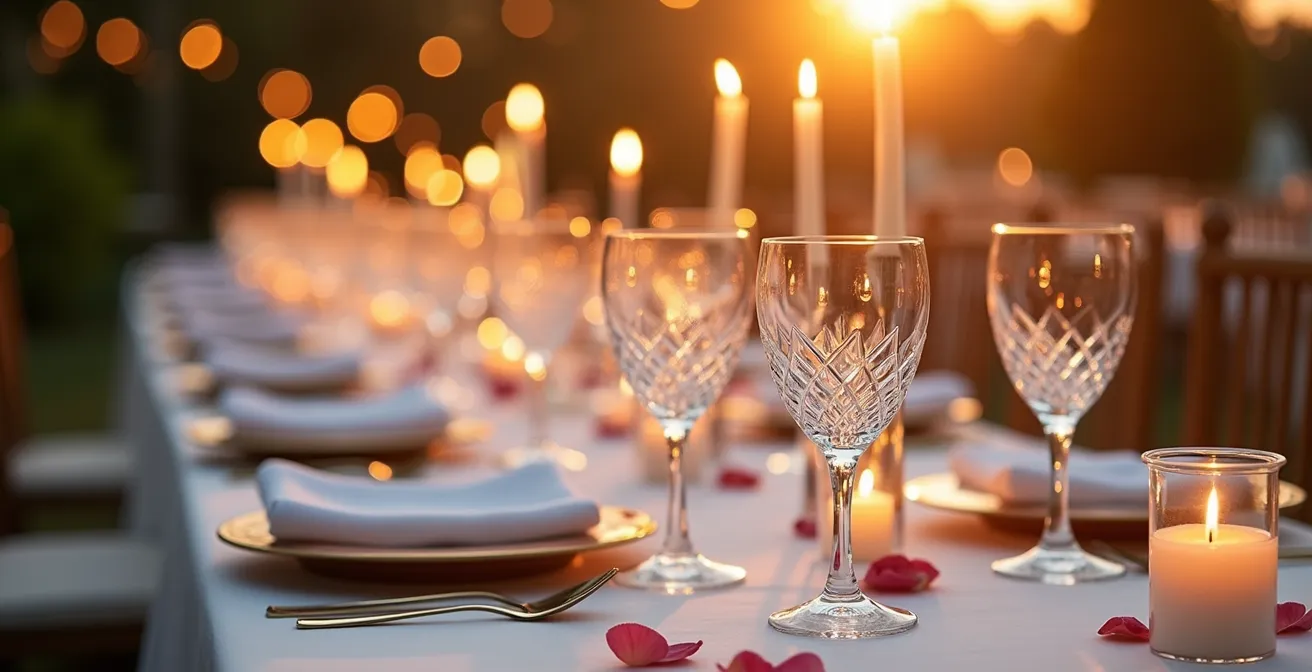
The “sparkle” of your wedding glassware is not a matter of opinion, but a result of physics and psychology; cut crystal is engineered to manipulate light in a way smooth glass cannot.
- The high lead content in crystal increases its refractive index, causing it to bend light more dramatically and create fire-like spectral colors.
- The weight and texture of crystal (haptic qualities) psychologically elevate the perceived value and taste of the beverage it contains.
Recommendation: For maximum evening sparkle, prioritize multi-faceted cut crystal for water goblets and pair them with real wax candles, as their organic flicker creates the most dynamic light play.
For couples obsessed with achieving the ultimate “sparkle factor” for an evening reception, the choice of glassware is paramount. It’s a decision that goes far beyond simple utility; it is a critical element of atmospheric design. The ambient glow of candlelight on a beautifully set table is the heart of romantic wedding decor, and the vessel that holds this light can either amplify it into a dazzling display or let it pass by unnoticed. This is the core of the debate: cut crystal versus smooth, modern glass.
Common advice often simplifies this choice to a matter of style—vintage versus contemporary. Many will state plainly that “crystal sparkles more,” but fail to explain the scientific principles that make this true. This superficial understanding leads to missed opportunities. The true potential of your tablescape lies not just in choosing a material, but in orchestrating a symphony of light, texture, and sensory experience. The goal is to move beyond passive decoration and into active light manipulation.
But what if the key to unlocking that coveted, diamond-like glitter wasn’t just about the presence of crystal, but about understanding its very nature? The secret lies in the physics of light refraction and the psychology of haptic perception. This guide moves beyond aesthetics to provide an analytical breakdown of why certain glass reflects light better than others. We will explore the material science, the quantifiable risks of rental, and the precise techniques required to make your tables truly scintillate.
This article provides a comprehensive analysis to help you make an informed, strategic decision. By exploring the unique properties of each material and how they interact with different light sources, you will gain the expertise to design a tablescape that not only looks beautiful but is intelligently engineered for maximum brilliance and perceived luxury.
Summary: A Guide to Glassware and Light at Your Wedding
- Why Heavy Crystal Goblets Change the Perceived Value of the Wine?
- The Breakage Fee Reality of Renting Vintage Crystal
- How to Mix Cut Crystal Water Glasses With Modern Wine Stems?
- Does the Rim Thickness of Rental Glassware Affect Wine Taste?
- The Polishing Timeline Required for Crystal to Truly Sparkle
- Real Wax Candles or LED Fakes: Which Creates the Better Ambiance?
- How to Use Moss and Pine Scent to Deepen the Forest Illusion?
- How to Balance Bistro Strings and Taper Candles for Outdoor Dining?
Why Heavy Crystal Goblets Change the Perceived Value of the Wine?
The elevated status of a heavy crystal goblet is not merely a cultural construct; it is deeply rooted in haptic psychology—the study of how touch influences our perceptions. When a guest lifts a substantial, weighty crystal glass, their brain receives a set of powerful sensory signals. The heft implies quality, substance, and expense. This physical sensation primes the mind to expect a superior experience, which in turn can genuinely alter the perceived taste and quality of the wine inside. The weight is a direct result of lead oxide content, which is a defining characteristic of true crystal.
Beyond weight, the acoustic properties of crystal contribute significantly to its luxurious feel. A high-quality crystal goblet, typically with 18-35% lead content, produces a clear, resonant “ping” when gently tapped. This sustained, bell-like ring, often lasting for several seconds, is a hallmark of its dense, crystalline structure. In contrast, standard soda-lime glass produces a dull, short thud. This auditory feedback, combined with the tactile weight, creates a multi-sensory confirmation of quality that a simple glass tumbler cannot replicate.
This psychological effect is a powerful tool in event design. By choosing heavy crystal, you are not just serving a beverage; you are curating an experience. The glassware becomes an active participant in the culinary journey, subtly communicating luxury and care to your guests before they even take their first sip. It transforms the simple act of drinking wine into a more refined and memorable moment, directly enhancing the overall perceived value of the reception.
The Breakage Fee Reality of Renting Vintage Crystal
While the allure of vintage crystal is undeniable, its delicacy introduces a significant financial risk that must be managed. Rental companies charge not only for the use of each piece but also impose a steep breakage fee for any item that is damaged, chipped, or lost. Unlike standard, mass-produced glassware, which may have a replacement cost of a few dollars, antique or high-quality crystal pieces can be valued at $50 to $150 per glass. These costs can accumulate with alarming speed during a lively celebration, turning a design choice into a budgetary liability.
A pragmatic approach involves quantifying this risk from the outset. As a wedding planning expert advises, it’s crucial to understand the terms before signing a contract.
Ask about their breakage policy. You’ll likely have to cover such costs. You might need to consider adding this to your wedding insurance because the replacement cost for these items might quickly add up.
– Wedding Planning Expert, Vowness Wedding Planning Guide
This is where event insurance becomes a non-negotiable part of the planning process. A policy where the average cost is between $155 to $600 can provide peace of mind and financial protection against accidental damage, covering the high replacement fees that crystal rentals often entail.
To make an informed decision, it is essential to compare the cost-to-risk ratio of different glassware options. The following table breaks down typical rental and breakage fees, illustrating the escalating financial exposure as you move towards higher-end crystal.
| Glass Type | Rental Cost Per Piece | Typical Breakage Fee | Risk Level |
|---|---|---|---|
| Standard Glass | $0.40 – $0.45 | $2 – $5 | Low |
| Vintage Glass Goblets | $0.85 – $1.50 | $15 – $25 | Medium |
| Crystal Wine Glasses | $1.10 – $1.85 | $25 – $50 | High |
| Antique Crystal | $2.00 – $3.50 | $50 – $150 | Very High |
How to Mix Cut Crystal Water Glasses With Modern Wine Stems?
Creating a sophisticated and dynamic tablescape does not require a uniform set of glassware. In fact, the most visually compelling designs often arise from a strategy of textural counterpoint: pairing ornate, cut crystal water goblets with sleek, unadorned modern wine stems. This approach prevents the table from feeling dated or overly fussy, creating a balance between classic opulence and contemporary elegance. The key is to let one style be the star while the other plays a supporting role. The cut crystal, with its intricate facets, becomes the primary light-catcher, while the smooth wine glass provides a moment of visual rest.
The success of this mix-and-match strategy lies in establishing a clear hierarchy. The crystal water goblet, typically larger and more robust, anchors the place setting. Its detailed cuts and patterns are designed to twinkle and dance in the candlelight, creating the “fairytale” effect many couples desire. The modern wine stems, with their clean lines and thin rims, should be chosen for their simplicity. They defer to the crystal, ensuring the overall look is curated and intentional, not chaotic. This combination allows you to enjoy the sparkle of crystal without committing to a fully vintage aesthetic.
As described in professional styling, this effect is deliberately cinematic. A row of exquisite crystal goblets twinkles softly against the glow of candlelight, creating a scene straight out of a fairytale. The delicate, intricate cuts on the glass seem to dance with each flicker of the candles, making the glassware feel alive. This visual magic is best realized with a strategic pairing.
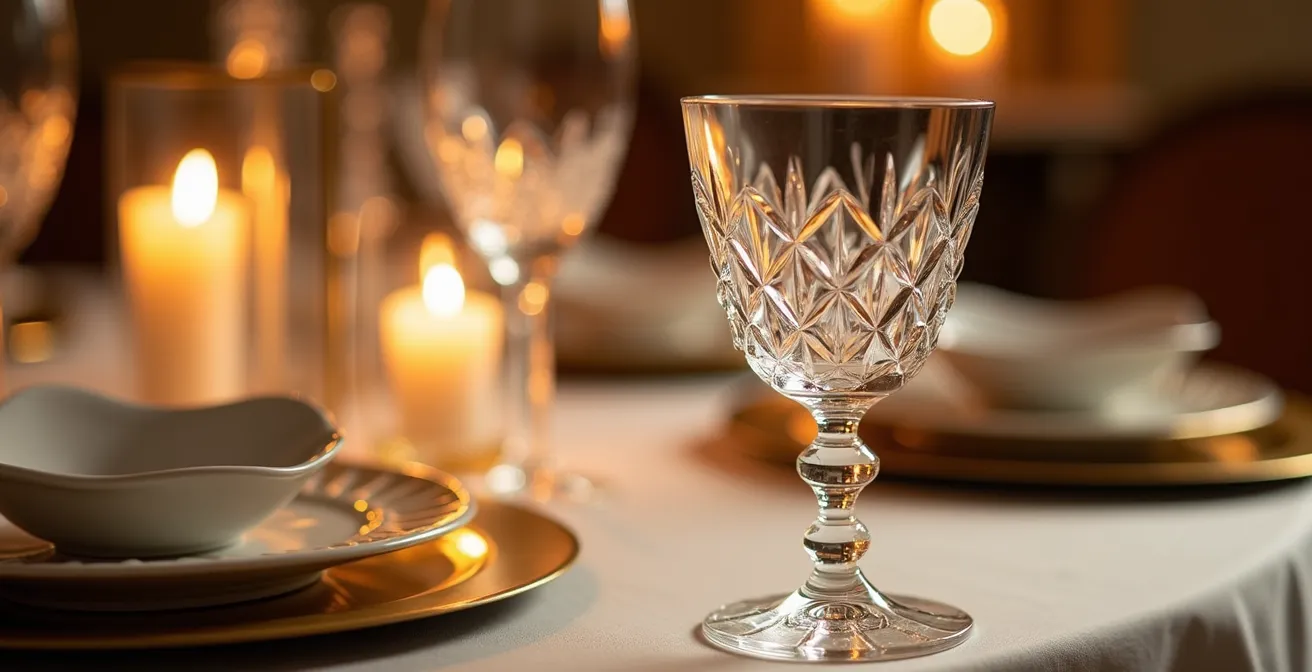
As you can see, the contrast between the ornate crystal and the minimalist stem creates a rich, layered look. The crystal handles the primary task of reflecting light, while the modern glass maintains an air of sophistication and prevents the setting from becoming visually overwhelming. This deliberate pairing is the hallmark of a professionally styled table.
Does the Rim Thickness of Rental Glassware Affect Wine Taste?
Analytically speaking, the material of a glass does not change the chemical composition of the wine. However, the physical properties of the glass, particularly the rim thickness, profoundly affect our sensory perception of the wine’s taste and aroma. A thin, fine rim, which is a signature of high-quality crystal, allows the wine to flow smoothly onto the palate. It minimizes the physical “barrier” between the drinker and the liquid, creating a more direct and delicate tasting experience. Conversely, a thick, rolled rim on a standard glass can feel clumsy and may disrupt the delivery of the wine, subtly altering the perception of its texture and flavor profile.
This phenomenon is scientifically supported by research into haptic influences on taste. For instance, a study showing that participants rated coffee as more acidic from rough-textured cups versus smooth ones demonstrates that our sense of touch directly informs our sense of taste. While not about rim thickness directly, it proves the principle: the physical feel of the vessel matters. The fineness of a crystal rim telegraphs elegance and quality, priming our brain for a more refined tasting experience.
The ability to create such a fine rim is a direct result of crystal’s unique composition. The addition of lead oxide and antimony softens the glass body, making it more elastic and easier to work at lower temperatures. This process not only allows for the creation of thin, elegant rims but also increases the material’s clarity and, most importantly, its refractive index. A higher refractive index means light bends more as it passes through the material, creating the signature “fire” and sparkle that is amplified by facet cutting. Smooth glass simply lacks the density and optical properties to achieve this level of brilliance.
The Polishing Timeline Required for Crystal to Truly Sparkle
The brilliant sparkle of crystal is not an inherent, automatic state; it is the result of a meticulously clean surface. Fingerprints, water spots, or a fine layer of dust can completely negate the optical properties of the glass, rendering even the most expensive crystal dull. Achieving that coveted, diamond-like scintillation requires a professional and disciplined polishing process, executed on a strict timeline. This is not a task to be left to the last minute; it is a critical step in event preparation that demands dedicated time and personnel.
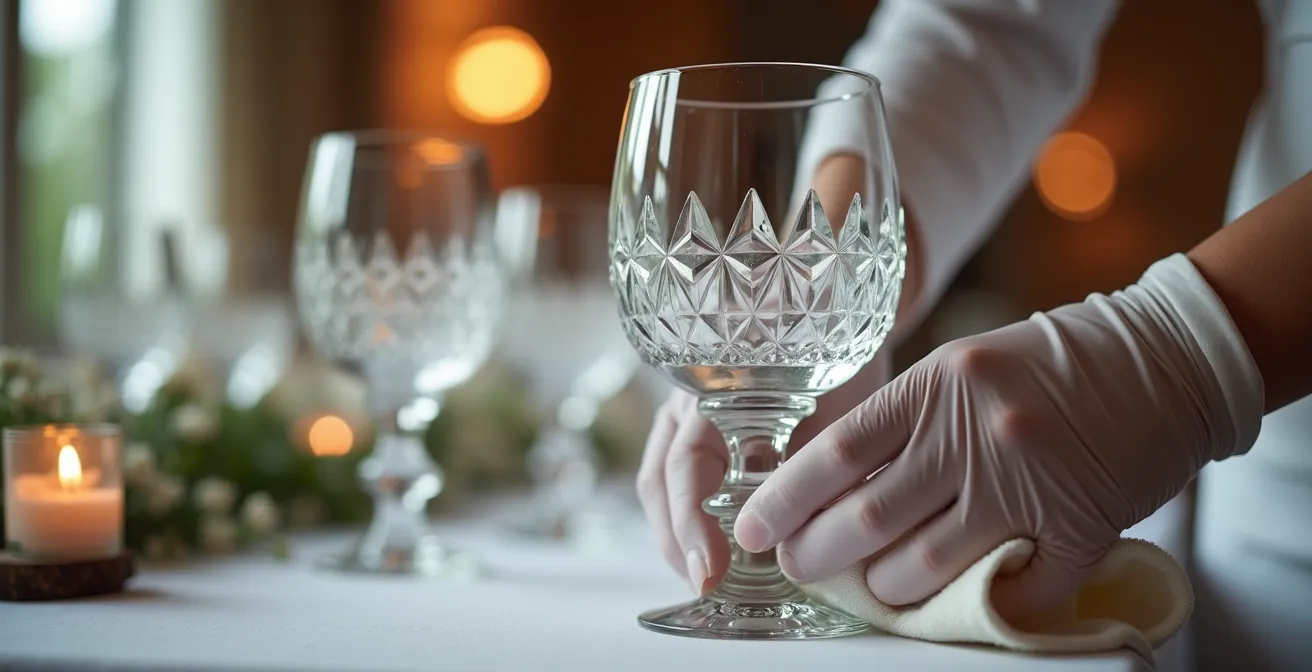
The process begins the day before the event and involves more than a simple wipe-down. The goal is to create a flawless surface that will interact with light perfectly. A common professional approach is the two-cloth technique, where one lint-free microfiber cloth is used to hold the glass by its stem or base, while another is used for polishing the bowl. This prevents the transfer of oils from hands onto the freshly cleaned surface. For stubborn water spots, a quick steam treatment before polishing can be highly effective.
The final, crucial step is a quality control check under the actual event lighting conditions. Ambient light in a prep room is very different from the dramatic, low-light-and-candlelight setting of the reception. A final inspection wearing white cotton gloves, performed just a couple of hours before guests arrive, ensures every single glass is pristine and ready to perform its function: to capture and reflect light with maximum brilliance.
Your Action Plan: The Professional Crystal Polishing Timeline
- Day-Before Tasks: Assign 2-3 team members specifically to polish all crystal. Use high-quality microfiber cloths and allow approximately 2 minutes per glass for a thorough job.
- Steam Method for Spots: Use a commercial steamer or a simple kettle to generate steam. Hold the bowl of the glass over the vapor for 5-10 seconds to loosen any stubborn hard water spots before polishing.
- Two-Cloth Technique: To prevent fingerprints, hold the glass with one lint-free cloth (at the stem or base) while actively polishing the bowl and rim with a separate, clean cloth.
- Day-Of Inspection: Schedule a final spot-check 2 hours before guest arrival. The inspection team must wear white cotton gloves to handle the glassware without leaving new marks.
- The Candlelight Test: Before final placement, check a representative sample of glasses on a set table under the actual event lighting. This is the only way to confirm they are truly sparkling and catch any missed smudges.
- Secure Storage Protocol: After polishing, keep all crystal in closed, covered containers or on covered speed racks until the moment of table setting to prevent dust from settling.
Real Wax Candles or LED Fakes: Which Creates the Better Ambiance?
In the analytical pursuit of sparkle, the light source is as important as the reflective surface. While premium LED candles offer safety and convenience, they cannot perfectly replicate the ambiance created by a real wax candle flame. The critical difference lies in flicker dynamics. A true flame produces organic, chaotic, and constant micro-flickers. This ever-changing movement means the angle of light hitting the crystal facets is never static. It creates a living, “dancing” display of reflections and refractions that the programmed, often repetitive flicker of an LED struggles to match. It is this organic quality that breathes life into a tablescape.
The color temperature of the light is another crucial factor. A real candle flame emits a very warm light, typically around 1850 Kelvin (K). This golden-orange hue is inherently perceived as romantic and intimate. While high-quality LEDs can now achieve warm tones (look for those in the 2200K-2700K range), many cheaper versions produce a colder, harsher light that can make a room feel sterile and fails to bring out the warmth in crystal reflections. For maximum authenticity and sparkle, real flame is the superior analytical choice for table-level lighting.
A professional strategy often involves a hybrid approach. Use real wax candles—tapers, votives, or pillars—on guest tables where their authentic flicker and warmth will have the most impact on the crystal glassware. Then, use high-quality, warm-toned LED candles for accents in high or hard-to-reach areas, or in venues where open flame restrictions are in place. This pragmatic solution balances the desire for authentic ambiance with the practical requirements of safety and logistics. For instance, mixing tall taper candles in crystal holders with low votives on a dining table creates a beautiful, layered look with dynamic light.
How to Use Moss and Pine Scent to Deepen the Forest Illusion?
While the title suggests a focus on scent, the true art of creating an immersive theme like a “forest illusion” lies in total sensory orchestration. Scent is a powerful layer, but it must work in harmony with visual and textural elements. In this context, crystal—often considered a purely glamorous element—can be masterfully integrated into a rustic or natural theme to enhance the magical quality of the “forest.” The key is to use it not as the main feature, but as an unexpected element of sparkle that mimics dew drops or dappled sunlight through leaves.
As the Waterford Crystal Design Team notes, this is a matter of strategic placement.
Small crystal decorations will capture the lighting that surrounds the wedding table, adding an extra degree of visual interest to more functional tableware and glassware.
– Waterford Crystal Design Team, Waterford Wedding Table Setting Guide
Instead of grand crystal candelabras that might feel out of place, consider hanging single crystal pendants from branches in your centerpiece, or scattering small crystal beads amongst the moss on the table runner. These small touches will catch the candlelight and create points of bright, unexpected scintillation, adding a layer of enchantment to the organic textures of moss, bark, and pine.
When incorporating larger crystal pieces like candelabras into a themed decor, the primary consideration is maintaining an unobstructed guest experience. As one event designer experienced, the height and design are critical. A tall centerpiece, like a 33-inch candelabra, can work beautifully if it is slender enough to remain above the natural line of sight, allowing guests to see and converse easily across the table. In a forest theme, this could be a crystal piece with a branching, tree-like structure that feels integrated rather than imposed. The crystal then serves to elevate the theme, adding a touch of elegance and light play without disrupting the social atmosphere or the intended natural illusion.
Key Takeaways
- The superiority of cut crystal for reflecting candlelight is based on its higher refractive index, a direct result of its lead content, which creates more intense sparkle and color separation (fire).
- The weight and fine rim of crystal glassware are not just aesthetic; they are haptic cues that psychologically enhance the perceived quality and taste of beverages.
- A hybrid lighting strategy is often optimal: use real wax candles at table-level for their organic flicker and warm color temperature, and high-quality LEDs for safety in other areas.
How to Balance Bistro Strings and Taper Candles for Outdoor Dining?
Creating a magical atmosphere for outdoor dining is a game of layers. Relying on a single light source often results in a flat or overly harsh environment. The key to a dynamic and intimate setting is to balance different types of light, each serving a distinct purpose. The two most important layers are ambient lighting (for overall illumination) and task lighting (for intimacy and function at the table level). Bistro string lights and taper candles are perfect representatives of these two layers, and their interaction with crystal glassware is what creates the final sparkle.
Bistro strings, hung overhead or around the perimeter, provide the foundational ambient light. Their purpose is to define the space and provide general, safe illumination. For the best effect, choose bulbs with a warm white color temperature (2200K-2700K). From the perspective of your crystal glassware, these overhead lights create a beautiful bokeh effect—soft, out-of-focus orbs of light in the background of photos—but they do not directly create sharp, dazzling reflections on the table.
The direct sparkle comes from the task lighting: the taper candles on the tables. Their low, warm (1850K) flame is positioned at the perfect angle to enter the crystal goblets, igniting the facets from within. This is the source of the dramatic, dancing light. Combining string lights above with candlelight below effectively doubles the sparkle; the candles create the primary scintillation in the crystal, while the overhead strings are reflected as a soft, secondary glimmer on the smooth surfaces of the glasses, creating a rich, multi-layered visual experience.
This table provides a clear breakdown of how to orchestrate these different light sources for the ultimate effect in an outdoor setting.
| Light Source | Purpose | Color Temperature | Placement | Crystal Interaction |
|---|---|---|---|---|
| Bistro Strings | Ambient lighting | 2200K-2700K warm white | Overhead/perimeter | Creates bokeh backdrop |
| Taper Candles | Task/intimate lighting | 1850K (flame) | Table level | Direct sparkle in crystal |
| Votive Clusters | Accent lighting | 1850K (flame) | Table perimeter | Adds depth to reflections |
| Hurricane Lanterns | Safety/pathway | Variable | Ground level | Minimal crystal interaction |
Frequently Asked Questions on Wedding Lighting and Crystal
Why do real candles create better sparkle in crystal than LEDs?
Real flame produces organic micro-flickers that constantly change the angle of light hitting crystal facets, creating a dynamic ‘dance’ of reflections that even premium LEDs cannot fully replicate.
Can I mix real candles and LED alternatives safely?
Yes, professionals recommend using real candles on guest tables for authenticity and warm-toned LED candles (2200K-2700K) in high areas or where open flames are prohibited.
Should dining table candles be scented?
Never use scented candles on dining tables. The aroma will clash with food and wine aromas, compromising the culinary experience. Reserve scented candles for non-dining areas only.
To truly bring these principles to life, the next logical step is to test these combinations in your own venue. Obtain a sample of your chosen crystal and view it under both real candlelight and potential LED alternatives to see the science of sparkle with your own eyes.